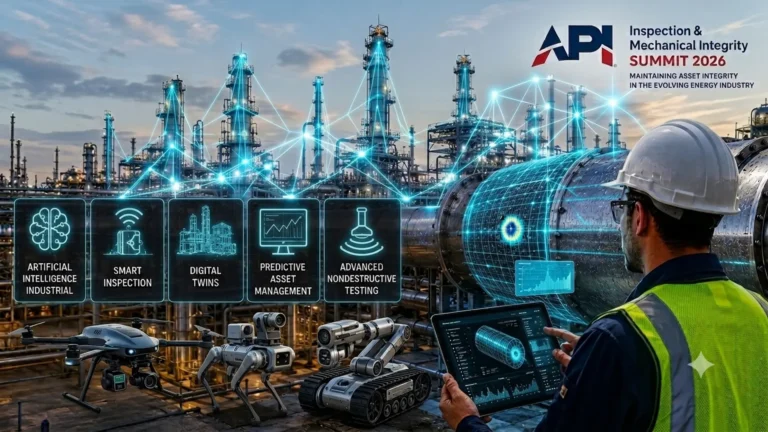
Table of Contents
- From scheduled inspections to condition-based integrity
- API Summit 2026: Innovation in industrial mechanical integrity
- How AI and robotics are revolutionizing industrial asset integrity?
- Aging infrastructure and energy transition
- The future of mechanical integrity is already underway
- Conclusions
- References
The process industry is undergoing a transformation driven by digitalization, the energy transition, and the aging of critical infrastructure. In this context, the API Inspection & Mechanical Integrity Summit 2026 confirmed that mechanical integrity is evolving from a reactive model, based on periodic inspections, toward a predictive strategy supported by data, artificial intelligence (AI), and continuous monitoring. More than incorporating new technologies, the challenge lies in integrating them within an asset management framework capable of anticipating degradation, optimizing resources, and strengthening operational safety.
The central theme of the event was maintaining asset integrity in an ever-evolving energy sector, a vision that recognizes that damage mechanisms are becoming increasingly complex due to prolonged equipment operation, the incorporation of alternative fuels, and higher regulatory demands. Faced with this scenario, so-called Mechanical Integrity 4.0 emerges as a new paradigm where engineering, advanced analytics, and automation converge to improve decision-making throughout the entire asset lifecycle.
From scheduled inspections to condition-based integrity
For decades, inspection programs were structured around frequencies established by standards, operational experience, and regulatory requirements. Although this approach remains fundamental, today it proves insufficient for facilities that generate large volumes of real-time information.
The Summit presentations highlighted the evolution toward management models based on asset condition, where data from sensors, monitoring systems, operational variables, and non-destructive testing are integrated to continuously update the risk level. This approach allows deviations to be identified before they evolve into critical failures, optimizing inspection scheduling and prioritizing interventions where they truly add value.
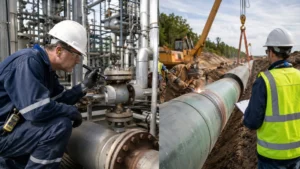
The following image illustrates the vision of the evolution of Asset Integrity Management (AIM) toward a 4.0 paradigm: cyber-physical integration of artificial intelligence, NDT robotics, and digital twin modeling for the continuous synchronization of Integrity Operating Windows (IOWs), Risk-Based Inspection (RBI), and real-time reliability.
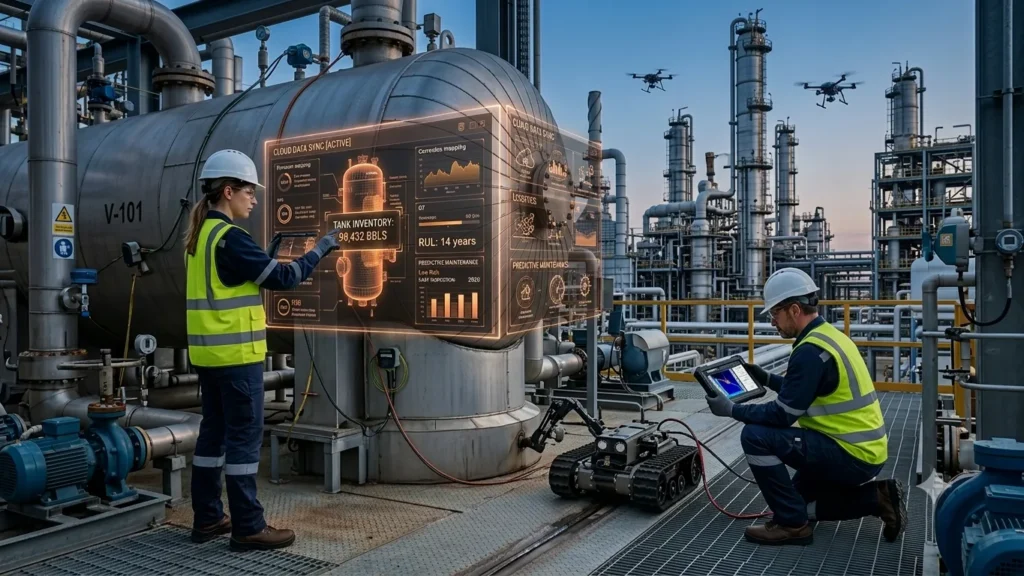
The integration of methodologies such as Risk-Based Inspection (RBI) with Integrity Operating Windows (IOWs) strengthens this strategy by relating actual operating conditions to expected damage mechanisms. Instead of merely responding to detected deterioration, organizations are starting to manage the variables that cause it.
API Summit 2026: Innovation in industrial mechanical integrity
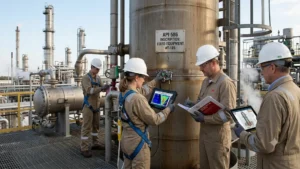
The integration of Artificial Intelligence and advanced robotics is redefining the standards of industrial inspection. The transition from reactive maintenance to a predictive and automated model allows companies to optimize data-driven decision-making, reduce unplanned downtime, and ensure maximum operational safety.
The API Summit 2026 positions itself as the epicenter of this digital transformation, presenting cutting-edge solutions focused on:
- Autonomous robotic inspection: Deployment of drones and robotic crawlers for non-destructive testing (NDT) in complex or high-risk areas.
- Predictive analytics and digital twins: Real-time evaluation of corrosion rates, monitoring of Integrity Operating Windows (IOW), and accurate remaining useful life estimation.
- Comprehensive risk management: Implementation of Risk-Based Inspection (RBI) models aimed at proactive prevention of critical failures in process assets.
How AI and robotics are revolutionizing industrial asset integrity?
Digital transformation is redefining how the energy industry inspects, monitors, and manages its critical assets. The integration of artificial intelligence, advanced robotics, predictive analytics, and smart inspection technologies is enabling the anticipation of damage mechanisms, the optimization of maintenance strategies, and the strengthening of operational reliability.
Within the framework of the API Summit 2026, these innovations stand out as pillars of the new generation of Mechanical Integrity 4.0, where data, automation, and engineering work in an integrated manner to enhance the safety, efficiency, and availability of industrial assets.
In the following Inspenet link, the disruptive technologies and key strategies that will lead the API Summit 2026 are exclusively presented. Discover how the convergence of automation and predictive analytics is securing the future of the energy industry. Press play and stay up to date with industrial evolution! Below is a brief summary of the technologies most discussed at the event.
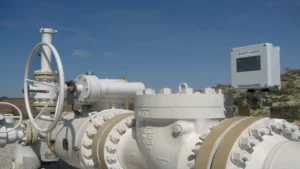
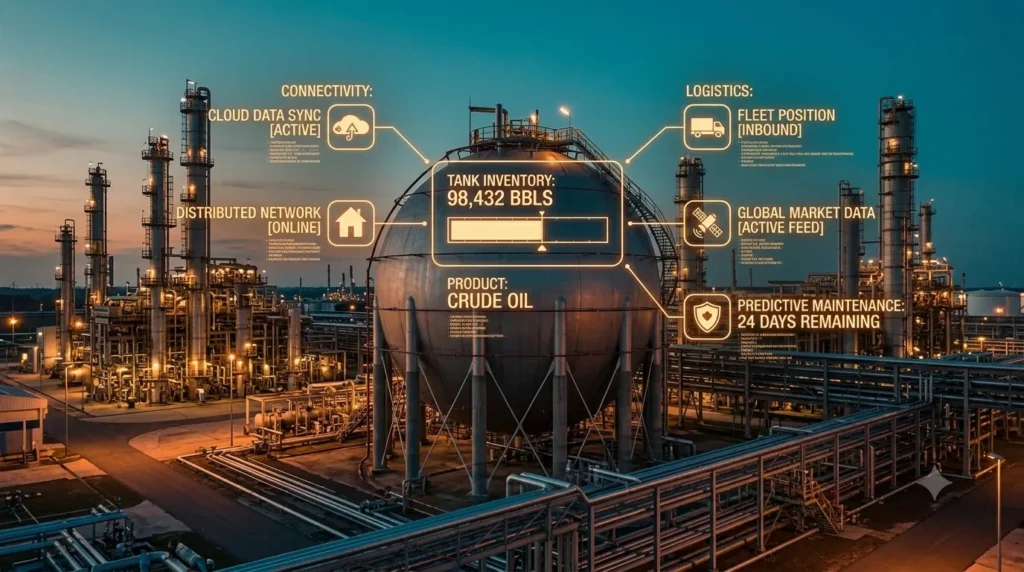
The following visual representation exemplifies this model in action: the integration of digital interfaces, predictive analytics, and cloud connectivity applied directly to critical storage infrastructure, transforming decision-making in real time.
Artificial intelligence: from historical analysis to prediction
One of the most prominent topics was the incorporation of artificial intelligence and machine learning algorithms into integrity management. Its application is no longer limited to processing historical databases, but is moving toward models capable of correlating information from inspections, maintenance, operations, and online monitoring to identify degradation patterns that are difficult to detect using conventional methods.
The solutions presented during the event showed how AI can support the prediction of corrosion rates, estimate remaining life, detect operational anomalies, and even assist in the automatic classification of indications obtained through advanced NDT.
However, the consensus was clear: artificial intelligence does not replace the engineer’s judgment. The reliability of any model depends on data quality, the correct identification of damage mechanisms, and technical validation performed by mechanical integrity specialists.
Digital twins and IIoT: a comprehensive view of the asset
Another consolidated trend was the use of Digital Twins connected through the Industrial Internet of Things (IIoT). These digital models make it possible to virtually represent the behavior of equipment and facilities, integrating design, operation, inspection, and maintenance information into a single environment.
When the digital twin receives data from permanent sensors, it can simulate degradation scenarios, evaluate operational changes, and continuously update the health status of the asset. This facilitates maintenance planning, risk assessment, and evidence-based decision-making.
Beyond the three-dimensional representation of equipment, the real value of these platforms lies in transforming large volumes of scattered information into actionable knowledge for integrity management.
Advanced NDT for more complex damage mechanisms
Technological evolution is also redefining the capabilities of non-destructive testing. During the Summit, a greater integration of techniques such as Phased Array Ultrasonic Testing (PAUT), Total Focusing Method (TFM), Full Matrix Capture (FMC), guided waves, permanent ultrasonic monitoring, and acoustic emissions was demonstrated to detect increasingly subtle degradation.
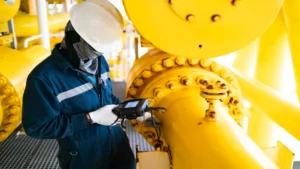
These tools allow for a more precise characterization of phenomena such as localized corrosion, stress corrosion cracking, hydrogen damage, erosion-corrosion, and mechanisms associated with high temperatures. At the same time, drones, inspection robots, and autonomous vehicles continue to expand safe access to confined spaces, elevated structures, and operating assets, reducing personnel exposure and outage times.
The trend is not to replace conventional techniques, but to integrate them into more efficient inspection strategies, where each method provides specific information about the predominant damage mechanism.
Aging infrastructure and energy transition
One of the most relevant messages from the API Summit was that the energy transformation introduces unprecedented challenges for mechanical integrity. The incorporation of renewable diesel, sustainable aviation fuels, hydrogen, and other alternative feedstocks modifies operating conditions and can alter traditional mechanisms of material corrosion and degradation.
Added to this is the fact that a significant portion of global infrastructure has exceeded several decades of service. The combination of aging assets and new processes requires reviewing inspection models, material selection criteria, and maintenance strategies to ensure safe operation during increasingly extended service life extensions.
In this context, the continuous updating of API standards and the rigorous application of engineering practices remain the foundation upon which new technologies are incorporated.
The future of mechanical integrity is already underway
The API Inspection & Mechanical Integrity Summit 2026 made it clear that the industry is moving toward a more connected, predictive, and intelligent integrity management. The combination of artificial intelligence, digital twins, IIoT, continuous monitoring, and advanced NDT is transforming how damage mechanisms are identified, evaluated, and controlled.
However, Mechanical Integrity 4.0 should not be understood solely as a technological evolution. Its true value lies in integrating reliable data, engineering knowledge, technical standards, and operational experience within a system that enables anticipating risks before they turn into incidents. Organizations that adopt this approach will be better prepared to face the challenges of an energy industry in transition, increasing human safety, asset reliability, and operational sustainability.
Conclusions
Mechanical Integrity 4.0 represents a paradigm shift in industrial asset management. The trends presented during the API Inspection & Mechanical Integrity Summit 2026 demonstrate that the future of inspection does not rely solely on more sophisticated technologies, but on the ability to integrate artificial intelligence, continuous monitoring, digital twins, and advanced non-destructive testing within a risk-based management strategy.
The availability of large volumes of operational data makes it possible to evolve from reactive models to predictive systems capable of anticipating degradation and optimizing maintenance interventions. However, digital transformation only generates value when backed by reliable information, a deep understanding of damage mechanisms, and the rigorous application of international technical standards.
In a scenario marked by energy transition, aging infrastructure, and the adoption of new fuels, mechanical integrity will continue to be a strategic element to ensure personnel safety, process reliability, and operational sustainability. The industry no longer faces only the challenge of detecting failures, but of predicting, managing, and preventing them through sound technical decisions. That was undoubtedly one of the main messages left by the API Summit 2026.
References
- American Petroleum Institute. (2026). API Inspection & Mechanical Integrity Summit 2026. https://events.api.org/2026-inspection-and-mechanical-integrity-summit/
- American Petroleum Institute. (2024). API Standard 586: Nondestructive Examination for Damage Mechanism Assessment in Fixed Equipment. API Publishing Services.
- American Petroleum Institute. (2021). API Recommended Practice 580: Risk-Based Inspection (3rd ed.). API Publishing Services.
- American Petroleum Institute. (2016). API Recommended Practice 571: Damage Mechanisms Affecting Fixed Equipment in the Refining Industry (3rd ed.). API Publishing Services.
- American Petroleum Institute. (2021). API Recommended Practice 584: Integrity Operating Windows. API Publishing Services.
- Cenosco. (2026). API Inspection & Mechanical Integrity Summit 2026: Key insights and industry trends. https://cenosco.com
- U.S. Department of Energy. (2024). Digital Twin for Energy Systems. https://www.energy.gov