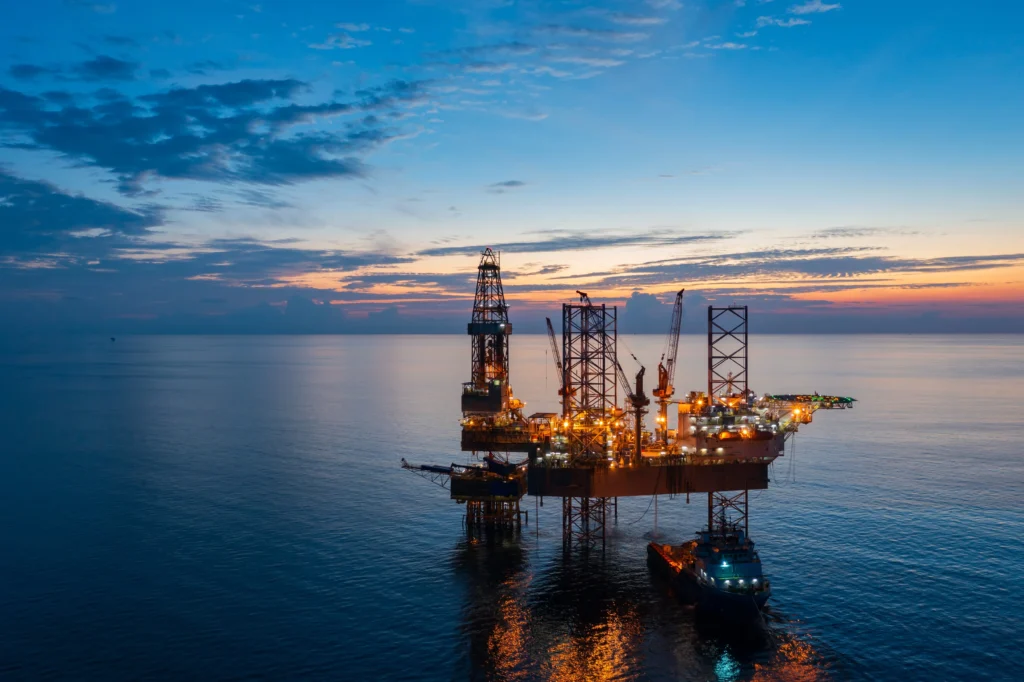
US energy companies raised to 595 the number of oil and gas platforms meanwhile, drilling activity is gaining momentum in some of the country’s main producing basins.
The number of rigs increased for the second consecutive week, according to the latest count published by Baker Hughes. During the week ending September 18, the total grew by four units to reach 595 rigs.
This figure represents the highest level since May 2014 and is 53 more rigs than in the same period last year. Year-over-year, the count is nearly 10% higher, indicating a recovery in drilling activity in the US energy sector.
Oil and gas platforms rise to 452 and 134
By type of operation, the platforms intended for the oil drilling they increased by two units to reach 452, their highest level since August.
Natural gas platforms also added two units, reaching 134, the highest figure since February 2016, meanwhile, the teams classified within other categories remained unchanged at nine.
The Baker Hughes weekly count is one of the indicators used by the industry to track drilling activity in the United States. Its movements allow observers to see how operators respond to changes in commodity prices, market conditions, and their production plans.
The Permian Basin reaches 269 platforms
The activity also registered significant movements in some of the main producing regions of the United States. In the Permian basin in the area stretching from West Texas to East New Mexico, the number of platforms increased by one to reach 269. This is its highest level since June 2025.
The Williston Formation, located primarily in North Dakota and Montana, added three platforms and reached 35 active crews, its highest number since January 2025.
In North Dakota, the count also increased by three units to reach 31 platforms, the highest level recorded since May 2025. The behavior was different in the Gulf of Mexico, where the number of active teams decreased by one unit to five, its lowest level since September 2021.
Drilling is trying to recover ground after three years of decline.
The recent growth in the number of platforms comes after three consecutive years of decline in activity, the count fell by 20% in 2023, 5% in 2024, and another 7% in 2025. In those years, the smallest crude oil prices American factors led many producers to maintain greater capital discipline, reduce debt, and prioritize shareholder returns over rapid production expansion.
In 2026, however, the outlook begins to change, with expectations about West Texas Intermediate (WTI) prices, along with supply and demand conditions, once again influencing the drilling decisions of US operators.
EIA forecasts higher oil and gas production in 2026
The United States Energy Information Administration (EIA) it forecasts that the country’s oil production will increase from the record 13.7 million barrels per day recorded in 2025 to approximately 13.8 million barrels per day in 2026.
In the natural gas market, the expected growth is greater, the EIA estimates that production will increase from 107.600 million cubic feet per day in 2025 to about 111.700 million cubic feet per day in 2026.
Among the factors supporting this growth is the increased demand for natural gas for electricity generation, driven in part by the development of data centers with high energy requirements.
Added to this is the expansion of US infrastructure to produce and export liquefied natural gas (LNG), which increases the need for gas supply within the country.
Baker Hughes’ two-week increase in drill rig counts provides a further indication of the positive trend in US drilling. Whether this trend continues will depend primarily on oil and gas prices, investment decisions by operators, and the growth in energy demand.
Source: BOE Report
Photo: Shutterstock