Asset management integrates technical, administrative, and operational approaches to ensure equipment fulfills its function throughout its life cycle. It involves planning, risk assessment, maintenance, integrity, optimization, and infrastructure renewal.


In the energy industry, effective management balances performance, cost, and risk. Globally, the discipline advances toward digital models, data analytics, and ISO 55000 frameworks, with strong adoption in the U.S. and Europe, and progressive expansion in LATAM.
Main topics
This section gathers content for professionals managing the asset life cycle.
Key topics include:
- ISO 55000 and asset management frameworks
- Criticality and operational risk assessment
- Maintenance strategies (RCM, CBM, PM)
- Mechanical integrity and reliability
- Life cycle optimization (LCC, LCOE)
- Digitalization, digital twins, and continuous monitoring
- Investment planning and CAPEX/OPEX analysis
Asset management is essential to align technical and economic decisions in complex organizations. Challenges include data integration, operational maturity, risk management, and sustainability.
API 626: Inspection and evaluation criteria for cryogenic tanks
TFR: Impact on integrity and service life of AST tanks
Smart traceability at terminals tank: Level and custody
Geodesic dome roofs for tanks: Design, risks and reliability
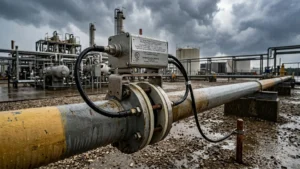
Aged pipes: Integrity and service life extension
Asset integrity: How software is transforming inspection management
Fabric to Function: Engineering Next Gen Durable Emissions Barriers
3D laser scanning: As-built for plant shutdown planning
Recycled aluminum for geodesic domes of storage tanks
FROM INDUSTRY VOICES
Expert interviews, technical conversations and leadership insights