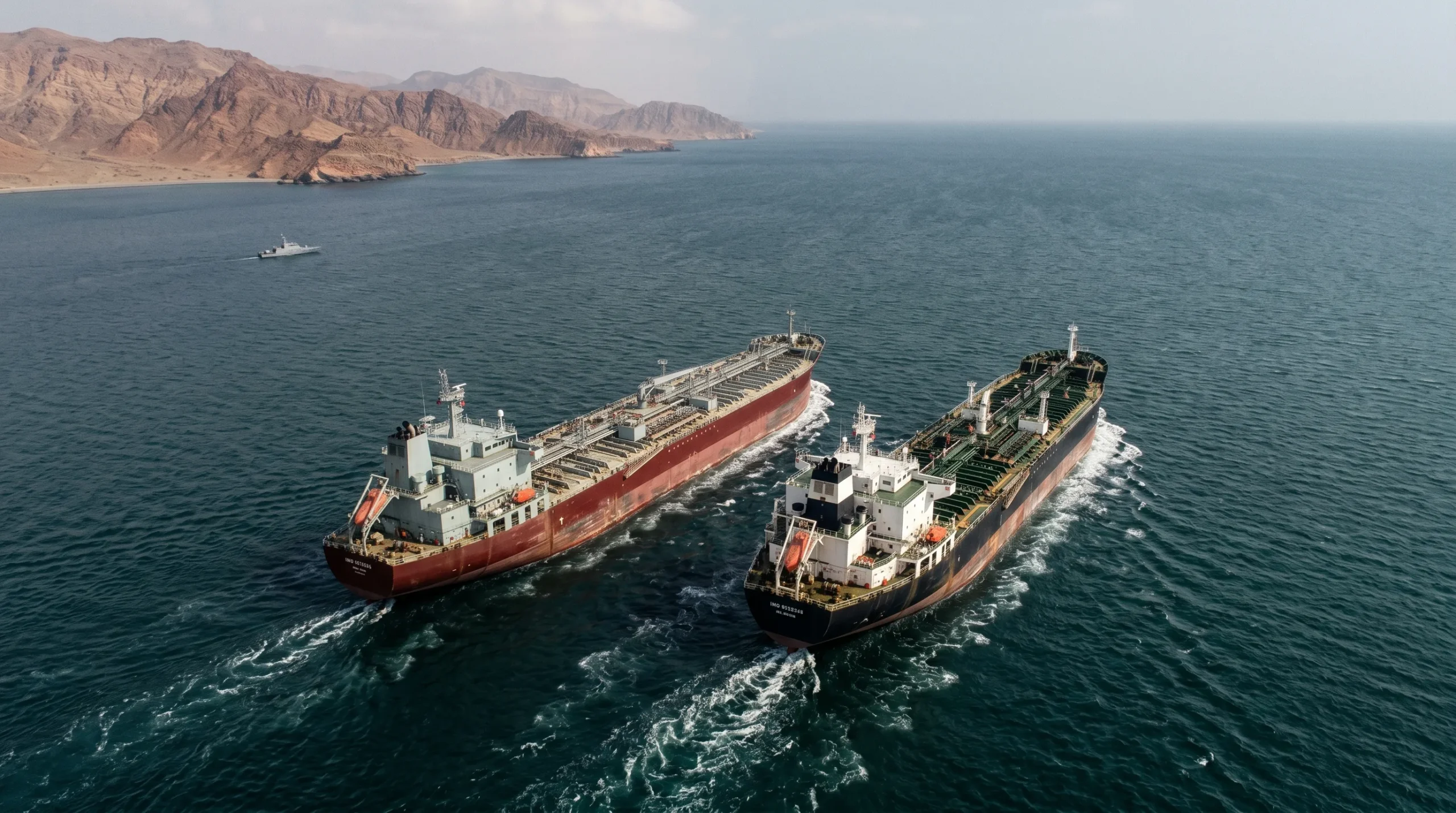
Two oil product tankers exited the Strait of Hormuz and an LNG vessel loaded at Das Island, United Arab Emirates, in movements described as rare by maritime tracking records from Kpler, LSEG, and Vortexa—but energy transit through the chokepoint remains heavily restricted.
Two product tankers exit the strait
The Aframax Cy Victorious exited the Strait of Hormuz on May 30 with at least 80,000 metric tons—equivalent to more than 508,000 barrels—of high-sulfur fuel oil loaded in Iraq. One day earlier, on May 29, the LR2 tanker Sti Elysees crossed the strait loaded with clean products from Kuwait.
Both movements are considered rare in the current context. Before the restrictions, the Strait of Hormuz recorded between 125 and 140 daily transits. Today, the number has been reduced to a fraction of that figure. The Strait of Hormuz reactivated the departure of three supertankers with 6 million barrels in May, in what was also described at the time as an exceptional movement.
Marigold loads LNG at Das Island
In the LNG segment, the vessel Marigold—managed by ADNOC—loaded at Das Island, United Arab Emirates, between May 24 and 25. According to Vortexa data, the vessel turned off its AIS system before crossing Hormuz in a “dark” transit, a practice adopted by vessels seeking to reduce exposure during high-risk transits.
Additionally, four LNG vessels in ballast condition (empty) positioned themselves near the eastern entrance of the strait during the same period, a sign that industry operators are actively monitoring transit windows. The Hormuz crisis left more than 40 vessels destined for India stranded in the Gulf, including LPG and LNG cargoes critical for Asian energy supply.
AIS off and “dark” transit: what it means for energy logistics
Turning off the AIS (Automatic Identification System) is a legal technical practice but one that adds operational risk for fleet operators, insurers, and cargo buyers. Without an AIS signal, the vessel’s position and condition are not verifiable in real-time by commercial tracking systems. For supply chain teams managing LNG cargoes, this means greater uncertainty in delivery times and the need for additional risk coverage.
Iran closed the Strait of Hormuz by firing on commercial vessels in April, an episode that raised the transit risk profile to its highest level since the start of the tensions. The Joint Maritime Information Center, led by the U.S. Navy, maintains the high-risk operating environment advisory.
Why these movements do not equate to a full normalization
The movements of Cy Victorious, Sti Elysees, and Marigold represent signs that some operators are finding specific operational windows—not a structural reopening of the chokepoint. The IEA confirmed a drop of up to 10.1 MMbpd in global supply resulting from the restrictions in the Gulf, a figure that is not corrected by two tankers and one LNG vessel.
Industry experts point out that the Strait of Hormuz continues to be the most critical point in the global energy supply chain. Every movement of tankers or LNG cargoes through the strait is monitored in real-time by leading analytical firms. The full resumption of transit in the Strait of Hormuz will depend on the evolution of the geopolitical environment in the Persian Gulf over the coming weeks.
Recent movements suggest that some operators are finding windows to move cargoes, but the logistical risk in the Strait of Hormuz continues to condition global energy security.
Source: Reuters