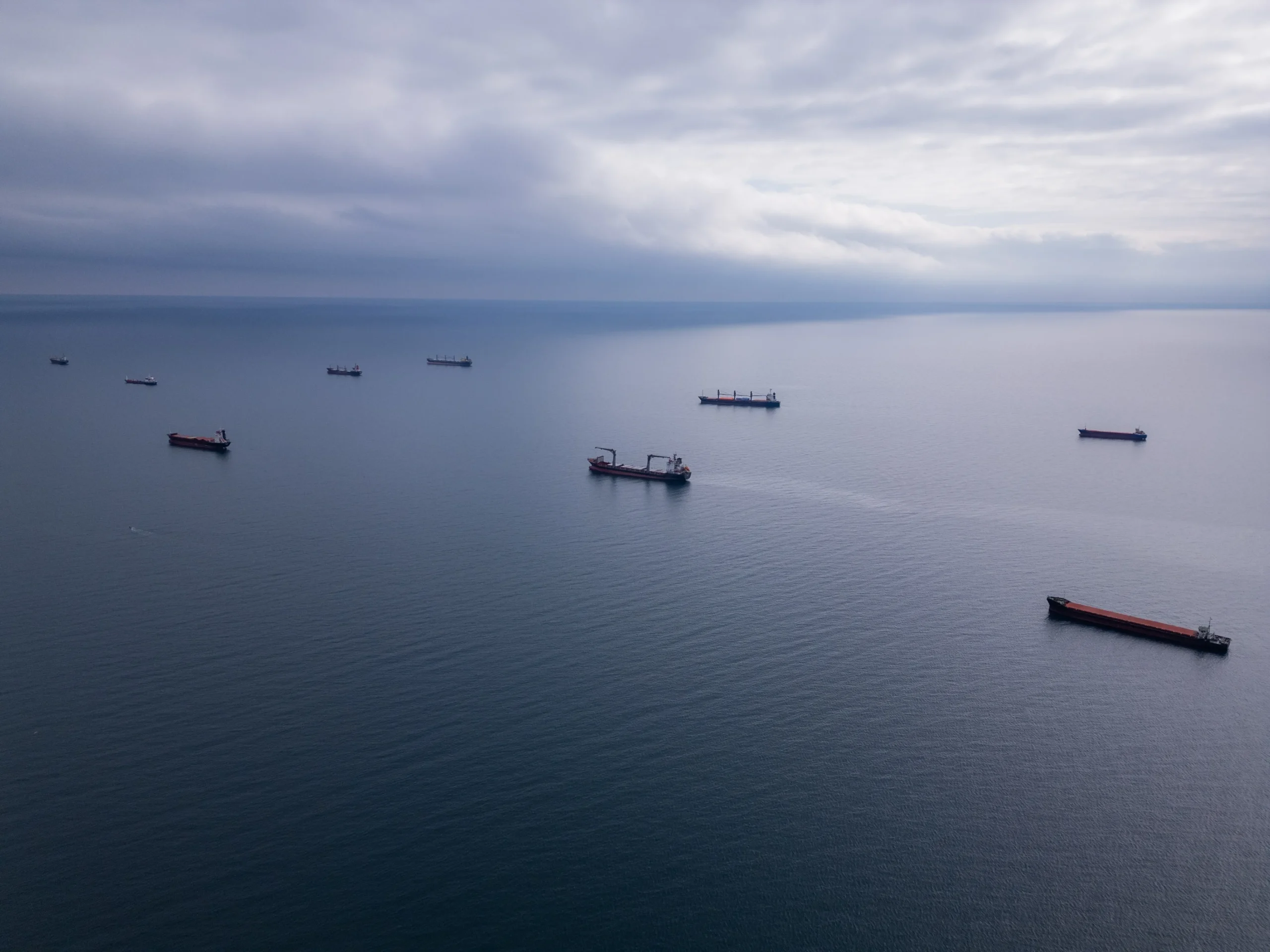
Military tensions in the Strait of Hormuz continue to affect international maritime trade and have left more than 40 vessels bound for India stranded in the Persian Gulf. Nearly half of the vessels are carrying crude oil, LPG, and LNG, essential products for the Asian country’s energy supply.
According to Indian authorities cited by local media, 13 Indian-flagged vessels remain immobilized west of the strait as navigation restrictions remain in force on one of the world’s most sensitive shipping routes.
India accelerates the release of stranded oil and fertilizers
The Indian government drew up a priority evacuation list for 41 vessels stranded in the Gulf. The group includes 18 tankers carrying energy products, 16 ships loaded with fertilizers, and seven vessels carrying other commercial goods.
The situation is raising concern in New Delhi due to the country’s dependence on supplies from the Persian Gulf. Delays in the arrival of crude oil, gas, and fertilizers could affect both energy security and agricultural supply in the coming weeks.
Likewise, authorities believe that de-escalation between Iran and the United States would allow maritime traffic to be partially restored and ease logistical pressure on strategic imports.
The Strait of Hormuz intensifies global maritime tensions
Hostilities in the region escalated again following reports of exchanges of gunfire between Iranian and U.S. forces near the Strait of Hormuz. The incident threatens to undermine the fragile ceasefire both sides have maintained for a month.
Washington maintains that negotiations remain open while Tehran reviews a U.S. proposal to move toward a framework agreement that would facilitate future talks and an eventual full reopening of the maritime corridor.
The Strait of Hormuz is considered one of the world’s main energy transit chokepoints; thousands of vessels cross this strategic waterway each year, linking the Persian Gulf to international oil and gas markets.
An LPG cargo managed to pass through the blockade
Over the past weekend, the MT Sarv Shakti managed to cross the Strait of Hormuz with an LPG cargo destined for India. The vessel was chartered by Indian Oil Corporation (IOC), India’s largest state-owned refiner.
The ship crossed the area on May 2 and is scheduled to arrive at the port of Visakhapatnam on May 13. The MT Sarv Shakti’s transit represents one of the few commercial movements recorded since the United States tightened maritime restrictions to curb Iranian oil exports.
While diplomatic negotiations continue, India remains cautiously monitoring developments in the conflict due to the direct impact the Strait of Hormuz crisis may have on its energy and agricultural supply chains.
Source: Oilprice
Photo: Shutterstock.