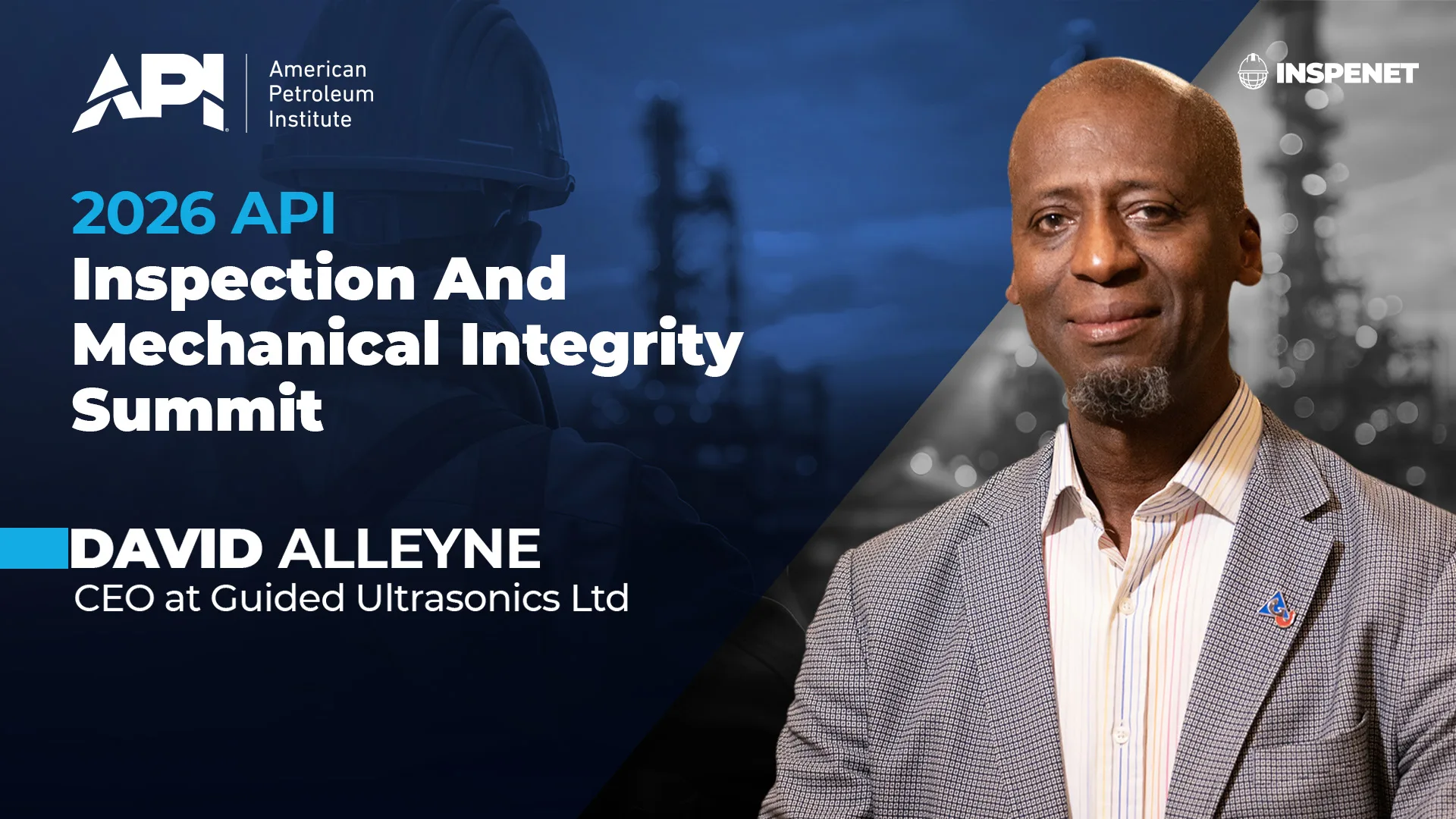
GUL advances guided wave inspection with AI and quantitative measurement
Non-destructive testing is undergoing a transformation marked by the incorporation of new digital tools and methods capable of providing increasingly accurate information about the condition of industrial assets. In this context, David Alleyne , CEO of Guided Ultrasonics Limited (GUL) , explained at API Summit 2026 how the company has evolved its guided wave technology from a screening solution to a platform that integrates quantitative assessment, continuous monitoring, and artificial intelligence capabilities to help inspection professionals make more informed decisions.
GUL enhances inspection using guided waves
Founded in 1999 by members of the research team at Imperial College London, GUL specializes in developing solutions for inspection and monitoring using Guided Wave Testing (GWT) . The company designs equipment, develops specialized software, and provides technical training for sectors such as oil and gas, refining, chemicals, power generation, and transportation.
With offices in London, Houston, and Kuala Lumpur, the company has built an international presence based on technological development and supporting its clients during the implementation of new inspection methodologies . Its activity focuses on providing tools that enable the assessment of the integrity of pipelines and other industrial assets, facilitating more efficient inspections and improved maintenance planning.
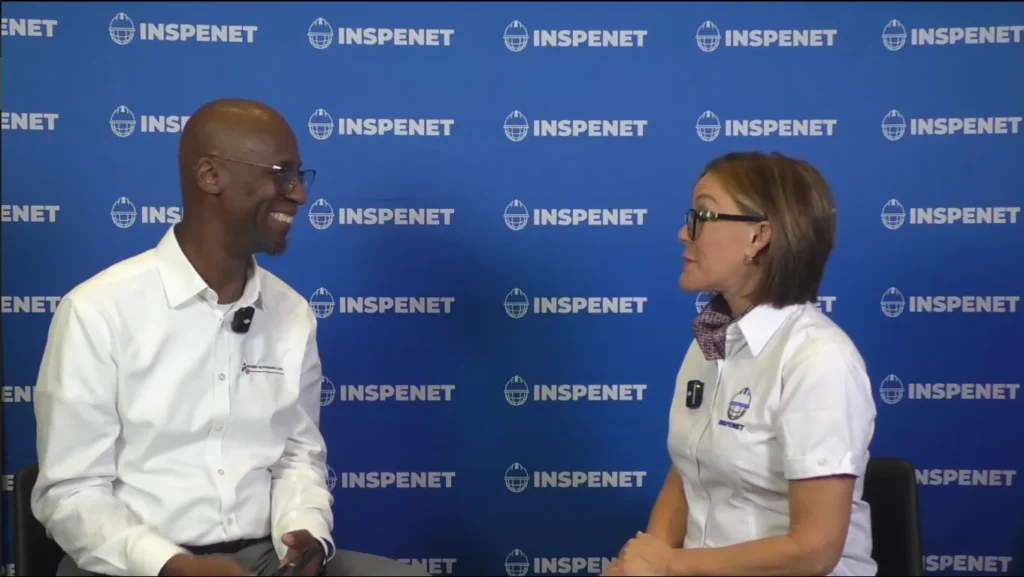
During the interview, Alleyne explained that the evolution of these technologies responds to a growing need to obtain more complete information about the state of the facilities, especially in infrastructures where access is complex or where reducing downtime is a determining factor.
From screening to quantitative asset valuation
One of the main messages of the interview was the transformation experienced by guided wave technology over the last few decades.
David Alleyne recalled that, in its early industrial applications, Guided Wave Testing was primarily used as a detection technique. Its purpose was to identify potential anomalies in order to then conduct more detailed inspections using other methods.
Over time, improvements in signal processing algorithms and the development of new procedures have significantly expanded the capabilities of the technology.
As a result of this evolution, GUL developed Quantitative Screening Results (QSR) , a methodology that allows estimating the loss of thickness in pipes from data obtained using guided waves .
This capability represents a significant advance because it provides quantitative information that helps prioritize subsequent inspections and facilitates decision-making related to asset maintenance.
According to Alleyne, having more accurate data allows for reducing uncertainties and better targeting resources for inspection, especially in large facilities where it is not feasible to carry out exhaustive inspections of all elements.
Continuous monitoring is gaining prominence
In addition to the evolution of quantitative analysis, GUL has expanded its solutions to include monitoring systems capable of regularly tracking the condition of the facilities.
Instead of relying solely on one-off inspections, these systems allow for the continuous collection of information to identify changes that may indicate the start of degradation processes.
This approach offers a more complete view of asset behavior over time and facilitates maintenance planning before major failures occur.
Likewise, the automation of certain processes helps to improve the repeatability of measurements and reduces the influence of operational factors that can affect the quality of the results.
For industries where facility availability is critical, having continuous information represents a significant advantage when setting intervention priorities and optimizing inspection resources.
Artificial intelligence expands the inspector's capabilities
Another central topic of conversation was the incorporation of artificial intelligence into the inspection process.
Far from presenting AI as a substitute for human knowledge, David Alleyne advocated an approach based on collaboration between technology and professionals.
From their perspective, artificial intelligence can analyze large volumes of information, detect patterns, and bring consistency to data processing. However, the final interpretation still requires the inspector's expertise , especially when operating conditions are highly complex.
The director of GUL explained that these tools allow for the automation of repetitive tasks and reduce the time needed to review the results of an inspection, freeing up specialists to concentrate on activities of greater technical value.
Furthermore, the use of support algorithms can help reduce variability between different operators, promoting more homogeneous evaluations and facilitating the comparison of results obtained in different inspection campaigns.
For Alleyne, artificial intelligence should be understood as an assistance system that improves the professional's analytical capacity without replacing the technical criteria required for evaluating the integrity of industrial assets.
The combination of technologies will remain essential
During the interview it also became clear that no single inspection technique can solve all the needs of the industry.
David Alleyne emphasized that guided waves are part of a broader set of non-destructive inspection tools and that their true potential emerges when integrated with other methodologies.
Each technology offers specific advantages depending on the type of asset, the geometry of the installation, and the objective of the inspection. Therefore, selecting the appropriate method remains a decision that requires technical knowledge and experience.
This integrated approach allows for a more complete view of the state of the infrastructure and promotes maintenance strategies based on information from different sources.
The challenge also lies with the people.
Although much of the interview revolved around technological innovation , Alleyne pointed out that one of the biggest challenges for the future of the sector is related to the human factor.
The industry needs to incorporate new generations of professionals while preserving the knowledge accumulated by specialists with decades of experience.
From their perspective, facilitating this transfer of knowledge is a fundamental element for maintaining the quality of inspections and continuing to develop new solutions.
In this scenario, digital tools and artificial intelligence can also play a relevant role by helping to standardize procedures and facilitate access to technical knowledge, although always under the supervision of qualified professionals.
Likewise, Alleyne highlighted the importance of fostering collaboration between companies, research centers and specialists to continue perfecting inspection technologies and respond to the new needs of the industry.
GUL looks to the future of asset integrity
The evolution of GUL reflects how guided wave inspection has gone from being a technique primarily focused on screening to becoming a solution that incorporates quantitative evaluation, continuous monitoring, automation, and artificial intelligence.
David Alleyne's statements reflect a vision where technological innovation advances in parallel with the development of human knowledge. Much of the potential of future non-destructive inspection solutions lies in this combination, with the goal of continuing to provide more reliable information to improve the management of industrial asset integrity and support decision-making in sectors where safety and operational availability play a vital role.
For more content about API Summit 2026, visit our LinkedIn profile.
Source: Inspenet.