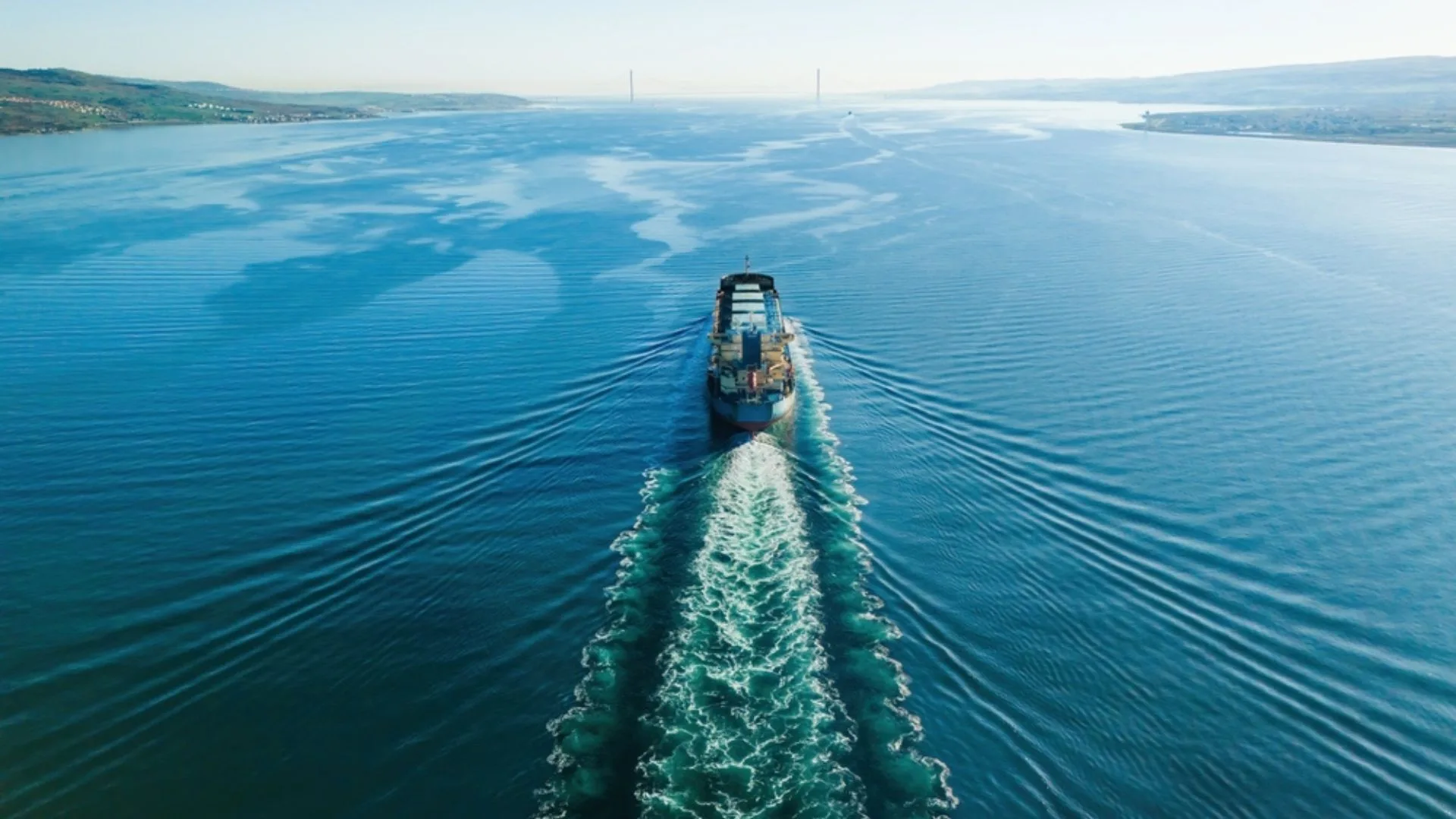
Maritime transit in the Strait of Hormuz was interrupted again after the Iranian navy issued radio messages prohibiting passage to vessels, while at least two ships reported being hit by gunfire in the area.
Armed Incidents Following the Closure of the Strait of Hormuz
According to shipping industry sources, several merchant vessels attempted to cross the strait after receiving prior notice allowing transit under restrictions. However, on Saturday, Iranian naval units reportedly opened fire on at least two vessels in waters near Qeshm and Larak islands.
As a result, the affected ships decided to abort the crossing and return without completing the passage, increasing uncertainty on one of the world’s most sensitive maritime routes.
Radio Messages Confirm Total Closure
In parallel, multiple crews reported receiving VHF radio communications in which Iran’s navy declared the total closure of the Strait of Hormuz.
The message warned that no vessel, regardless of flag or type, was authorized to transit through the waterway, in response to political tensions linked to international negotiations.
Reports of Boarding and Gunfire Against Tankers
Likewise, maritime security agencies confirmed additional incidents in the region. The UKMTO agency received reports of an attack approximately 20 nautical miles northeast of Oman, where a tanker was reportedly intercepted by armed vessels of the Islamic Revolutionary Guard Corps.
According to the captain, Iranian units fired on the vessel. Despite the incident, the crew is out of danger.
In parallel, a container ship was also reportedly hit by gunfire, reinforcing the perception of risk for commercial traffic in the area.
Immediate Impact on Global Trade
The closure of the Strait of Hormuz has direct implications for global energy supply. This waterway handles approximately 20% of global oil and liquefied natural gas transport.
Currently, hundreds of vessels and approximately 20,000 seafarers remain waiting in the Gulf, unable to complete their commercial routes.
This scenario increases pressure on energy markets and raises concerns about potential prolonged disruptions in hydrocarbon flow.
Source: Reuters
Photo: Shutterstock