During the API conference, PipeSense presented a new technology for leak detection in pipelines that promises to significantly reduce incident response times and strengthen predictive maintenance strategies.
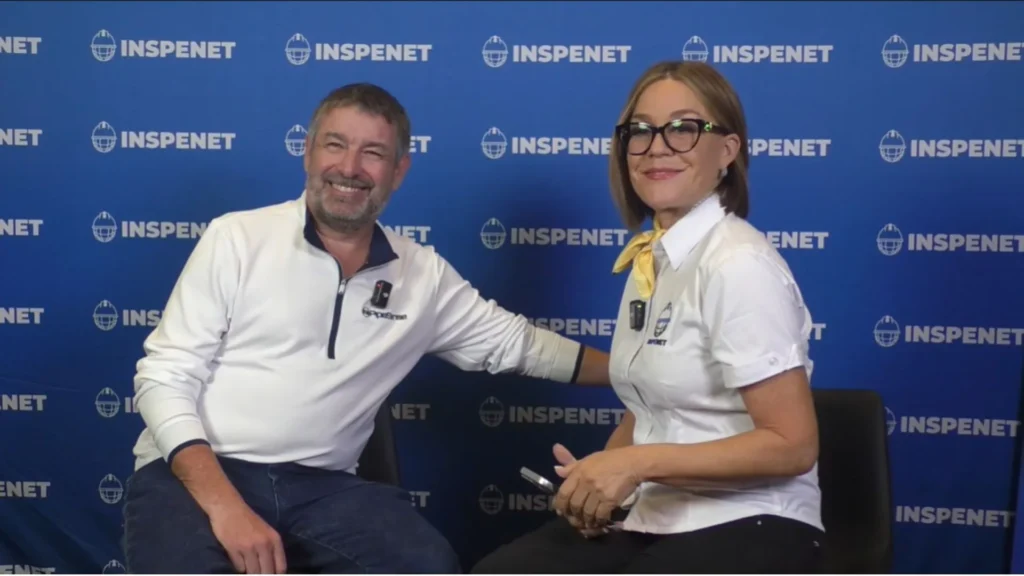
In an interview with INSPENET, Stuart Mitchell, the company’s Chief Executive Officer (CEO), explained how the development of an intelligent pig capable of detecting and locating leaks in real time represents a breakthrough for pipeline integrity management.
An intelligent pig that identifies leaks during inspection
PipeSense is a company specializing in technologies for real-time leak detection, hydrostatic testing monitoring, and locating inspection tools (pigs) when they become blocked or lost inside a pipeline.
The main innovation presented during the conference is a leak detection pig that incorporates onboard electronics capable of identifying a leak as the tool moves through the pipeline.
According to Mitchell, when the pig passes through the area where a leak exists, the system immediately detects the event and transmits a signal that allows its location to be known without needing to remove the tool from the pipeline or subsequently download the collected information.
This capability significantly reduces the time between detection and intervention, allowing action to be taken before a small leak escalates into an event with greater operational or environmental impact.
Miniaturization and Real-Time Processing
Mitchell noted that one of the project’s biggest technological challenges was transferring the processing capability of surface-installed monitoring equipment to a compact device that could operate inside the pig.
The development involved miniaturizing the electronics and increasing onboard processing capacity to analyze large volumes of data as the tool moves through the pipeline, while maintaining the necessary precision to detect small leaks.
Artificial Intelligence to Reduce False Alarms
The solution developed by PipeSense combines edge computing with machine learning algorithms to improve detection reliability.
In an initial stage, the system continuously analyzes variables such as pressure through high-speed local processing. When a possible event is identified, the information is sent to a central server where machine learning models verify the data and rule out false alarms.
According to Mitchell, this architecture allows for high sensitivity in detecting small leaks without increasing the number of false detections, one of the main challenges of conventional monitoring systems.
The CEO of PipeSense believes that the natural evolution of the industry involves moving away from reactive models towards data-driven predictive management.
In this regard, he explained that integrating information generated by leak detection systems with data from in-line inspections (ILI) and other monitoring tools will allow for anticipating deterioration mechanisms such as fatigue, optimizing maintenance strategies, and concentrating resources on the highest-risk segments of the infrastructure.
Mitchell emphasized that this approach not only helps reduce operational costs but also strengthens operational safety and decreases the risk associated with failures in pipeline transportation systems.
Enjoy the full interview and all the exclusive details from the API Conference in our Inspenet TV section.
Source and photo: Inspenet