PipeSense announced successful test results for its new leak detection system for supercritical carbon dioxide (sCO₂) pipelines, a technology developed to support the growing carbon capture and storage (CCS) infrastructure.
The company implemented and evaluated the system on a South Texas pipeline transporting dense-phase and supercritical CO₂ at approximately 2000 psi.
System detected leaks in 2 to 3 minutes
The test covered a 12-mile stretch between a compressor station and a customer delivery point within the state of Texas.
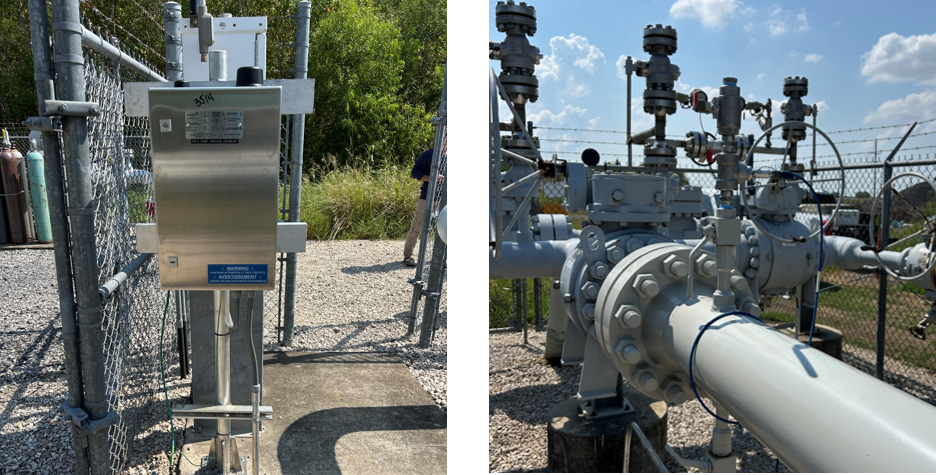
PipeSense utilized a Dynamic Pressure Analysis (DPA) method using two field processing units equipped with high-sensitivity pressure sensors installed at both ends of the pipeline.
Installation began during the third quarter of 2025, with testing continuing through the fourth quarter of the same year.
Technology seeks to solve supercritical CO₂ challenges
PipeSense explained that supercritical CO₂ pipelines present complex operational challenges due to the highly variable behavior of the fluid near its critical point.
According to Stuart Mitchell, President and CTO of PipeSense, traditional monitoring models struggle to correctly interpret pressure and flow variations in these types of operations.
“Standard transient models and statistical models have difficulty accurately predicting pressure and flow transients during operational fluctuations,” Mitchell stated.
The executive indicated that the DPA method developed by PipeSense offers a mass flow-independent alternative, better suited for CO₂ transport systems for CCS.
CCS infrastructure drives demand for advanced monitoring
The company believes that the technology could become a key component for the safe growth of carbon capture and storage infrastructure.
According to PipeSense, the CO₂ pipeline network in the United States is projected to increase twentyfold by 2050, increasing the need for advanced monitoring and early leak detection solutions.
The company also noted that the system successfully managed operational challenges related to:
- Variability in the speed of sound of CO₂.
- Unplanned compressor station shutdowns.
- Transitions between dense and supercritical phases.
PipeSense plans to expand tests in CCS networks
Following the results obtained in Texas, PipeSense confirmed that it plans to conduct new tests and implementations in CO₂ infrastructure in both the United States and other international markets.
The company also highlighted the simplicity of the system’s deployment, based solely on pressure sensors connected to processing units and a flexible monitoring interface.
According to the company, this architecture would facilitate scaling towards future large-scale carbon capture and storage networks.
Source and photo: https://pipesense.com/