Corrosion under insulation monitoring is advancing toward continuous and predictive models capable of transforming sensor data into integrity decisions. CorrosionRADAR received the Highly Commended distinction in the Technology Innovation of the Year category at the Oil & Gas Saudi Awards 2026 for a solution that combines sensors, predictive analytics, and artificial intelligence to manage CUI risk in oil and gas facilities.
The recognition comes as the technology expands its presence at Aramco facilities in Saudi Arabia. Beyond the award, the development reflects a significant shift in asset integrity: moving from periodic inspection campaigns toward systems that maintain surveillance of conditions associated with deterioration between inspection cycles.
Corrosion Under Insulation Monitoring Addresses Damage That Is Difficult to Detect
Corrosion under insulation, known as CUI, represents a challenge because it can develop in piping and equipment without visible signs from the outside. The ingress and retention of moisture beneath insulation can create favorable conditions for deterioration while the asset remains in operation.
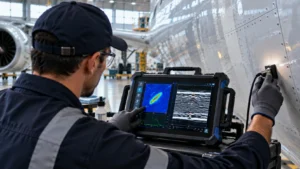
For this reason, CUI management traditionally combines risk assessment, inspection, and techniques such as ultrasonic testing, radiography, pulsed Eddy Current, and thermography. Sensor based monitoring and advanced CUI inspection techniques are expanding this approach by providing information about conditions beneath insulation without relying exclusively on periodic interventions.
The recognized CorrosionRADAR solution integrates CR:Clarity analytics software, CR:LR and CR:SR sensors, AI supported virtual sensors, and specialized services. The objective is to identify higher risk areas and use this information to prioritize where inspection and maintenance resources should be concentrated.
Aramco Scales Predictive CUI Monitoring
The application in Saudi Arabia brings an industrial dimension to the development. CorrosionRADAR states that it has been working with Aramco since 2023 and that its technology began to be implemented at the Ju’aymah Natural Gas Liquids Fractionation Plant to detect conditions associated with CUI at selected locations.
The system was subsequently expanded. According to data published by the technology provider, continuous monitoring currently covers approximately 50% of the Ju’aymah site, including columns, refrigeration units, and piping. It is important to note that these results come from CorrosionRADAR and do not constitute independent verification of performance.
The concept is related to a broader evolution in integrity management: an isolated measurement shows a specific condition, while comparable data collected over time make it possible to identify changes and trends. This principle is also present in other strategies for CUI detection and monitoring using technologies such as LRUT.
Sensors and AI Are Integrated From the Construction of New Facilities
Another step is to incorporate the system before a facility enters service. CorrosionRADAR reported in February 2026 that Aramco was installing its predictive solution at a new greenfield project in Saudi Arabia, integrating corrosion and moisture sensors during construction.
The approach makes it possible to establish an information baseline from the earliest stages of operation and use the data to guide decisions related to materials, coatings, insulation, and future interventions. The provider states that the strategy can reduce inspection scope by concentrating it on areas identified as presenting higher risk. However, the reported savings figures correspond to results reported by the company itself.
Aramco has also publicly highlighted the role of these technologies. At a corrosion conference in 2025, Ahmad O. Khowaiter cited CorrosionRADAR as an example of technological collaboration and explained that its sensors are installed beneath insulation to transmit data that help identify corrosion risk.
Can Continuous Monitoring Replace CUI Inspection?
Technological advancement does not mean that sensors eliminate the need for inspection. Their primary value lies in improving the selection of where and when to inspect by providing continuous information to prioritize assets and areas requiring verification.
This complementary role is also reflected in industry practices for CUI. The CUI RP 101 guidance published in 2024 addresses the incorporation of remote monitoring into inspection strategies and the use of its data to support maintenance and repair decisions.
The recognition received in Saudi Arabia therefore reflects a trend broader than the award itself: the convergence of permanent sensors, continuous monitoring, predictive analytics, and AI is moving CUI management toward increasingly condition based approaches. For operators with extensive networks of piping and insulated equipment, having information available between inspection campaigns can help direct inspections toward the areas of greatest interest and turn corrosion monitoring into an integrated tool within the asset integrity strategy.
Sources: BINDT / CorrosionRADAR / CorrosionRADAR / CorrosionRADAR — Ju’aymah implementation · Aramco