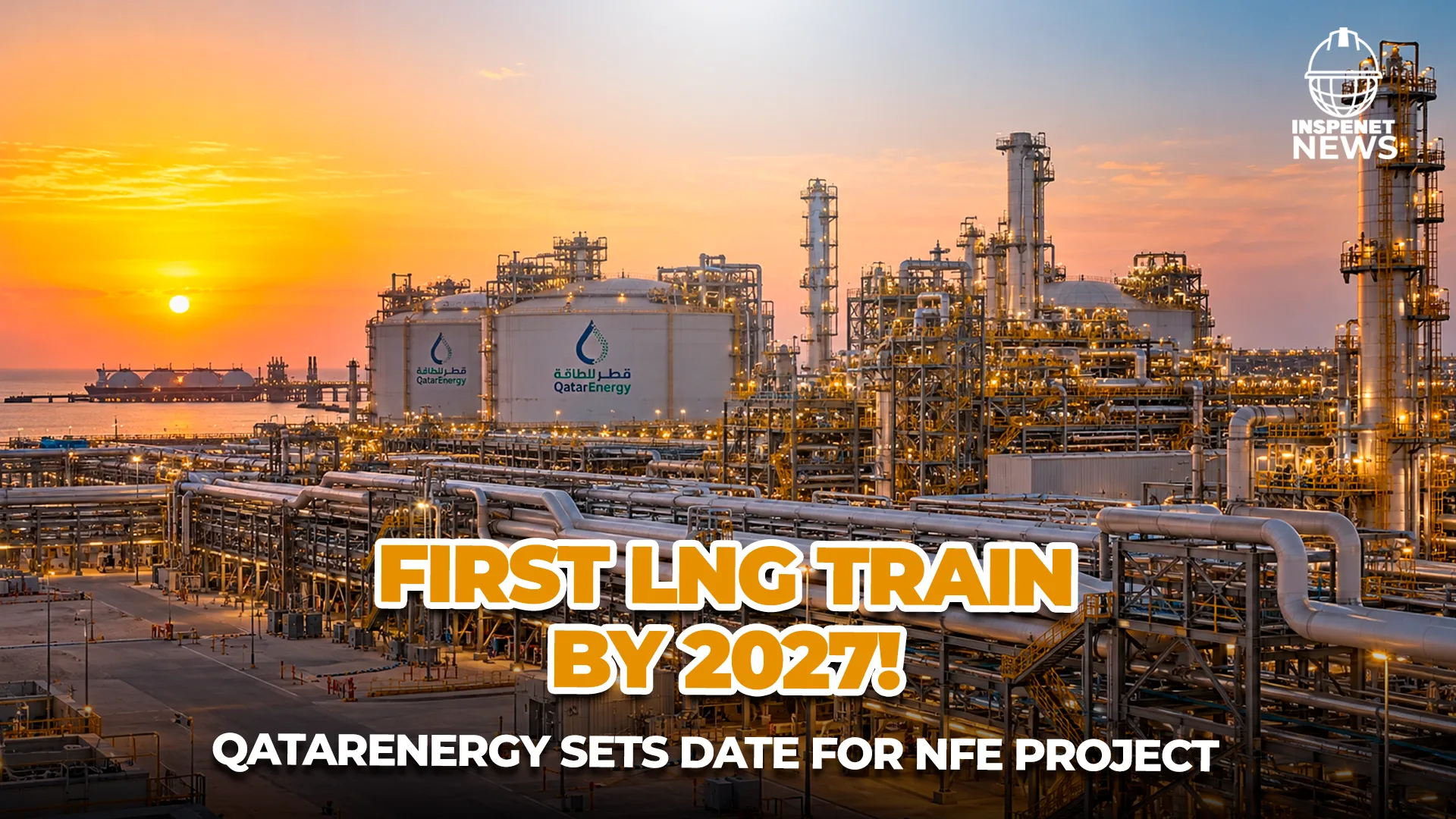
QatarEnergy is preparing the first North Field East train for 2027
Qatar Energy plans to commission the first train of its North Field East (NFE) LNG expansion project during the first half of 2027. The unit will have a production capacity of 8 million tons per year and will mark the start of an expansion that will bring NFE's capacity to 32 million tons per year .
However, the schedule for the following units will depend on the situation in the Strait of Hormuz; disruptions to this shipping route have caused delays in the arrival of equipment needed to continue with the company's expansion projects.
Saad al-Kaabi, CEO of QatarEnergy and Qatar's Minister of Energy Affairs, explained the situation during a special edition of the Qatar Economic Forum held in New York.
North Field East will begin production in the first half of 2027
QatarEnergy expects the first train at North Field East to become operational during the first six months of 2027. The facility will have the capacity to produce 8 million tons of LNG per year.
NFE units will be able to start operations as 2027 progresses; their entry into service will be linked to both the development of the project and the availability of the equipment that must arrive in Qatar.
Once completed, North Field East will add 32 million tonnes of annual capacity; the project is part of a much larger program to increase Qatar's liquefied natural gas production.
The Strait of Hormuz affects the following LNG trains
Furthermore, Qatar Energy's schedule remains contingent on developments in the Strait of Hormuz. Disruptions in this waterway have impacted the transport of equipment destined for the new facilities.
This situation is especially important given Hormuz's role in the movement of goods to the countries in the region. Al-Kaabi rejected the notion that the route has lost its relevance and pointed out that numerous products besides oil and gas are transported along it.
Qatar has also received expressions of willingness from neighboring countries to allow the construction of a gas pipeline that crosses their territories and reduces dependence on the strait.
However, Qatar Energy does not believe that such infrastructure makes economic sense under current conditions. The company is already implementing its North Field expansion program and is maintaining its growth plans using LNG.
According to al-Kaabi, Qatar could also resume normal operations a few weeks after traffic through the Strait of Hormuz returns to normal.
Repairs at Ras Laffan could take three years
While North Field East is progressing, QatarEnergy will also have to deal with the recovery of damaged infrastructure in Ras Laffan.
Two LNG trains were affected, and repairs could take approximately three years. These facilities collectively represent 17% of the country's LNG production capacity .
In addition, a gas-to-liquids (GTL) conversion facility was also damaged. Qatar Energy expects this unit to be back in service during the first quarter of 2027.
Therefore, the company will simultaneously address the repair of existing capacity and the progressive incorporation of new production units.
QatarEnergy continues to expand its LNG capacity
Despite these difficulties, the North Field growth program continues; North Field East is one part of a plan that also includes North Field South (NFS) and North Field West .
Currently, Qatar has an LNG production capacity of 77 million tons per year ; with the joint development of these projects, the goal is to reach 142 million tons per year .
In this way, the expansion would mean incorporating 65 million tons per year compared to the current capacity.
North Field South would begin production in 2028
Following the start of North Field East, Qatar Energy plans to move forward with North Field South. This project will add 16 million tons of annual capacity and is scheduled to begin production in 2028.
NFE and NFS are integrated into the overall development strategy for North Field, along with North Field West. The progress of each project will allow for the phased addition of capacity.
Qatar is aiming for 142 million tons annually
Once the program is developed, QatarEnergy expects to increase Qatar's production capacity from the current 77 million to 142 million tons of LNG per year.
The difference reflects the scale of the projected growth and explains the importance of the North Field East timeline. The start of the first train in 2027 will mark the operational launch of a significant portion of that new capacity.
At the same time, the work at Ras Laffan will determine how long it takes Qatar to recover the currently affected units.
Golden Pass expands QatarEnergy's presence outside the Gulf
In parallel, QatarEnergy maintains LNG projects outside of Qatar, including Golden Pass LNG , a joint venture with ExxonMobil located in Jefferson County, Texas.
The plant has a capacity of approximately 18 million tons per year. According to al-Kaabi, it will reach full capacity in 2028 with the commissioning of liquefaction trains 2 and 3.
Also located in Jefferson County is Golden Triangle Polymers , a joint venture with Chevron Phillips Chemical. The facility has a capacity of 2 million tons per year and has already begun its commissioning phase. Qatar Energy expects it to begin operations in the coming weeks.
What does QatarEnergy's schedule mean for the LNG market?
Finally, the next few years will combine two processes for QatarEnergy: the addition of new capacity through North Field East and North Field South and the recovery of the damaged facilities at Ras Laffan.
The schedule places 2027 as the year planned for the start of the first NFE train and for the return of the affected GTL facility. North Field South would then begin production in 2028.
The Strait of Hormuz will continue to be part of this equation; difficulties in receiving equipment have already introduced uncertainty regarding the units following the first train at North Field East. Its evolution could determine the pace at which Qatar Energy incorporates some of the new LNG volumes planned within its expansion program.
News of additional interest
Japan is preparing AI-powered robots to support its defense.
Japan will study how to use humanoid robots with artificial intelligence within its Self-Defense Forces. The plan aims to reduce the workload on personnel given the difficulties in recruiting new troops. Among the planned tasks are base surveillance, logistical support, reconnaissance, and rescue operations. For now, the government remains hesitant about the idea of using armed robots in combat.
The Procurement, Technology, and Logistics Agency would lead the research and organize tests with prototypes from companies and universities. At the same time, the Ministry of Defense wants to expand the use of AI in other areas. Its plans include incorporating it into command systems and testing a satellite capable of processing large amounts of data from space to support missile guidance.
Superior Energy acquires Welltec and expands its oil reach
Superior Energy Services has agreed to acquire the Danish company Welltec to expand its oil well intervention and completion business. The acquisition will incorporate technologies such as Well Tractor, a system that transports tools into wells to perform cleaning, cutting, repair, and component recovery operations. Welltec also develops systems that help isolate zones and maintain well integrity.
With a presence in more than 50 countries and nearly 1,000 employees, Welltec will strengthen Superior's international and offshore operations . The Danish company also holds more than 800 active patents and possesses its own engineering, research, development, and manufacturing capabilities. The acquisition is expected to close in the first half of 2027, subject to regulatory approvals. The companies did not disclose the transaction value.
The US and Glencore will create a mineral reserve
Glencore has been selected by the U.S. government as a founding partner of VaultCo, a strategic reserve of critical minerals designed to bolster the supply for the country's industry. The project will combine financing from the U.S. Export-Import Bank (EXIM) with Glencore's ability to source, purchase, and supply base minerals and metals across various markets.
VaultCo will seek to build up inventories that can support U.S. manufacturers in the event of supply disruptions. Glencore will contribute its international network and expertise in connecting producers with industrial consumers. The initiative aims to diversify supply sources and reduce U.S. exposure to issues that could limit access to these materials.
Petrobras is preparing new wells in Foz do Amazonas
Petrobras plans to move forward in 2027 with the evaluation of its discovery in Foz do Amazonas, after finding oil it described as “excellent quality” in the Morpho prospect. The Brazilian oil company expects to have a drillship available in January to begin work on three new wells in this area of Brazil’s northern equatorial margin.
The next phase will be crucial in determining the size and characteristics of the find and whether it can be commercially developed. Petrobras recently received authorization from the environmental agency Ibama to begin drilling. The project is located in a region that has garnered significant attention due to its environmental sensitivity and the oil industry's interest in exploring its energy potential.