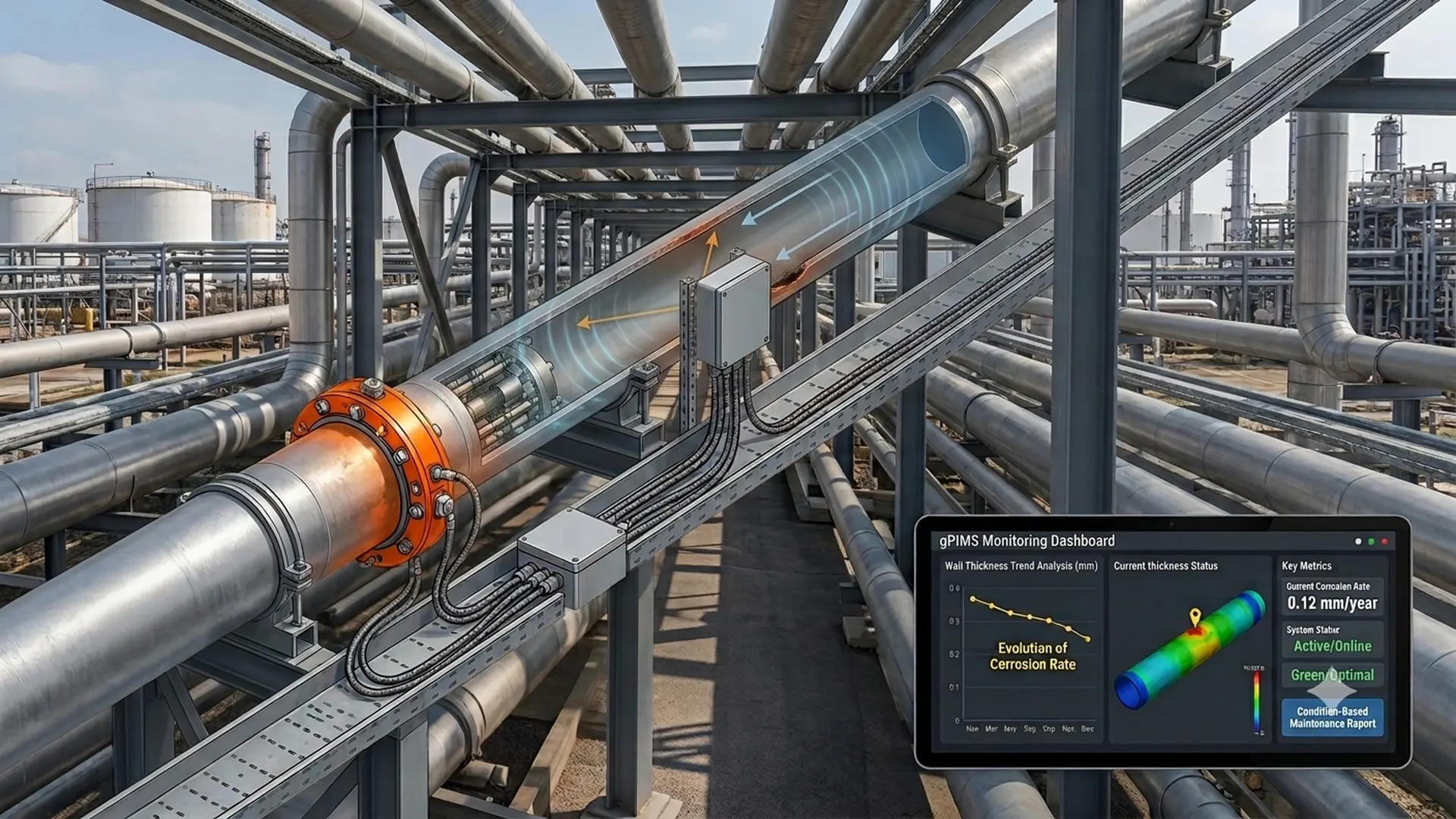
gPIMS sensors are redefining permanent pipeline integrity monitoring by providing continuous information on corrosion progression and in-service wall thickness loss. Their implementation addresses a recurring challenge in modern mechanical integrity management: degradation mechanisms evolve continuously, whereas conventional inspections only provide an assessment of the asset’s condition at a specific point in time. Between scheduled inspections, localized wall loss may progress undetected, particularly in pipelines operating under severe service conditions or located in hard-to-access areas. This limitation has driven the adoption of permanent monitoring systems that support condition-based maintenance strategies.
In this context, Guided Ultrasonics has developed gPIMS (Guided Permanent Integrity Monitoring System) sensors, a solution designed to continuously monitor wall thickness and detect changes associated with material loss in extensive pipeline sections using guided ultrasonic wave technology. Complementarily, the Monitoring Studio platform centralizes the acquired information, facilitates trend analysis, and allows evaluating the evolution of corrosion rates for predictive integrity management.
Uncovered corrosion spots between inspections
Traditional inspection programs based on conventional ultrasound, radiography, visual inspection, or periodic Guided Wave Testing (GWT) campaigns offer limited information to the specific moment they are executed. However, numerous degradation mechanisms present variable rates influenced by operational changes, fluid composition, temperature, water presence, CO₂, H₂S concentration, chlorides, microbiology, or alterations in the hydraulic regime.
As a consequence, phenomena can develop such as:
- Localized corrosion under insulation (CUI).
- Internal corrosion due to free water.
- Microbiologically influenced corrosion (MIC).
- Erosion-corrosion in elbows and tees.
- Accelerated attack due to process changes.
- Localized thickness loss in supports and clamps.
When the next scheduled inspection occurs months or even years later, the damage may have evolved to require costly repairs or cause operational failures.
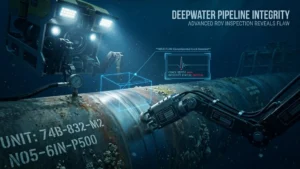
Hard-to-reach areas represent an additional risk. Elevated crossings, partially buried sections, lines on racks, subsea pipelines, encapsulated zones, or sections under insulation increase the difficulty of performing frequent inspections, generating “blind spots” within the integrity program.
Gpims sensors for permanent monitoring
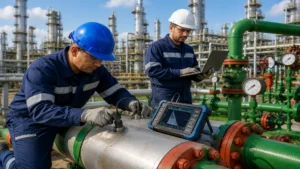
The gPIMS sensors were designed precisely to eliminate those windows without information. These are ultrasonic sensors permanently installed on the pipeline that perform repetitive measurements without the need to remove insulation, remount instrumentation, or interrupt the operation of the asset.
The system uses guided ultrasonic waves, capable of propagating over considerable distances using the pipeline’s own geometry as a propagation guide. This feature allows inspecting regions much larger than those covered by conventional point thickness sensors.
Once installed, the system executes periodic, fully repeatable acquisitions. Each acquisition is compared with the baseline obtained during installation, allowing the identification of modifications in the ultrasonic response associated with thickness loss or geometric changes produced by degradation mechanisms.
The repeatability of the measurements constitutes a fundamental advantage for detecting small cumulative variations before they reach critical dimensions. Instead of relying solely on discrete inspections, the operator has a continuous history of the asset’s behavior.
This approach transforms the traditional philosophy of periodic inspection towards a condition monitoring scheme (Condition Monitoring), where maintenance decisions are sustained by the real evolution of the deterioration.
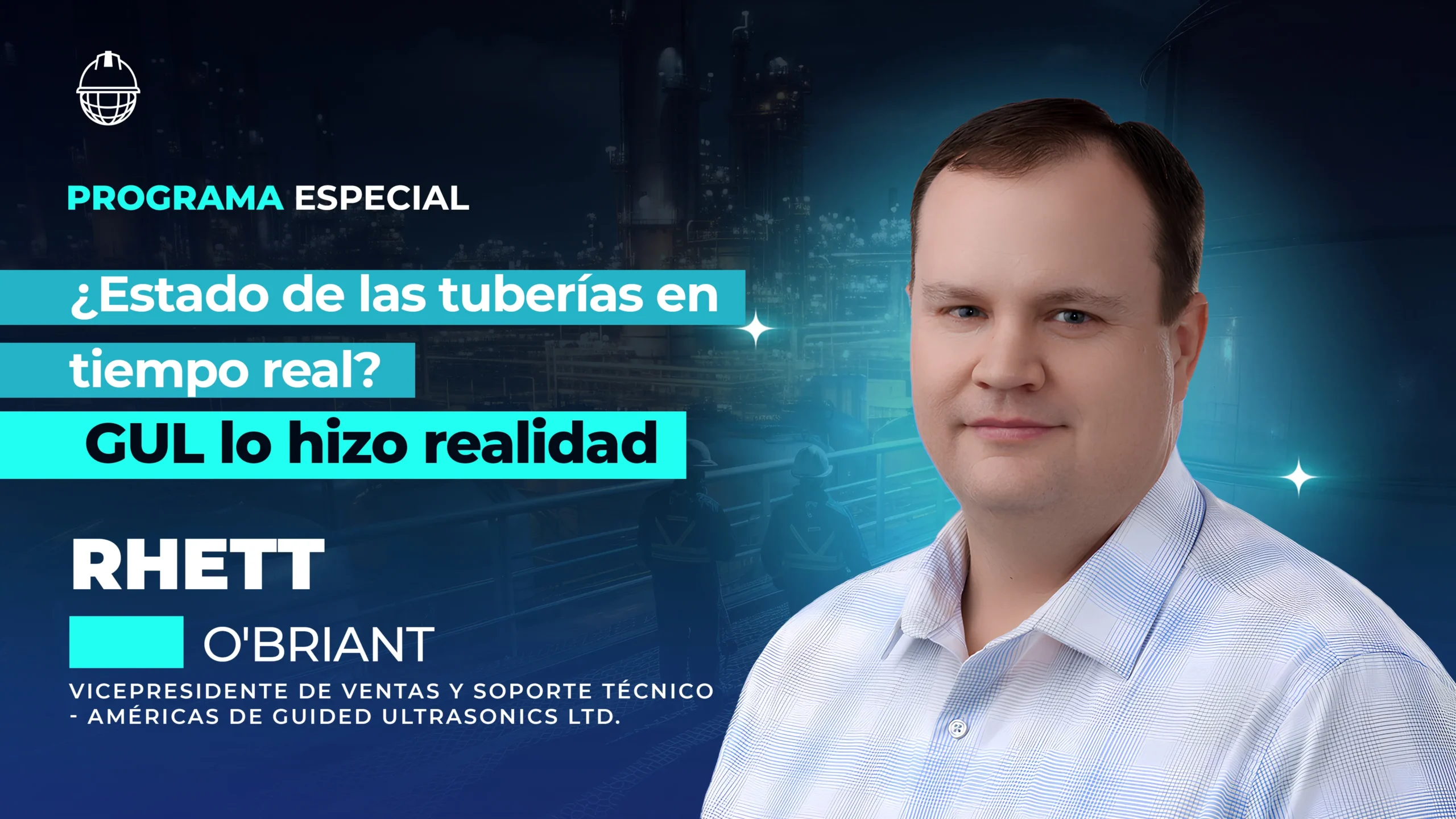
To complement the information presented on guided wave technology, one of the most consolidated Non-Destructive Testing (NDT) techniques for pipeline inspection, we invite you to watch the following video of Inspenet. In it, Rhett O’Briant, Vice President of Sales and Technical Support for the Americas at Guided Ultrasonics Ltd. (GUL), explains how the company has evolved this technology, used for more than two decades, towards permanent monitoring solutions that allow for a more proactive asset integrity management, based on real-time data and oriented towards condition-based maintenance.
Local thickness and guided wave monitoring
The technology used by gPIMS combines the advantages of permanent monitoring with the sensitivity of guided ultrasound to evaluate thickness changes in large areas.
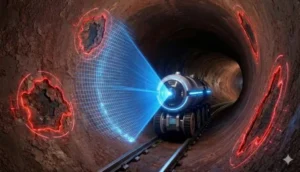
Guided waves propagate longitudinally through the pipeline wall interacting with geometric discontinuities such as thickness loss, localized corrosion, or metallic defects. Variations in amplitude, time of flight, and reflection characteristics allow identifying modifications regarding the initial state of the component.
Unlike conventional ultrasound, whose measurement corresponds only to the point where the transducer is placed, guided waves allow monitoring significantly longer lengths from a single installation location, optimizing coverage in assets where physical access is limited.
Among its main applications are:
- high-criticality process lines;
- pipelines under insulation;
- partially buried pipelines;
- road and railway crossings;
- elevated lines on racks;
- offshore installations;
- manifolds and production systems.
The continuous monitoring of wall thickness also facilitates the estimation of the corrosion rate, an essential parameter to calculate the remaining life, establish optimal inspection intervals, and update RBI (Risk-Based Inspection) analyses according to API RP 580 and API RP 581.
The availability of historical data also improves the calibration of predictive corrosion models, reducing uncertainties associated with assumed degradation rates.
Monitoring studio for trends and alerts
The information generated by a permanent system only acquires true value when it can be converted into easily interpretable integrity indicators. For this, Guided Ultrasonics integrates the gPIMS sensors with the Monitoring Studio platform.
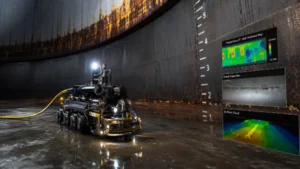
This solution concentrates all the information coming from the installed sensors, organizing the historical acquisitions and allowing the visualization of the temporal evolution of each monitored point.
Among its main features are:
- visualization of thickness loss trends;
- tracking of the corrosion rate;
- automatic comparison with the baseline;
- centralized management of multiple assets;
- configuration of condition thresholds;
- generation of alerts when significant changes are detected;
- support for data-driven decision making.
The platform makes it easier for integrity specialists to identify unexpected accelerations of the corrosive mechanism, verify the effectiveness of inhibitors, evaluate operational modifications, and prioritize interventions only where there is actual evidence of deterioration.
This approach reduces unnecessary inspections, optimizes resources, and improves the planning of predictive maintenance, especially in facilities with hundreds or thousands of kilometers of pipelines.
Likewise, the permanent availability of information strengthens asset management programs aligned with international standards such as ISO 55000, allowing the integration of monitoring results within corporate strategies of reliability and mechanical integrity.inuous of integrity.
For more information, Guided Ultrasonics Ltd. (GUL) presents the key features and benefits of the gPIMS® continuous monitoring system. This technology uses a guided ultrasonic wave (Guided Wave Testing, GWT) sensor permanently installed on the pipeline, enabling periodic integrity assessments without the need to reinstall the inspection system.
Conclusions
The evolution of integrity programs requires overcoming the limitations inherent in periodic inspections. Corrosion mechanisms can evolve between inspection campaigns, especially in hard-to-reach pipelines, increasing operational risk and uncertainty about the actual condition of the asset.
Guided Ultrasonics’ gPIMS sensors represent a technological solution oriented towards the permanent monitoring of wall thickness through guided ultrasonic waves, providing continuous information on the evolution of material loss in extensive pipeline areas. Complementarily, Monitoring Studio centralizes data, analyzes trends, and facilitates the tracking of corrosion rates through configurable indicators and thresholds.
The combination of both technologies allows migrating from reactive strategies towards predictive maintenance models and condition-based management, improving operational reliability, optimizing RBI programs, and strengthening decision-making based on continuous integrity data.
References
- Alleyne, D. N., & Cawley, P. (1992). The interaction of Lamb waves with defects. IEEE Transactions on Ultrasonics, Ferroelectrics, and Frequency Control, 39(3), 381-397. https://doi.org/10.1109/58.143171
- API. (2021). API Recommended Practice 580: Risk-Based Inspection (4th ed.). American Petroleum Institute.
- API. (2022). API Recommended Practice 581: Risk-Based Inspection Methodology (3rd ed.). American Petroleum Institute.
- Guided Ultrasonics Ltd. (s. f.). gPIMS – Guided Permanent Integrity Monitoring System. https://www.guided-ultrasonics.com/
- Guided Ultrasonics Ltd. (s. f.). Monitoring Studio. https://www.guided-ultrasonics.com/
- Rose, J. L. (2014). Ultrasonic Guided Waves in Solid Media. Cambridge University Press. https://doi.org/10.1017/CBO9781107273610
- World Federation of Engineering Organ