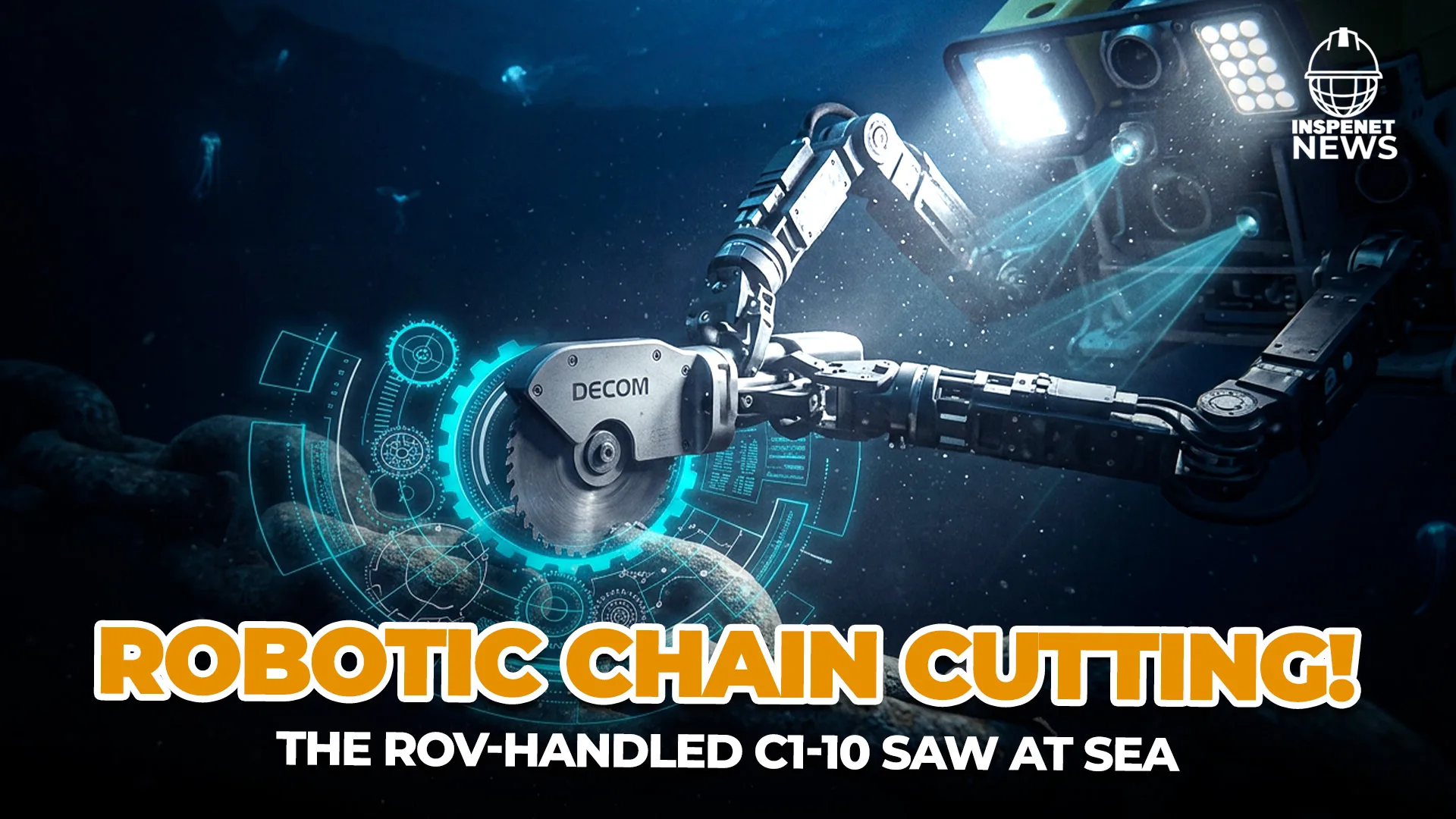
Decom Engineering adds nine mooring chain projects in 2026
Decom Engineering has been awarded nine mooring chain cutting projects so far in 2026. Two-thirds of these jobs are linked to offshore installation campaigns, an activity that is expanding the application range of the company's equipment.
Until now, underwater cutting was primarily associated with the later stages of the life cycle of marine installations. However, new projects are showing increased use of these systems during the installation and commissioning of floating assets.
Two-thirds of the projects correspond to offshore installations
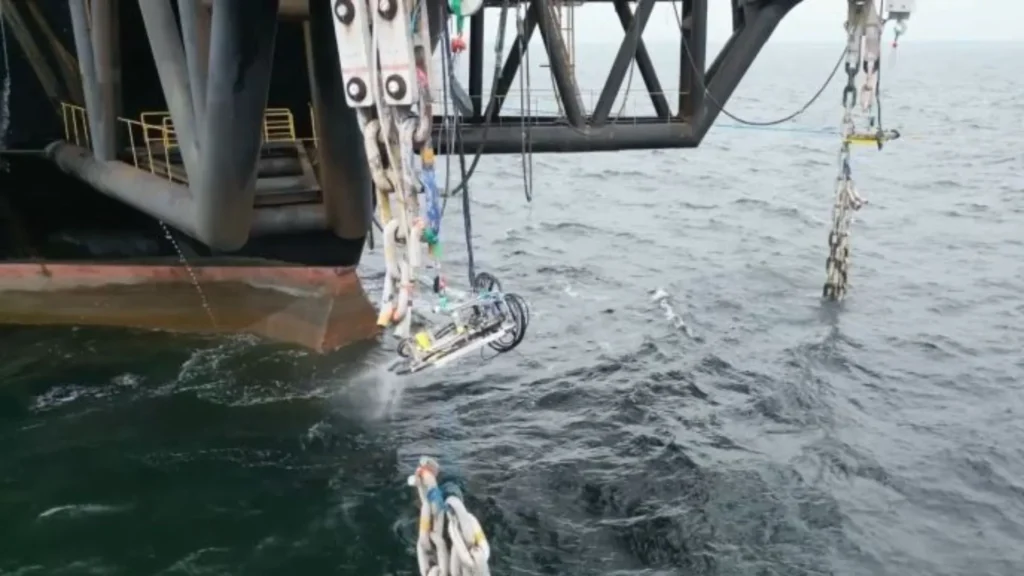
During the installation of a floating platform, the mooring lines must be laid and tensioned to secure the structure in its intended position. After this process is complete, a length of excess chain remains and must be removed.
C1-16UL and C1-10 cold cutting saws ; these machines allow for controlled cuts near new or existing infrastructure.
Of the nine projects obtained during 2026, six correspond to installation campaigns; this distribution reflects the greater importance that these jobs are acquiring within the company's operations.
Decom completes cuts under approximately 400 tons of tension
Furthermore, a recent campaign in West Africa allowed for testing the equipment's performance under heavy load conditions. Decom Engineering used the C1-16UL and C1-16HD units to perform four cuts in mooring chains.
400 tons of tension when the cuts were made. Each operation took about 11 minutes.
The result provides a reference on the system's ability to intervene during offshore operations where timing and cut control are especially important due to the proximity of other facilities.
Previously, the C1-16UL had been used during a campaign in Brazil in 2025. In that operation, the cuts were completed in less than 15 minutes.
C1-16UL and C1-10 cover different sizes of mooring chains
Furthermore, Decom Engineering has equipment designed for different chain diameters; this variety allows the underwater cutting to be adapted to the characteristics of each mooring system.
The C1-16UL works with chains from about 120 mm
The C1-16UL is the larger of the two models used in new projects. It is designed to work primarily with mooring chains approximately 120 mm in diameter or larger.
Its deployment in Brazil during 2025 preceded the international expansion that the team recorded during 2026.
The C1-10 expands operations using ROVs
Meanwhile, the C1-10 is intended for chains with diameters less than 120 mm. Decom Engineering launched this model in early 2026 to serve jobs that require smaller equipment.
One of its operational features is the ability to deploy and position it using the manipulator arm of a remotely operated vehicle (ROV). This allows the saw to operate without a conventional support structure and facilitates its use at greater depths.
Decom extends submarine cut-off to offshore facilities
In turn, the growth of installation projects implies a change in the time at which Decom Engineering participates in offshore operations.
Michael O'Neill, the company's business development director, explained that offshore cutting had traditionally been associated with the final phase of an asset's lifecycle. That trend is changing as their teams begin to intervene earlier, especially during installation and commissioning.
Thus, the technology used for dismantling work finds another application in the preparation of new floating assets. Cutting off excess chain becomes part of the necessary operations once the lines have been laid and tensioned.
This evolution also expands the possibilities of using the equipment within the offshore market, where the same type of technology can be involved in different stages of the infrastructure.
Decom's equipment fleet will grow before the end of 2026
Finally, Decom Engineering has C1-16UL equipment deployed or in the process of being mobilized in Brazil, Canada, the United States, the British North Sea and Cameroon.
The company expects to end 2026 with a fleet consisting of 10 C1-16UL units and four C1-10 systems. This expansion accompanies the increase in installation projects and the incorporation of subsea cutting into an earlier phase of operations.
Decom Engineering 's systems. With six contracts linked to offshore installations, mooring chains are becoming established as an application that goes beyond traditional decommissioning work.
News of additional interest
Africa seeks to breathe new life into its depleted wells
Africa is exploring the possibility of converting former oil and gas fields into permanent CO₂ storage facilities. The idea is to capture emissions from refineries, power plants, and other industries and transport them via pipelines or ships to geological formations capable of storing them underground. Some existing pipelines and plants could also be adapted to reduce costs and repurpose assets that would otherwise become obsolete.
South Africa is already analyzing deep salt formations and options for storing industrial emissions. Nigeria is moving forward with regulations to develop its carbon market, while Kenya is exploring another alternative: injecting CO₂ into basalt rock to convert it into stable minerals. Other terrestrial and marine deposits are also under evaluation in various parts of the continent.
Oil reignites the dispute over the Falkland Islands
Argentina has increased pressure on companies involved in oil development around the Falkland Islands as the first crude oil production in the area approaches. The government of Javier Milei released statements from Halliburton, SLB, and Baker Hughes in which the companies assert they are not involved in these projects. At the same time, Buenos Aires has tightened sanctions against firms operating there without Argentine authorization.
The offensive also targeted Argentine businessman Eduardo Elsztain, whose fund owns approximately 2% of FIH Group, the parent company of the Falkland Islands Company. Elsztain asserted that his investment aims to foster closer economic ties between Argentina and the islands. Meanwhile, the United Kingdom maintains its position on sovereignty over the territory and previously blocked an Argentine investor from acquiring control of the company.
ExxonMobil takes command of the Papua LNG project
ExxonMobil will take over operations at Papua LNG as the US$14 billion project nears its final investment decision. TotalEnergies will relinquish operational control to leverage the experience and infrastructure of the PNG LNG complex that ExxonMobil already operates in Papua New Guinea. Furthermore, a redesign and a new contract bidding process have reduced the estimated cost by nearly US$4 billion since 2024.
The reorganization will also change the project's ownership structure. ExxonMobil will retain a 34.1% stake, TotalEnergies will reduce its share to 20%, and Santos will hold 21%. Papua LNG plans to produce 5.6 million tons of LNG annually using gas from the Elk and Antelope fields. The partners also reached an agreement with state entities to market 2.4 million tons annually to support financing.
Ventura adds a ship and wins a contract with Petronas
Ventura Offshore has expanded its managed fleet by adding the Deep Value Driller, a seventh-generation drillship owned by Eldorado Drilling. The Brazilian company will be responsible for the vessel's commercial services and operational management. This agreement strengthens its capacity to manage equipment for deepwater oil and gas operations.
The company also secured a contract with Petronas E&P Bobara to drill a well off the coast of Indonesia. The agreement is valued at approximately US$58 million, a figure that includes additional services. Ventura already has active rigs in Brazil and Indonesia, and this new campaign strengthens its presence in Southeast Asia.