The U.S. Department of Energy (DOE) has selected four projects to receive $73 million through its Mine of the Future initiative, with an objective beyond funding research: to create facilities where mining technology can be tested under real-world conditions before reaching commercial operation.
The program seeks to accelerate commercialization, modernize U.S. extractive capabilities, and strengthen national critical mineral supply chains.
The decision addresses one of the less visible problems in mining innovation. A technology may work in the lab and demonstrate results in a prototype, but still be far from operating reliably within a mine.
Dust, vibrations, humidity, geological variations, poor communications, interaction with heavy machinery, and safety requirements turn the step from the lab to the working face into a considerable engineering challenge.
The mine becomes a testbed
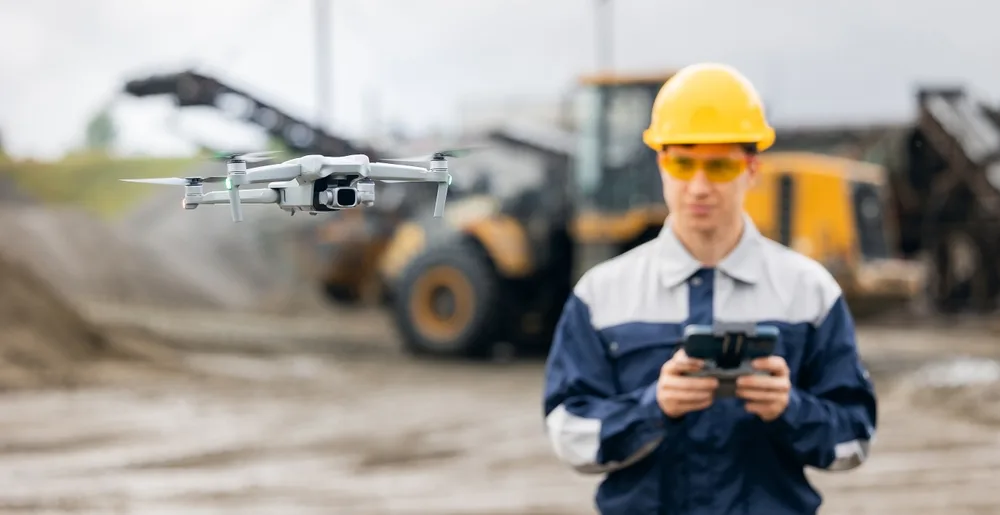
One of the projects, led by Innovative Wireless Technologies, will combine underground and surface environments to validate digital mining technology, connectivity, and automation under real conditions.
The goal is to verify how these systems respond when they cease to operate within a controlled environment and must coexist with the physical conditions of a mining operation.
The University of Arizona will develop an underground testbed in Sahuarita focused on advanced mining, electrification, and energy management. This combination is particularly significant because the electrification of mining equipment is not merely about replacing a diesel engine with an electric one.
It changes the needs for power distribution, storage, ventilation, load control, and energy management within the operation.
In Missouri, the University of Missouri will develop a multifunctional field combining underground testing with advanced comminution research, a fundamental stage for reducing mineral size before subsequent processing phases.
From lab to mining technology
The concept of a synthetic mine environment contains one of the most interesting elements of the initiative. Instead of waiting for a new tool to arrive directly at a commercial mine to discover its limitations, the instrumented environment will allow for repeatable tests on tools, processes, and automation systems.
From an engineering perspective, this has considerable value. Industrial innovation requires successive cycles of testing, measurement, modification, and retesting. The more costly or dangerous it is to perform that cycle in a commercial facility, the slower the maturation of mining technology will be.
The U.S. strategy involves creating specific infrastructure to reduce this risk. The DOE itself points out that these centers will enable progress from concepts developed in the laboratory to field-scale testing and demonstrations, a necessary stage to reduce the risk of commercial adoption.
Technology to secure critical minerals
The initiative takes on an additional dimension when considering the type of materials the United States is trying to secure. Critical minerals are essential components of multiple industrial chains related to energy, manufacturing, electronics, and advanced technologies.
Therefore, increasing the availability of geological resources is not enough if the country lacks the technological capacity to extract, process, and convert them into usable materials.
The DOE is already developing other programs aimed at covering different stages of this chain. In May 2026, it announced $45.7 million for 19 projects aimed at closing technological gaps in the national supply of critical materials, while in July it allocated another $75 million to five projects for recovering rare earths and other critical materials from coal and its derivatives.
SOURCE: https://www.energy.gov/