Table of Contents
- Why are circumferential cracks critical offshore?
- The biggest challenges in subsea pipeline inspection
- Advanced technologies for subsea crack detection
- Case study: Oceaneering and robotic subsea inspection
- Case study: ROSEN and crack detection in offshore pipelines
- Fatigue, stress and crack growth in offshore pipelines
- Practical solutions for detecting circumferential cracks offshore
- How operators are improving subsea integrity strategies
- The future of offshore pipeline integrity
- Conclusions
- References
- Frequently Asked Questions (FAQs)
- What causes circumferential cracks in subsea pipelines?
- How often should subsea pipelines be inspected for crack detection?
- Can cracks in subsea pipelines be repaired without shutting down production?
- What is the difference between corrosion detection and crack detection?
- Why are unpiggable subsea pipelines more difficult to inspect?
Failures in subsea pipelines rarely begin with catastrophic events. In many offshore systems, the first warning sign may be a small circumferential crack growing silently beneath insulation, marine deposits, or complex weld geometries thousands of feet below the surface. Detecting these defects before they evolve into critical failures has become one of the greatest challenges in modern subsea pipeline inspection.
Operators today face increasing pressure to maintain offshore pipeline integrity while extending asset life, reducing downtime, and operating under extreme environmental and logistical constraints. Deepwater conditions, limited inspection access, unpiggable pipeline segments, and the high cost of offshore intervention continue to complicate accurate crack detection across subsea infrastructure.
As offshore assets age, conventional inspection approaches are no longer sufficient for many critical applications. This reality is accelerating the adoption of advanced subsea inspection technologies, including robotic inspection systems, phased array ultrasonics, EMAT solutions, and digitally integrated monitoring strategies designed to improve reliability in some of the industry’s most demanding environments.
Why are circumferential cracks critical offshore?
Circumferential cracks are defects that propagate around the circumference of a pipeline rather than along its longitudinal axis. These flaws commonly develop near girth welds, heat-affected zones, or areas subjected to repeated cyclic loading. In offshore environments, their orientation and growth behavior can significantly reduce structural resistance, particularly in subsea pipelines exposed to vibration, pressure fluctuations, and dynamic seabed interaction.
Unlike generalized corrosion or isolated mechanical damage, circumferential cracking in pipelines represents a far more complex integrity threat in offshore operations. These defects are strongly associated with cyclic stresses, long-term operational fatigue, and welded sections exposed to continuous mechanical loading. In subsea systems, where pipelines operate under hydrodynamic forces, thermal expansion, and fluctuating internal pressure, even small discontinuities can progressively evolve into structurally significant cracks.
One of the greatest concerns is that many offshore cracks remain undetected during the early stages of growth. As pipeline fatigue cracking advances, structural resistance around welded joints may gradually decrease, compromising the pipeline’s ability to withstand operational loads. This becomes particularly critical in deepwater assets, risers, and dynamically stressed flowlines where inspection access is limited, and offshore intervention costs are extremely high.
An offshore pipeline failure caused by crack propagation may lead not only to production shutdowns and costly repairs, but also to environmental exposure, regulatory consequences, and major reputational risks for operators. For this reason, accurate crack detection and continuous integrity assessment have become essential priorities in modern offshore asset management.
The biggest challenges in subsea pipeline inspection
Modern subsea pipeline inspection operations are performed in some of the most demanding environments in the energy industry. Unlike onshore assets, subsea systems combine structural complexity, limited accessibility, harsh environmental exposure, and extreme operational conditions that significantly increase inspection difficulty. As offshore infrastructure continues to age, operators are under growing pressure to improve inspection reliability while minimizing production interruptions and offshore intervention costs.
One of the primary subsea inspection challenges is the inability to directly access critical pipeline areas where cracking, fatigue damage, or corrosion may initiate. In many offshore systems, inspection activities must be executed remotely through ROVs, specialized sensors, or inline inspection technologies operating under strict environmental and operational constraints. This becomes even more difficult in deepwater assets where hydrostatic pressure, low visibility, and dynamic subsea conditions can reduce inspection efficiency and data quality.
In addition, not all pipelines are designed to accommodate conventional pigging operations. Complex geometries, risers, diameter transitions, and aging infrastructure often limit the deployment of traditional inline inspection tools, forcing operators to adopt alternative subsea crack inspection strategies. These challenges are driving the industry toward more advanced robotic systems, digital monitoring technologies, and risk-based integrity programs capable of improving defect detection in increasingly complex offshore environments.
Deepwater operational constraints
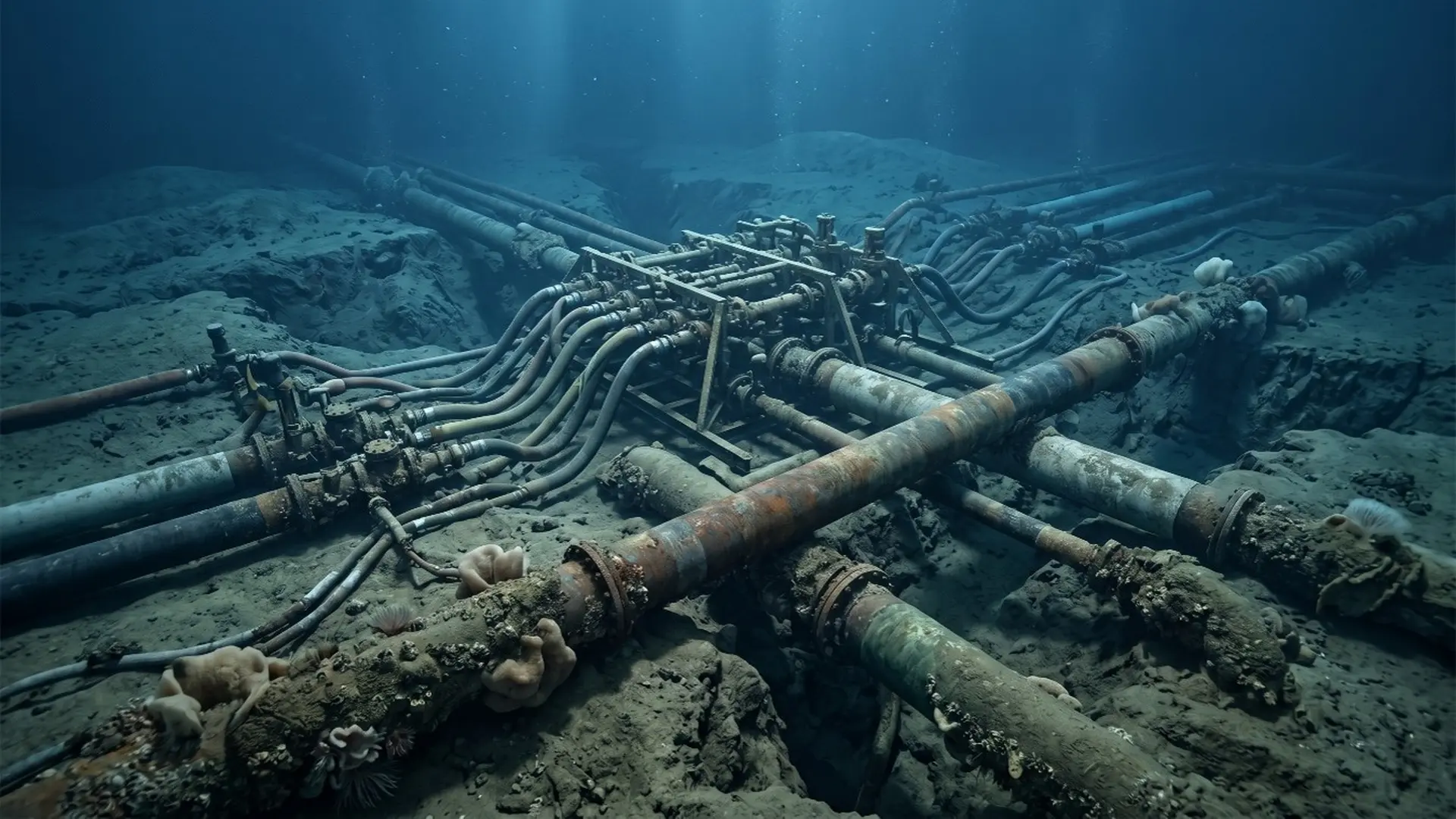
Deepwater pipeline inspection involves severe operational limitations that directly affect inspection planning and execution. Hydrostatic pressure, strong marine currents, low temperatures, and limited visibility create highly demanding conditions for subsea intervention. In many offshore projects, inspection campaigns must also be completed within narrow operational weather windows to reduce vessel exposure and production disruptions. These constraints significantly increase offshore logistics complexity and overall inspection costs. As water depth increases, even minor inspection delays can translate into substantial financial impact due to vessel rates, specialized equipment requirements, and limited access to critical subsea assets.
Inspection access limitations
Accessing critical inspection areas in subsea pipelines is often far more difficult than detecting the defect itself. Protective coating systems, thermal insulation layers, marine growth accumulation, and buried pipeline sections can obstruct direct evaluation of welds and external surfaces. Complex subsea geometries, connectors, clamps, and pipeline crossings also reduce accessibility for inspection tools and robotic systems. In many offshore assets, limited physical access restricts the use of conventional NDT methods and complicates accurate crack characterization. These limitations force operators to rely on advanced subsea inspection technologies capable of operating remotely while maintaining reliable defect detection performance.
Unpiggable subsea pipelines
Unpiggable pipelines remain one of the most difficult integrity management challenges in offshore operations. Many subsea systems were not originally designed for inline inspection, while others have gradually become unsuitable for pigging due to aging infrastructure or operational modifications. Short-radius bends, diameter changes, subsea manifolds, flow restrictions, and complex riser configurations frequently prevent conventional inspection tools from traveling through the pipeline.
This creates major difficulties for subsea crack inspection programs, particularly when operators need to evaluate girth weld integrity or fatigue-related damage. As offshore assets continue operating beyond their original design life, the number of unpiggable pipelines requiring alternative inspection solutions continues to increase. This has accelerated the adoption of robotic crawlers, externally deployed ultrasonic systems, and ROV-assisted inspection technologies for complex subsea integrity assessments.
Advanced technologies for subsea crack detection
As offshore assets move into deeper waters and extended operational lifecycles, conventional inspection methods are no longer sufficient to manage the growing complexity of subsea integrity threats. Detecting circumferential cracks in subsea pipelines now requires a combination of high-resolution sensing technologies, advanced data analysis, robotic deployment systems, and digitally integrated inspection strategies capable of operating under extreme environmental constraints.
Modern subsea NDT programs are increasingly focused on improving crack detection sensitivity while reducing uncertainty in defect characterization. Operators are prioritizing technologies capable of identifying early-stage fatigue cracking, evaluating girth weld integrity, and monitoring structural degradation in areas with limited accessibility. This evolution has accelerated the adoption of advanced pipeline inspection tools designed specifically for offshore crack detection in deepwater and high-consequence assets.
Unlike traditional inspection approaches that mainly targeted corrosion or wall loss, today’s subsea monitoring technologies are engineered to evaluate crack orientation, depth, propagation behavior, and structural impact with greater accuracy. Automated ultrasonic systems, EMAT platforms, phased array technologies, and robotic inspection tools are now central components of offshore integrity programs. These systems also generate significantly larger volumes of inspection data, increasing the importance of digital analytics, machine-assisted interpretation, and predictive integrity modeling.
In many offshore operations, the objective is no longer limited to identifying existing damage. Operators increasingly seek technologies capable of supporting condition-based monitoring, risk prioritization, and long-term integrity forecasting across subsea infrastructure networks. This shift is transforming subsea inspection from a reactive maintenance activity into a strategic integrity management function and a critical component of modern pipeline integrity management programs.
Ultrasonic crack inspection
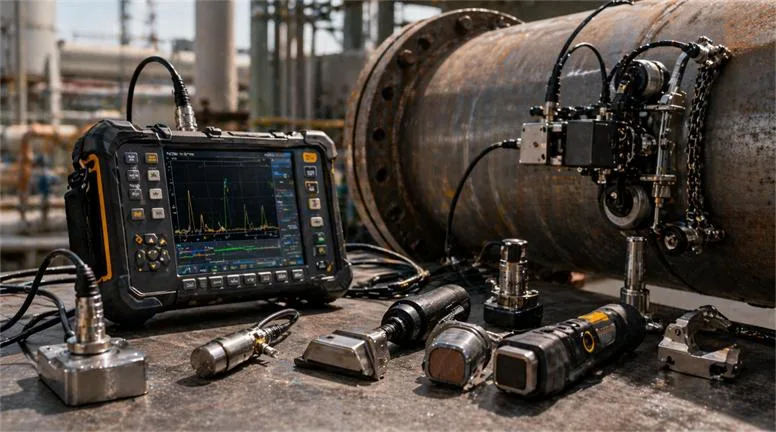
Ultrasonic inspection remains one of the most effective methods for detecting and sizing cracks in offshore pipelines. Advanced shear wave UT techniques are widely used to evaluate circumferential defects located in girth welds and heat-affected zones where fatigue-related damage commonly develops. These systems improve probability of detection by generating detailed reflections from crack tips and discontinuities that may not be visible through conventional inspection methods. In subsea applications, accurate crack sizing is critical for determining structural severity, remaining life assessment, and repair prioritization. Ultrasonic technologies are also highly adaptable to automated and robotic inspection platforms used in offshore environments.
EMAT and phased array systems
EMAT and phased array technologies have significantly improved offshore crack detection capabilities compared to traditional inspection methods. EMAT systems can generate ultrasonic waves without direct couplant contact, making them particularly useful in challenging subsea conditions where surface preparation and accessibility are limited.
Phased array systems provide enhanced defect characterization through multi-angle beam steering and high-resolution imaging capabilities. These technologies also support automated scanning and real-time data acquisition, reducing inspection uncertainty in complex offshore assets. Their ability to improve crack detection sensitivity and evaluate defect orientation has made them increasingly important in advanced subsea integrity programs.
ROV and robotic inspection tools
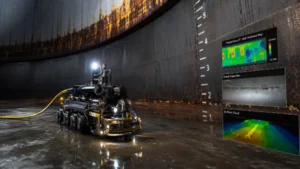
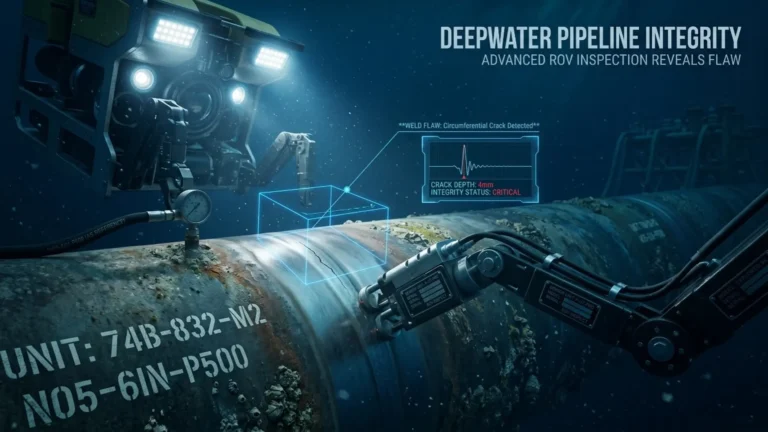
The growth of robotic subsea inspection technologies is rapidly transforming offshore integrity operations. ROV pipeline inspection systems now allow operators to perform detailed inspections in deepwater environments without exposing divers to hazardous subsea conditions. Modern robotic platforms integrate ultrasonic sensors, laser scanning, imaging systems, and digital analytics into remotely operated or semi-autonomous inspection ecosystems capable of accessing difficult pipeline geometries.
These technologies are particularly valuable for unpiggable pipelines, risers, and subsea structures where conventional inline inspection is not feasible. In addition to reducing operational risk, robotic systems improve inspection repeatability, increase data collection efficiency, and support long-term digital integrity strategies through continuous subsea monitoring and automated defect assessment capabilities.
Case study: Oceaneering and robotic subsea inspection
The offshore industry is rapidly moving toward remote and intelligent inspection strategies capable of operating in environments where conventional intervention methods are increasingly inefficient, costly, or unsafe. One example of this transition can be observed in the evolution of robotic subsea inspection systems developed for deepwater offshore operations by companies such as Oceaneering.
Recent offshore developments have demonstrated how offshore ROV inspection technologies are reducing operational exposure while improving access to complex subsea assets. Oceaneering recently reported the successful execution of an onshore-piloted remote ROV operation in Brazil, allowing subsea robotic activities to be controlled remotely from a land-based operations center rather than directly offshore. This approach reflects a broader industry shift toward digital inspection ecosystems designed to minimize personnel exposure in high-risk offshore environments.
The company has also introduced new electric propulsion ROV systems intended for extended subsea residency and reduced maintenance requirements in deepwater operations. These technologies support subsea asset integrity programs by enabling longer inspection campaigns, improved operational efficiency, and greater inspection repeatability in difficult subsea conditions.
As offshore infrastructure becomes more complex and aging subsea assets require more frequent evaluation, robotic subsea inspection systems are increasingly becoming essential tools for advanced integrity management in deepwater environments and for maintaining the reliability of critical offshore assets.
Case study: ROSEN and crack detection in offshore pipelines
As offshore infrastructure ages and production systems expand into deeper and more complex environments, operators are facing increasing challenges related to offshore crack detection in risers, flowlines, and subsea pipelines that cannot be inspected using conventional pigging methods. Companies such as ROSEN Group have developed specialized inspection technologies focused on managing these high-risk integrity scenarios through advanced diagnostic and subsea assessment capabilities.
Offshore assets frequently operate under severe mechanical loading, cyclic pressure fluctuations, thermal stresses, and corrosive marine environments, all of which can contribute to fatigue cracking and crack propagation over time. The complexity increases significantly in unpiggable systems containing short-radius bends, diameter restrictions, subsea tie-ins, or geometries associated with offshore risers and aging flowlines. In these environments, conventional inline inspection tools often become operationally impractical.
To address these limitations, ROSEN has expanded its offshore inspection portfolio with specialized technologies designed for complex subsea integrity applications, including advanced solutions for circumferential crack inspection and integrity assessment in challenging offshore configurations. ROSEN Offshore Solutions
The growing adoption of these advanced inspection methodologies reflects a broader industry shift toward data-driven pipeline integrity management strategies capable of improving offshore reliability while reducing operational uncertainty. As subsea assets continue aging beyond their original design life, advanced crack detection technologies are becoming essential for maintaining safe and reliable offshore operations in increasingly demanding environments. ROSEN Technology and Innovation.
The following video from ROSEN illustrates how advanced ultrasonic inspection technologies are applied to offshore risers and subsea pipelines operating under challenging offshore conditions. The example provides additional context on crack detection methodologies and integrity assessment practices used in complex subsea environments.
Source: ROSEN Group Official YouTube Channel. Video embedded for educational, informational, and technical reference purposes. All rights belong to the original content owner.
Fatigue, stress and crack growth in offshore pipelines
Offshore pipelines operate under continuous mechanical and environmental loading conditions that can gradually weaken structural resistance over time. Unlike static onshore systems, subsea pipelines are constantly exposed to cyclic pressure fluctuations, vibration, thermal expansion, hydrodynamic forces, and seabed interaction. These operational stresses play a major role in offshore pipeline fatigue and significantly increase the probability of crack initiation and propagation in critical areas such as girth welds, risers, and welded connections.
One of the greatest integrity concerns is that very small defects can evolve into structurally significant cracks after years of repetitive loading cycles. In many offshore systems, crack growth offshore occurs progressively as cyclic stresses repeatedly concentrate around microscopic discontinuities or weld imperfections. Over time, these cracks may expand deeper into the pipe wall, reducing structural capacity and increasing failure risk under normal operating conditions.
Subsea structural integrity becomes particularly vulnerable in deepwater environments where dynamic movement, pressure variations, and operational complexity intensify fatigue exposure. Because crack propagation may remain undetected during early stages, operators increasingly rely on advanced monitoring technologies, fatigue assessment models, and high-resolution inspection systems to reduce uncertainty and prevent catastrophic offshore failures before they occur.
Practical solutions for detecting circumferential cracks offshore
As offshore pipelines continue operating in deeper waters and under increasingly demanding conditions, operators are adopting more practical and integrated approaches to improve circumferential crack detection. Modern integrity programs no longer rely on a single inspection method. Instead, they combine robotic deployment systems, advanced non-destructive testing technologies, and continuous monitoring strategies to improve defect detection while minimizing operational disruption. These solutions are particularly valuable in offshore environments where accessibility is limited, intervention costs are high, and undetected fatigue-related damage can compromise long-term asset reliability.
Combining robotic inspection and advanced NDT
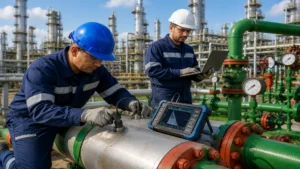
One of the most effective approaches for detecting circumferential cracks offshore is the integration of robotic inspection platforms with advanced NDT technologies. Work-class ROVs equipped with ultrasonic testing (UT) sensors can perform detailed inspections of girth welds, risers, and subsea structures without requiring diver intervention. When combined with Phased Array Ultrasonic Testing (PAUT), operators gain the ability to characterize crack depth, orientation, and geometry with significantly greater precision than conventional ultrasonic methods.
EMAT technology further expands inspection capabilities by generating ultrasonic waves without requiring direct couplant contact, making it particularly valuable in subsea environments where surface preparation is difficult or impractical. Together, ROV-deployed UT, PAUT, and EMAT systems provide access to critical inspection areas while reducing vessel time, lowering inspection costs, and minimizing human exposure to hazardous offshore conditions. This integrated approach has become a key component of modern offshore crack detection programs.
Managing integrity in unpiggable pipelines
Unpiggable pipelines represent one of the most complex integrity challenges in offshore operations. Short-radius bends, diameter transitions, subsea tie-ins, risers, and aging infrastructure frequently prevent the use of conventional inline inspection tools, limiting the operator’s ability to assess structural condition through traditional pigging methods.
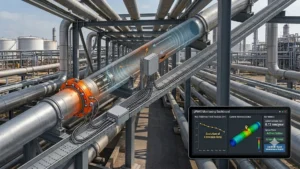
To overcome these limitations, the industry increasingly relies on robotic crawlers, externally deployed inspection systems, and ROV-assisted inspection technologies capable of evaluating pipeline condition from outside the pipe wall. Advanced crawler systems equipped with ultrasonic sensors can inspect selected sections of subsea pipelines, while externally mounted inspection tools provide valuable information on weld integrity, crack development, and localized degradation mechanisms. These solutions allow operators to maintain effective integrity management programs even in complex subsea assets where conventional inspection methods are not feasible.
Continuous monitoring for early crack detection
Detecting a crack before it reaches a critical size is one of the most effective ways to reduce integrity risk in offshore operations. For this reason, operators are increasingly implementing continuous monitoring strategies based on sensors, digital monitoring platforms, and predictive analytics technologies.
Modern monitoring systems can collect large volumes of operational and structural data, including pressure variations, vibration levels, temperature changes, and loading conditions that may contribute to fatigue-related damage. Through advanced digital monitoring platforms, this information can be analyzed in near real time to identify abnormal trends and potential indicators of crack initiation.
The integration of predictive analytics further enhances decision-making by identifying degradation patterns before they become visible during periodic inspections. As offshore infrastructure continues to age, continuous monitoring is becoming a critical layer of protection that supports proactive maintenance, improves reliability, and strengthens long-term pipeline integrity management programs.
How operators are improving subsea integrity strategies
As offshore infrastructure becomes older and operational conditions more demanding, operators are shifting from reactive inspection approaches toward integrated integrity management strategies focused on risk reduction, continuous monitoring, and predictive decision-making. Modern subsea integrity programs increasingly combine advanced inspection technologies, digital analytics, and data-driven maintenance models to improve reliability across complex offshore assets. These integrated approaches are becoming fundamental elements of effective pipeline integrity management strategies throughout the offshore sector.
This evolution is largely driven by the growing need to manage aging pipelines, unpiggable systems, deepwater assets, and fatigue-sensitive infrastructure operating under severe environmental and mechanical stresses. Instead of relying exclusively on periodic inspections, operators are now implementing dynamic integrity frameworks capable of prioritizing risk, monitoring degradation trends, and improving early defect detection across subsea networks.
Risk based inspection
Risk-Based Inspection (RBI) methodologies are becoming essential tools for offshore integrity management. These approaches prioritize inspection activities based on Probability of Failure (PoF) and Consequence of Failure (CoF) evaluations rather than fixed inspection intervals alone.
By identifying high-risk pipeline segments, operators can optimize inspection frequency, allocate resources more efficiently, and focus integrity efforts on areas with the greatest operational criticality. RBI strategies are particularly valuable in offshore environments where inspection campaigns are expensive, logistically complex, and operationally constrained.
Digital integrity monitoring
Digital integrity monitoring systems are transforming how operators evaluate subsea pipeline condition in real time. Modern offshore assets increasingly incorporate sensors, automated monitoring platforms, analytics software, and digital twin technologies capable of continuously assessing structural performance and operational behavior.
These systems allow operators to detect abnormal conditions earlier, monitor degradation trends, and improve inspection planning through centralized integrity data analysis. The integration of digital monitoring technologies also supports faster decision-making and greater visibility across complex offshore pipeline networks, enabling operators to respond more effectively to evolving integrity threats.
Predictive maintenance offshore
The offshore industry is increasingly adopting AI-driven predictive maintenance offshore strategies to reduce integrity uncertainty and improve long-term asset reliability. Advanced predictive analytics platforms can process large volumes of inspection, operational, and monitoring data to identify patterns associated with fatigue damage, corrosion growth, and structural degradation. This proactive approach allows operators to intervene before defects evolve into critical failures, reducing downtime and unplanned offshore repairs. As digital pipeline integrity technologies continue evolving, predictive maintenance models are becoming central components of modern subsea asset management strategies focused on reliability, safety, and operational continuity.
The future of offshore pipeline integrity
The future of offshore pipeline integrity is moving rapidly toward fully connected, intelligent, and increasingly autonomous inspection ecosystems supported by advanced digital monitoring technologies capable of providing continuous visibility into subsea asset condition. As offshore infrastructure becomes more complex and aging assets continue operating beyond their original design life, the industry is accelerating the adoption of automation, AI-driven analytics, robotic inspection platforms, and continuous digital monitoring technologies capable of reducing operational uncertainty in subsea environments.
Traditional inspection models based solely on periodic intervention are gradually being replaced by integrated integrity frameworks that combine advanced sensing systems, predictive analytics, machine learning, and autonomous subsea inspection capabilities. This evolution is redefining how pipeline inspection programs are planned and executed across offshore environments.
The evolution of intelligent offshore inspection is also reshaping how operators manage risk in deepwater and hard-to-access assets. Autonomous robotic systems, digital twins, and AI-assisted diagnostics are expected to play a growing role in subsea structural assessment, fatigue monitoring, and integrity forecasting.
As the industry continues transitioning toward smarter and more data-driven operations, advanced inspection technologies will become essential for maintaining safe, reliable, and economically sustainable offshore infrastructure.
Conclusions
Maintaining offshore pipeline integrity has become one of the most technically demanding challenges in the modern energy industry. Achieving long-term asset integrity now requires a combination of advanced inspection technologies, digital monitoring systems, and predictive decision-making frameworks. Aging infrastructure, deepwater operations, harsh subsea environments, and increasingly complex production systems continue to push conventional inspection approaches beyond their operational limits. In this context, early crack detection is no longer simply a maintenance objective but a critical component of operational reliability, environmental protection, and long-term asset sustainability.
Throughout the offshore sector, operators are increasingly recognizing that circumferential cracking, fatigue damage, and structural degradation cannot be managed effectively through isolated inspection campaigns alone. The industry is evolving toward integrated integrity strategies that combine advanced subsea NDT technologies, robotic inspection systems, digital monitoring platforms, and predictive analytics capable of improving visibility across complex offshore assets.
The growing adoption of robotic subsea inspection, automated ultrasonic systems, AI-assisted diagnostics, and digital integrity frameworks reflects a broader technological transformation across offshore operations. These innovations are not only improving inspection accuracy and reducing operational risk, but also enabling more proactive and intelligent decision-making in environments where uncertainty has historically represented one of the industry’s greatest integrity challenges.
As offshore infrastructure continues evolving into deeper and more demanding environments, the integration of advanced inspection technologies with digital integrity management will play a decisive role in the future of subsea reliability and offshore asset performance.
References
- Amaechi, C. V., Redouane, F., Hussein, M., Khan, F., & Hamid, M. D. (2022). Review on subsea pipeline integrity management. Energies, 15(24), 9446. https://doi.org/10.3390/en15249446
- DNV. (2021). Subsea integrity management report. DNV. https://www.havtil.no/contentassets/5ba859711d314f3d8ed65b353ecc5ec7/dnv-report-no.-2021.pdf
- DNV. (2021). DNV-ST-F101: Submarine pipeline systems. DNV. https://www.dnv.com/energy/standards-guidelines/dnv-st-f101-submarine-pipeline-systems
- Oceaneering International, Inc. (n.d.). Subsea inspection: From splash zone to ultra-deepwater. Oceaneering. https://www.oceaneering.com/asset-integrity-management/inspection/subsea-inspection
- ROSEN Group. (n.d.). Offshore asset solutions: Performance to the extreme. ROSEN Group. https://www.rosen-group.com/en/business-fields/offshore
Frequently Asked Questions (FAQs)
What causes circumferential cracks in subsea pipelines?
Circumferential cracks in subsea pipelines are commonly associated with cyclic loading, girth weld defects, fatigue, pressure fluctuations, thermal expansion, seabed movement, and long-term accumulated mechanical stresses. These cracks typically develop around welded areas where stress concentration is higher and may progressively propagate if they are not detected during their early stages.
How often should subsea pipelines be inspected for crack detection?
Inspection frequency depends on the level of risk, pipeline age, operating conditions, potential consequences of failure, inspection history, and applicable regulatory requirements. In practice, operators usually establish inspection intervals through Risk-Based Inspection (RBI) methodologies, integrity management programs, and fatigue assessment studies rather than applying a fixed inspection schedule to all subsea pipelines.
Can cracks in subsea pipelines be repaired without shutting down production?
In some cases, temporary or permanent repairs can be implemented without a complete production shutdown, depending on crack severity, location, operating pressure, repair methodology, and safety requirements. However, critical cracks affecting structural integrity typically require a detailed engineering assessment before determining whether continued operation, pressure reduction, or immediate intervention is acceptable.
What is the difference between corrosion detection and crack detection?
Corrosion detection primarily focuses on identifying wall loss, metal thinning, and material degradation. Crack detection, on the other hand, focuses on locating linear discontinuities that may propagate under stress or fatigue conditions. In subsea pipelines, both threats are significant, but cracks are often more difficult to detect because their orientation, depth, and propagation behavior require more specialized inspection technologies.
Why are unpiggable subsea pipelines more difficult to inspect?
Unpiggable subsea pipelines cannot be easily inspected using conventional inline inspection tools due to the presence of tight bends, diameter changes, flow restrictions, valves, risers, manifolds, or complex subsea configurations. This forces operators to rely on alternative solutions such as external inspection methods, robotic crawlers, ROV-assisted inspections, advanced ultrasonic systems, and targeted integrity assessments.