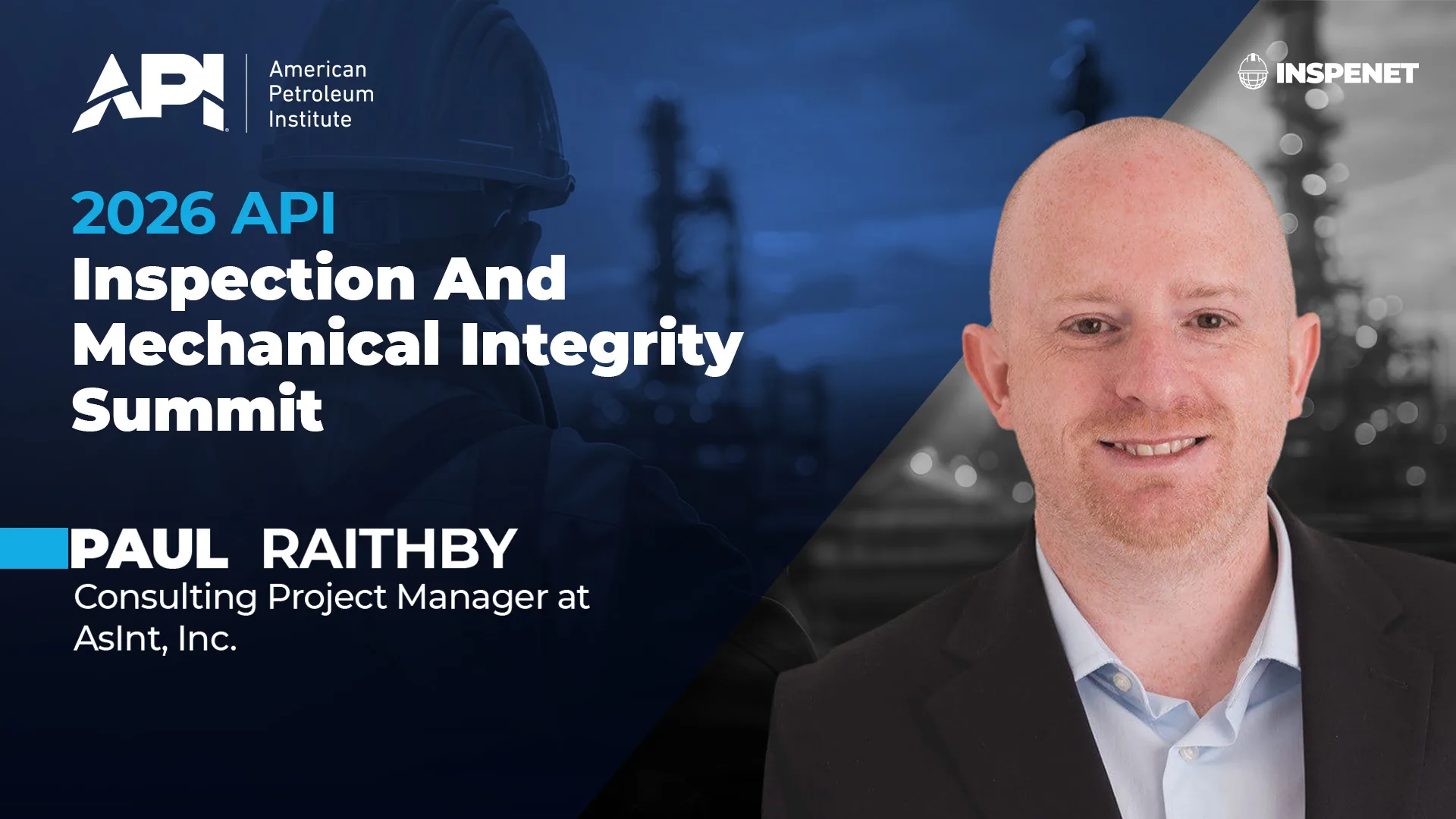
AsInt adapts the user experience to the engineer’s needs
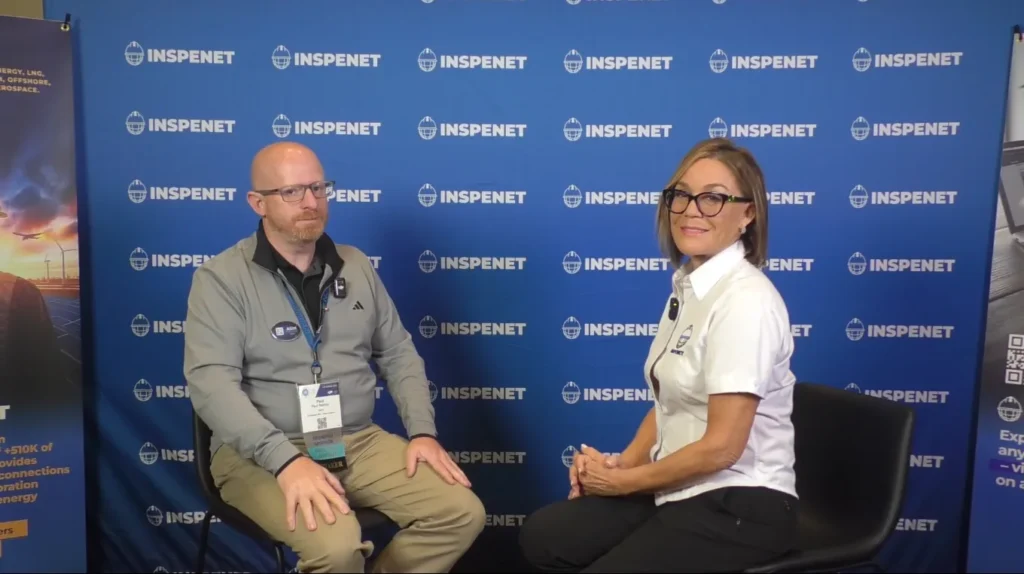
Digital transformation in industry demands tools capable of responding to increasingly complex challenges. In this scenario, AsInt focuses its strategy on developing solutions that allow technical teams to work more efficiently without losing control over engineering processes. During API Summit 2026, Paul Raithby, AsInt's Consulting Project Manager explained how the company understands user experience in applications aimed at highly specialized professionals and why that approach makes a difference in asset integrity management.
Engineering and technology with a common goal
AsInt is a company specializing in mechanical integrity , risk management, and operational excellence for asset-intensive industries. Its approach combines engineering expertise with digital solutions to help organizations identify risks early, prevent failures, and improve the reliability of their facilities throughout the asset lifecycle.
The company develops tools for sectors such as oil and gas, petrochemicals, energy, manufacturing, and process industries. Its platform brings together applications for risk-based inspection , corrosion management, reliability analysis, process safety, and other disciplines related to asset integrity.
According to the company, each development project originates from an engineering perspective rather than a purely technological one. This philosophy is also reflected in the design of its applications and in the way users interact with them.
A user experience designed for engineers
During the interview, Raithby explained that the concept of ease of use takes on a different meaning when the user is a technical specialist.
Far from oversimplifying processes, AsInt seeks to ensure that its applications respect the knowledge of the professionals who use them every day.
Being intuitive for an engineer doesn't mean trying to guide them as if they were an inexperienced user. It means enabling them to quickly access information and perform their work in the way that best suits their needs.
Raithby explained.
From this perspective, the company aims to reduce friction during software use ; the goal is for engineers to be able to quickly access their data, perform calculations, and complete their workflows without going through unnecessarily long processes.
This vision also recognizes that within the same organization, profiles with varying levels of experience coexist. For this reason, the platform incorporates learning paths that help those starting to use certain functions without limiting the productivity of more experienced users.
Transparency in every technical decision
One of the aspects that Raithby emphasized most was the importance of the software not hiding the internal processes involved in an engineering calculation or evaluation.
In applications designed for asset integrity management , the ability to review each decision is fundamental to ensuring confidence in the results.
The head of AsInt pointed out that users need to understand what the application is doing, what information is involved in each analysis, and how a particular conclusion is reached. This transparency facilitates the validation of results and allows for the generation of records that can later be reviewed during internal audits, external audits, or regulatory processes.
This approach also promotes the traceability of information and provides technical arguments that support the decisions made during the operation of an industrial facility.
A platform prepared for different types of operation
Another topic discussed during the conversation was AsInt Edge 's ability to adapt to organizations with very different needs.
Raithby explained that the platform can be used in facilities of varying sizes and levels of complexity. The system configuration is tailored to each client's operational needs, allowing for the management of everything from individual assets to large industrial facilities with thousands of pieces of equipment.
Flexibility is one of the elements that facilitates the adoption of software in different industrial sectors. Each organization can incorporate the modules and functionalities that best suit its processes without losing the consistency of information or the integration between disciplines.
This capability is especially relevant for companies seeking to unify the management of inspections, risk analysis, and integrity programs within a single digital environment.
Digitization with engineering criteria
Digitalization continues to be a priority in industrial strategies. However, Raithby believes that the success of these initiatives depends less on incorporating new technologies and more on understanding how technical teams actually work.
In this sense, AsInt develops tools designed to integrate into existing procedures and facilitate their evolution towards digital models .
The company understands that an application will be adopted more easily when it responds to the engineers' usual language and maintains the logic of the processes they use daily.
This philosophy aligns with the vision presented by the company in its corporate information, which highlights that each product is born from knowledge of disciplines such as mechanical integrity, risk-based inspection, corrosion management , and process safety.
Solutions for comprehensive asset management
AsInt's offering covers different areas related to reliability and industrial risk management .
These include risk-based inspection solutions aligned with API 580 and API 581 , tools for HAZOP studies, corrosion management programs, reliability analysis, fitness-for-service assessments, and applications designed to support inspection and maintenance planning.
The company also works on platforms that allow the integration of technical information from different disciplines to facilitate decision-making throughout the asset lifecycle.
This approach responds to a growing need within the industry: to have centralized information that allows prioritizing actions according to risk and optimizing the use of available resources.
The value of respecting user knowledge
One of the most important messages that came out of the interview was that technology should enhance the work of specialists instead of replacing their judgment.
For Raithby, the role of software is to facilitate access to information, reduce repetitive tasks, and provide tools that allow for faster decision-making, while always maintaining the engineer's ability to review, validate, and justify each result.
This combination of technical knowledge and digital development represents one of the principles on which AsInt continues to build its proposal for asset-intensive industries.
Presented during API Summit 2026, this vision highlights that the evolution of industrial software involves offering platforms capable of adapting to the real needs of professionals, while maintaining the technical rigor required by processes related to asset integrity and risk management.
For more content about API Summit 2026, visit our LinkedIn profile.
Source: Inspenet.