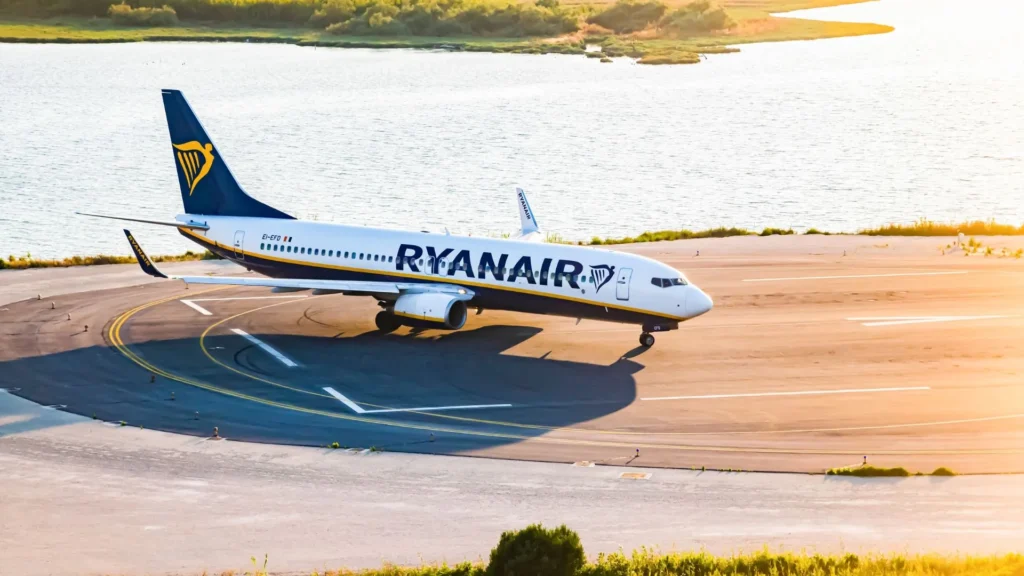
Ryanair it will incorporate Gemini Enterprise and Google DeepMind models to manage operations, crews, and maintenance within a dual-cloud strategy.
Ryanair and Google Cloud have signed a five-year partnership that will expand the use of artificial intelligence and cloud services within the airline’s operations. The agreement will allow the deployment of Google tools to approximately 35,000 of the company’s employees.
In addition, the European airline will use Gemini Enterprise and models developed by Google DeepMind to support operational decision-making. Areas of focus include crew planning, disruption management, and fleet maintenance.
Ryanair adds Gemini Enterprise to its operations
As part of the agreement, Ryanair will use Gemini Enterprise to develop custom AI agents capable of automating certain tasks and supporting decisions related to their operations.
Crew planning will be one of the application areas; the company seeks to use artificial intelligence to optimize processes that must adapt to changes in schedules, staff availability, and possible disruptions in the air network.
Furthermore, Google Workspace and Google Cloud services will be available to Ryanair’s 35,000 employees across its network. This technological infrastructure will support the airline’s growth plans, which aim to carry 300 million passengers annually by 2034.
Google DeepMind will support maintenance and operations
The collaboration will also bring Google DeepMind models to areas related to aircraft operation and maintenance. Among the technologies planned are AlphaEvolve and WeatherNext.
WeatherNext can provide meteorological information to support decisions in an industry where atmospheric conditions have a direct impact on routes and operations. AlphaEvolve, meanwhile, is part of the advanced tools that the airline plans to incorporate into its technological infrastructure.
In this way, the IA it will have applications that go beyond administrative processes; its incorporation extends to operational planning and fleet maintenance support, two relevant areas for maintaining service continuity.
Ryanair adopts a dual cloud strategy
Meanwhile, Google Cloud will be integrated into an infrastructure that Ryanair already uses Amazon Web Services (AWS). The airline is thus setting up a dual-cloud strategy aimed at increasing resilience and reducing its exposure to potential technological disruptions.
Eddie Wilson, CEO of Ryanair, linked this strategy to the company’s expansion plans and the need to have an infrastructure capable of keeping up with its growth rate.
Diversifying suppliers also allows for the distribution of technological services across different platforms. For an airline operating an extensive European network, the availability of its systems is especially important for coordinating flights, staff, and resources.
Artificial intelligence is gaining ground in aviation
Ryanair’s decision coincides with a greater incorporation of artificial intelligence in air transport, airlines and technology providers are applying these tools in customer service, operations, and maintenance with the goal of improving efficiency and reliability.
In this scenario, the alliance with Google Cloud places generative AI, custom agents, and DeepMind models within Ryanair’s specific operational processes.
The agreement does not publicly disclose its financial terms or its five-year duration however, it establishes a long-term framework for extending the use of Google Cloud, Google Workspace, and artificial intelligence tools as Ryanair continues to expand its network and capacity.
Source: Reuters
Photo: Shutterstock