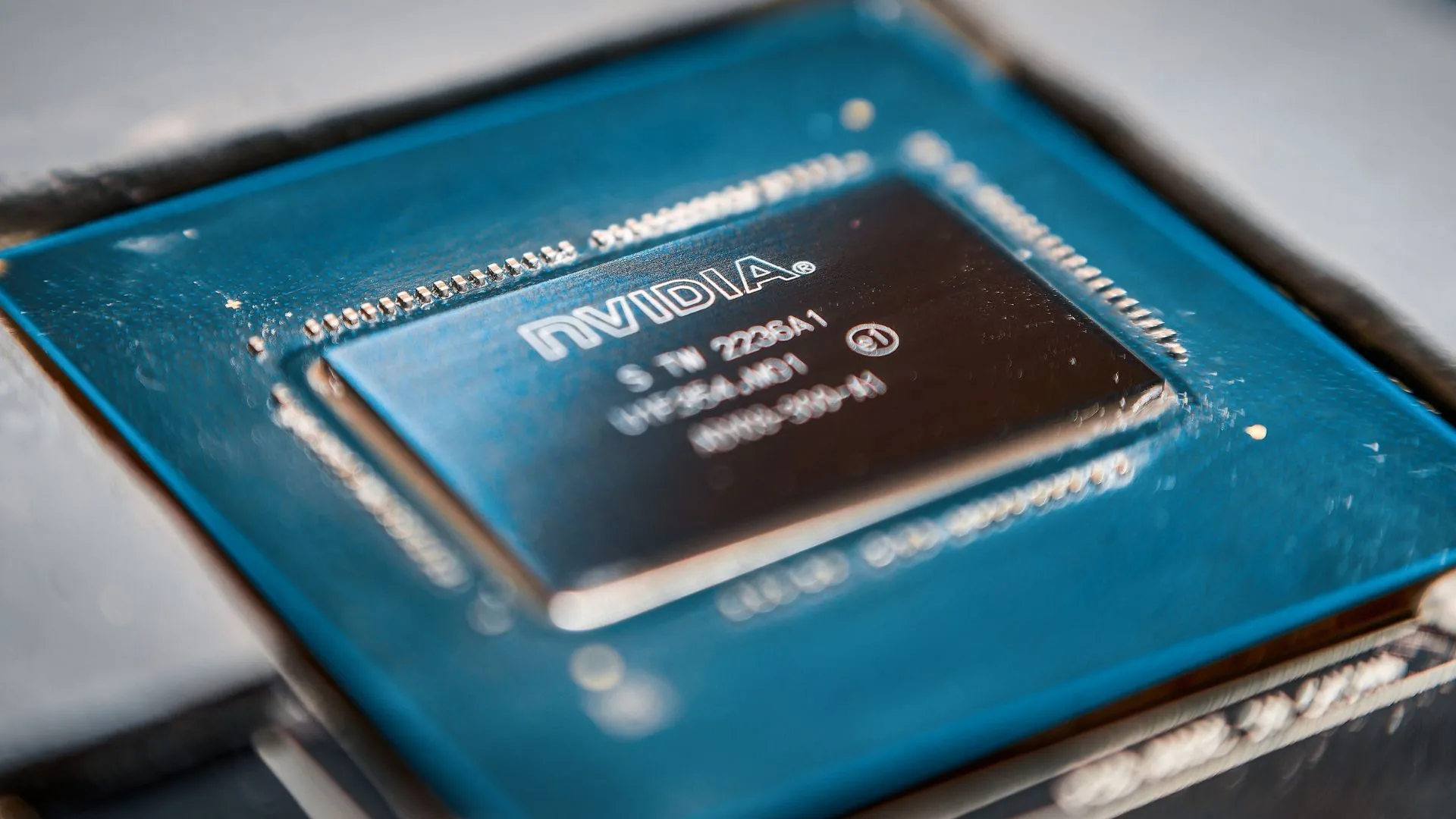
Nvidia it once again exceeded Wall Street expectations and anticipated revenues of USD 108 billion for the third quarter while maintaining growth in its data center business and demand for artificial intelligence chips.
Nvidia beats second quarter estimates
Nvidia closed its second fiscal quarter with revenues of $96.22 billion, more than double the figure from a year earlier and exceeding analysts’ expectations of $92.17 billion. Furthermore, adjusted earnings reached $2.22 per share, compared to an estimate of $2.10. This result keeps the company at the heart of the strong investment cycle focused on artificial intelligence infrastructure.
For their part, the data centers they once again became the main driver of the business, with this division generating $89 billion during the quarter, more than double the figure from a year earlier and exceeding the expected $85.08 billion. Following the release of the results and the company’s outlook, Nvidia’s shares rose, as investors continue to closely monitor the manufacturer’s ability to sustain its growth.
Nvidia expects revenues of USD 108 billion
For the third quarter Nvidia projected revenues of approximately $108 billion, with a 2% margin of error, this figure exceeds the median estimate of $104.19 billion compiled by LSEG. The company also anticipated that its revenues will grow by approximately 70% in fiscal year 2028. This forecast reinforces expectations that spending on AI infrastructure may continue to drive demand for advanced processors. Nvidia estimates that the revenue opportunity associated with its AI chips could exceed $1 trillion through 2027. This estimate doubles the $500 billion opportunity it previously projected through 2026 for its Blackwell and Rubin platforms.
AWS will expand its infrastructure with Nvidia GPUs
Another relevant element is the expansion of the collaboration between the company and Amazon Web Services. Both companies plan to deploy an additional 2 million GPUs during 2027 and 2028. This expansion reflects the scale that dedicated data centers are reaching artificial intelligence large cloud computing providers increasingly need more capacity to train models and run inference workloads. As a result, AWS remains one of the players expanding its infrastructure to meet the growth of AI-based services.
China is excluded from Nvidia’s forecast
However, Nvidia did not include chip sales for data centers in China within its quarterly forecast, the Chinese market continues to be constrained by US restrictions on the export of advanced semiconductors. In May, Washington authorized a group of Chinese companies, including Alibaba, Tencent, and ByteDance, to purchase Nvidia’s H200. Deliveries were delayed, and initial shipments remained limited.
Meanwhile, Nvidia began offering its Vera CPU to Chinese customers as authorities assessed limited purchases of the H200 by large AI companies. The absence of these sales in the forecasts adds further uncertainty for Nvidia in one of the world’s most important technology markets.
Competition is increasing in inference chips
At the same time, Nvidia faces increasing competition as the AI market moves from training to inference, the process by which trained models generate responses and perform tasks. Meta is working on its Iris AI chip, while Alphabet has placed orders for processors to expand its infrastructure. Intel and AMD are also looking to gain ground in this segment, and Chinese companies like Baidu are developing their own chips.
The company is adapting its offerings to this shift, in March, the company unveiled a central processor and AI system based on licensed technology from Groq, a company specializing in inference, for integration with its Vera Rubin platform. Thus, the next competitive front extends beyond GPU power. The cost of running models, energy efficiency, and the ability to deploy infrastructure at scale will become increasingly important factors.
AI Demand Supports Nvidia Outlook
For now, the results show that spending on AI infrastructure continues to fuel Nvidia’s growth, the combination of data centers, GPUs, and large cloud deployments keeps demand for its platforms high. The challenge will be sustaining that pace as custom chips from major tech companies increase, competition in inference intensifies, and uncertainty remains regarding sales in China. With a quarterly forecast exceeding expectations and new GPU deployments alongside AWS, the company enters the next stage of the AI investment cycle with demand still strong.
Source: Reuters
Photo: Shutterstock