Google AI raises concerns about Finland’s electricity supply
Google is preparing a major expansion of its artificial intelligence infrastructure in Finland; however, the size of the investment has also generated concern among opposition parties about the pressure that the new data centers could put on the country's electricity system.
Specifically, Alphabet, Google's parent company, will allocate at least €13 billion to AI infrastructure in Finland over the next two years. This investment represents the company's largest ever in Europe.
Now, the debate centers on how Finland can accommodate these facilities without compromising the availability of electricity or putting undue pressure on energy prices.
The opposition is calling for oversight of the new data centers.
Given this scenario, the leader of the Centre Party, Antti Kaikkonen, believes it is necessary to establish a national permit system for new investments in data centers.
Their proposal aims to allow authorities to assess the combined impact of projects before authorizing new facilities. According to Kaikkonen, Finland currently lacks sufficient oversight of the overall picture.
The concern arises because data centers require large amounts of electricity; as the infrastructure intended to train and operate AI systems increases, so do the associated energy needs.
Therefore, the challenge for Finland is to guarantee both the generation and transmission capacity necessary to serve the new facilities.
The electricity demand of AI enters the political debate
On the other hand, the Social Democratic Party also supports the arrival of investments in data centers, although it calls for more attention to be paid to their effects on the energy system.
Social Democratic MP Niina Malm pointed out that electricity availability must be analyzed from a broader perspective of internal security. Her proposal focuses on guaranteeing sufficient energy for the population at affordable prices.
Thus, Google's investment in AI raises a question that goes beyond technological expansion. Finland will have to determine how much additional consumption its network can handle and under what conditions future projects should be incorporated.
The issue takes on greater significance because the Social Democratic Party is leading in the polls ahead of the elections scheduled for April. Therefore, the regulation of data centers could gain prominence in the Finnish political debate.
Google secures nuclear power for 22 years
As the debate over electricity demand intensifies, Google has sought to secure some of the supply needed for its operations through a long-term agreement.
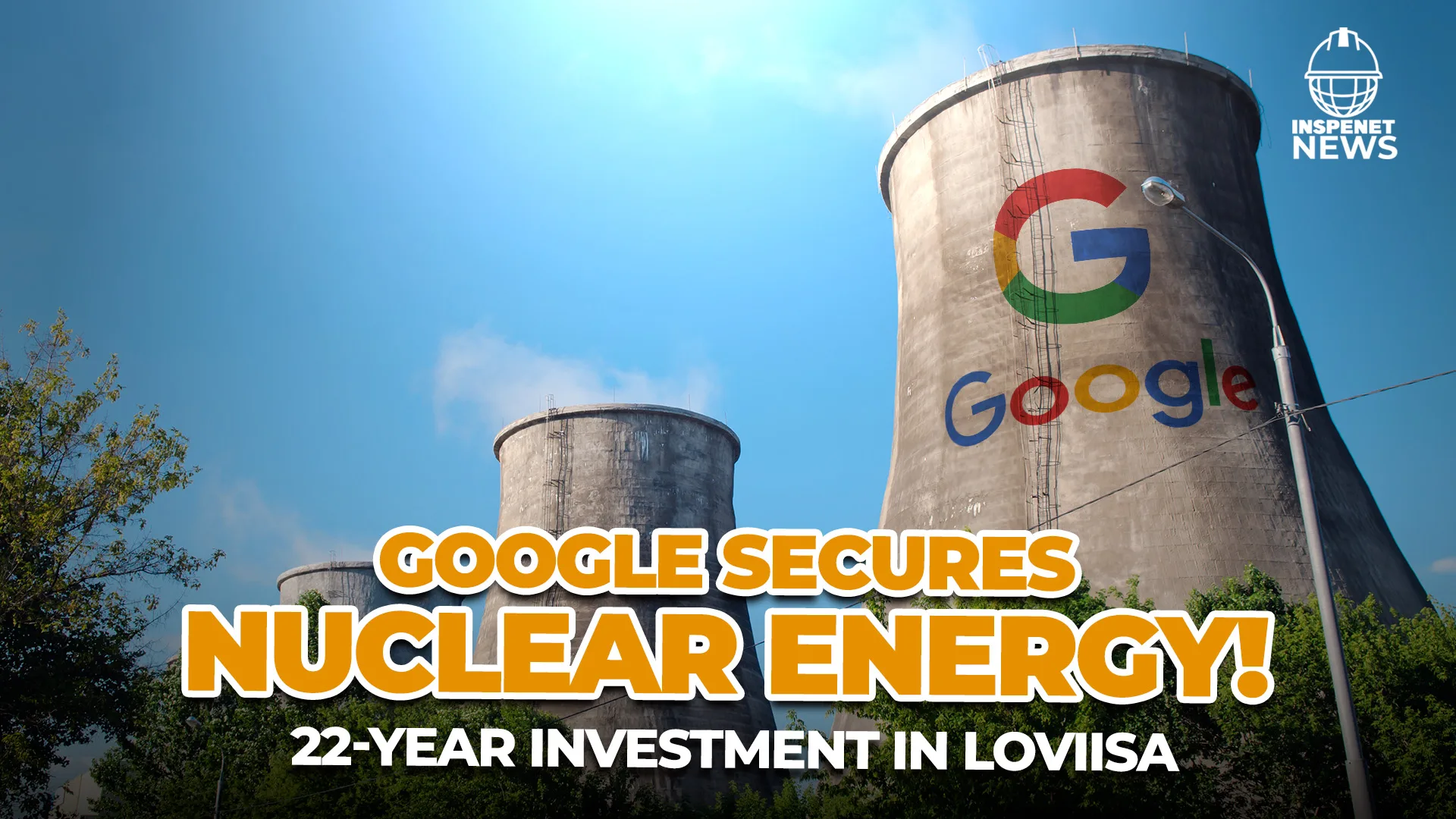
The company signed a 22-year power purchase agreement that covers up to 50% of the production from the Loviisa nuclear power plant in Finland.
This agreement provides Google with access to a stable source of electricity while it develops its AI infrastructure. In turn, the contract will help extend the power plant's planned lifespan until 2050.
Previously, the original closure of Loviisa was planned for 2030, but the energy agreement linked to Google thus changes the operational prospects of a facility with a relevant role in the Finnish electricity supply.
Loviisa gains ground amid the expansion of data centers
Furthermore, the involvement of nuclear energy shows the extent to which access to electricity has become a central factor in developing large data centers.
Finland has attracted these types of facilities for years due to its cold climate, reliable electricity grids , and the availability of low -carbon electricity.
However, the expansion of artificial intelligence increases the need for IT infrastructure and, consequently, energy consumption. This situation compels the country to assess the arrival of new investments along with their impact on the grid.
In this context, the agreement with Loviisa allows Google to cover some of its needs, although it does not eliminate doubts about the cumulative effect that new data centers could have.
Google and Fortum are studying new sources of electricity
Furthermore, Google's energy plans in Finland could extend beyond the existing contract.
Google and the Finnish energy company Fortum will study the development of new sources of nuclear and renewable energy. This collaboration aims to increase the available energy supply while the digital infrastructure expands.
The strategy reflects an increasingly close relationship between the growth of AI and the availability of electricity generation. To operate large-scale data centers, companies need a continuous and sufficient supply over long periods.
For this reason, ensuring electricity becomes part of the decisions about where to install and expand computing capacity.
Finland seeks to balance technological investment and electricity
Finally, Google's investment places Finland in a complex balancing act; the country can strengthen its position as a European destination for artificial intelligence infrastructure, but it must ensure that this growth is compatible with the electricity needs of homes and businesses.
The discussion raised by the opposition directly addresses this challenge: a national permitting system would allow for the evaluation of new data centers based on their available generation and transmission capacity, as well as their impact on electricity demand.
At the same time, Google's nuclear agreement offers a partial solution to the energy needs of its expansion. The potential addition of new nuclear and renewable energy sources could further increase that capacity in the coming years.
Thus, the €13 billion investment opens a new chapter for Google AI in Finland. The energy consumption of data centers will largely determine the debate about how far this infrastructure can grow without increasing pressure on electricity supply and prices.

News of additional interest
China will have the largest licensed PDH unit
Zhejiang Petroleum & Chemical (ZPC) has selected Lummus Technology to license its CATOFIN technology for a new propane dehydrogenation unit in Zhejiang, China. The plant will have the capacity to produce 1.2 million metric tons of propylene per year and will be the world's largest licensed PDH unit.
This will be the first time ZPC uses Lummus' PDH technology, although the two companies already collaborate on other refining and petrochemical processes. The propylene produced will be used to manufacture higher-value petrochemical products. The plant will also utilize the additional propane supply generated by ZPC's ongoing expansions at its refining facilities.
Adobe grows with AI, but cools Wall Street's reaction
Adobe closed its third quarter with revenues of $6.76 billion, exceeding analysts' expectations of $6.7 billion. This performance was driven by strong demand for artificial intelligence tools. Annual recurring revenue from AI-focused products more than doubled compared to the same period last year. Adjusted earnings also surpassed forecasts, reaching $6.13 per share.
For the fourth quarter, Adobe expects revenue of between $6.8 billion and $6.85 billion. The midpoint fell slightly short of Wall Street expectations, and its shares dropped 1.9% in after-hours trading. The result coincides with leadership changes: Anil Chakravarthy will become the new CEO in December, while Shantanu Narayen will become executive chairman.
Saipem enters the route of the Rovuma LNG megaproject
Saipem and Jan De Nul have signed a letter of intent with ExxonMobil to advance the first phase of the Rovuma LNG project in Mozambique. The initial agreement is valued at approximately €11 million and covers preliminary engineering, procurement, and planning work. The full contract is contingent upon approval of the final investment by the Area 4 partners and the project receiving the necessary permits.
The plan involves connecting 18 offshore wells to the future onshore liquefaction plant. To do this, the consortium will work on a network that includes export pipelines, subsea pipelines, umbilicals, and manifolds. If Rovuma LNG receives the green light, Saipem and Jan De Nul could move forward with a larger engineering, procurement, construction, and installation (EPI) contract.
UK strengthens its military connection with SpaceX
The UK has spent nearly $40 million on SpaceX satellite services to expand its military communications. The Ministry of Defence has approximately 1,000 Starshield terminals and another 500 Starlink terminals. Furthermore, the country became the first outside the United States to publicly acknowledge the use of Starshield, SpaceX's service designed for military and intelligence operations.
The British military began using Starlink in 2022 and later migrated some of its operational communications to Starshield. This service offers stronger encryption, network priority, and features tailored to military use, although it can be considerably more expensive. The UK also maintains its military Skynet system and holds a stake in Eutelsat, the European operator of low-Earth orbit satellites.