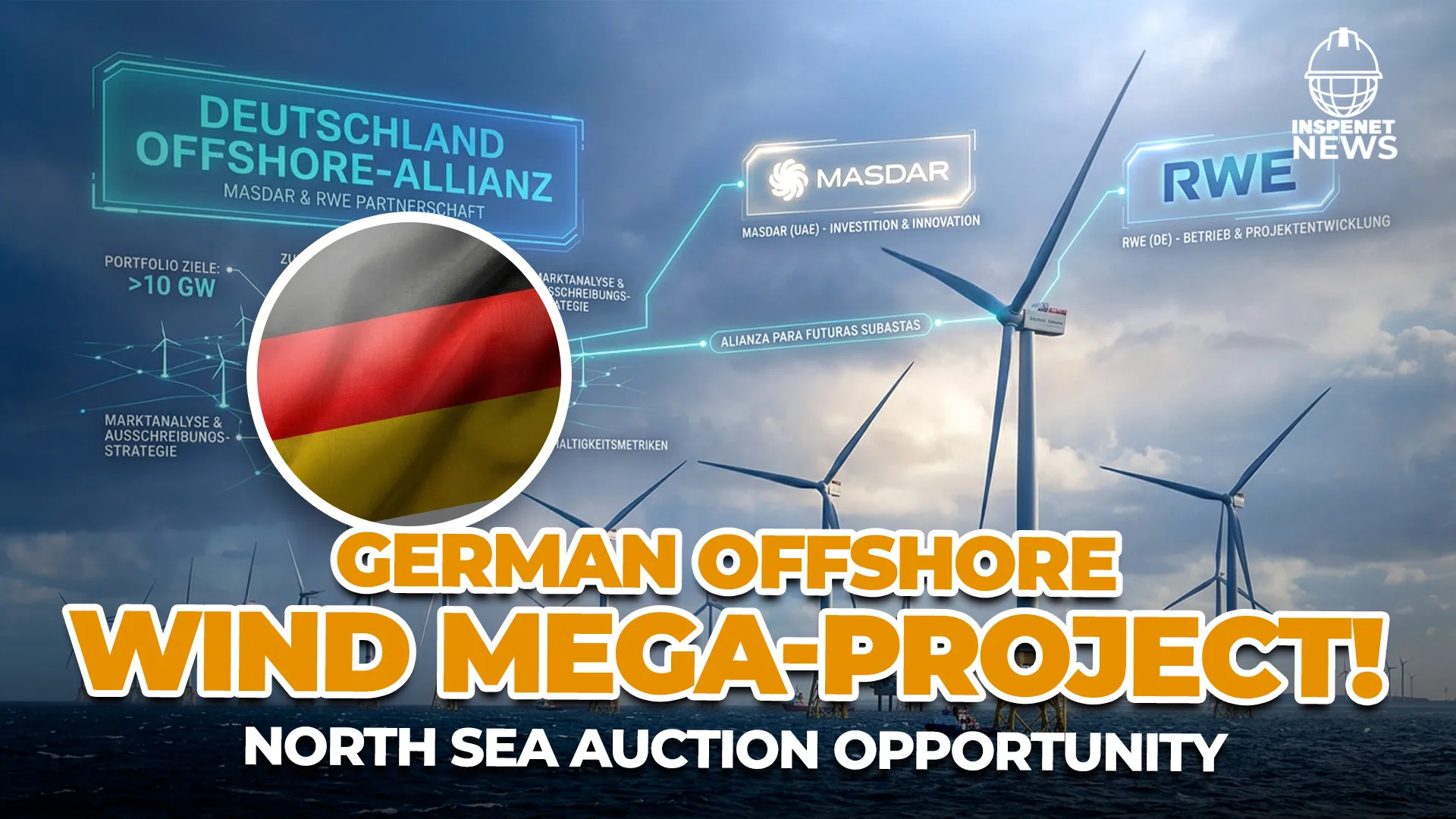
Masdar is considering investing more than 8 billion in Germany
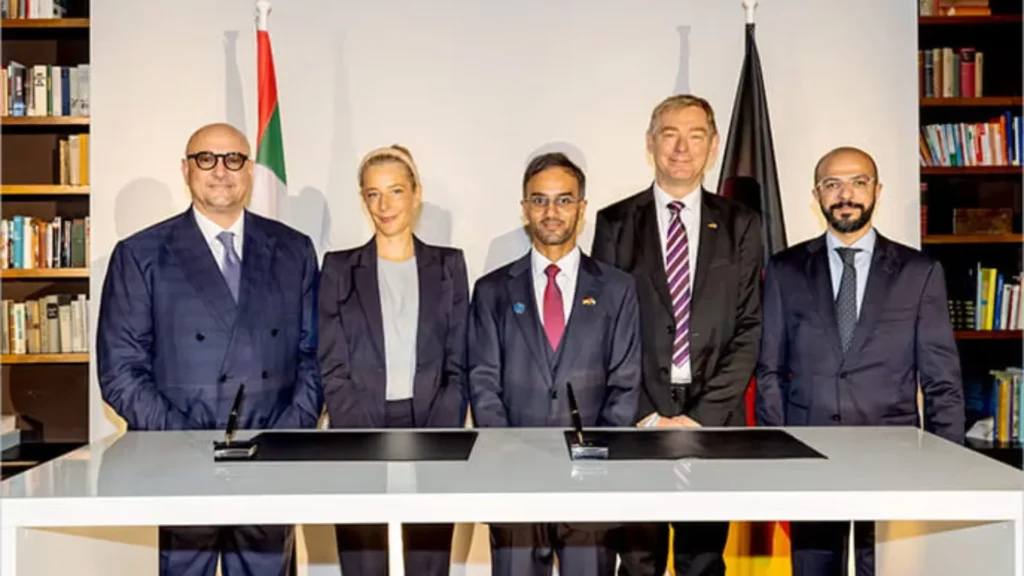
During the state visit of the President of the United Arab Emirates to Germany, Abu Dhabi Future Energy Company PJSC ( Masdar ) It signed two agreements that could expand its presence in the European energy market. The initiatives involve potential investments exceeding €8 billion.
On one hand, the company reached an agreement with RWE regarding future offshore wind energy projects in Germany. On the other, it established a partnership with Luxcara to explore investments in this technology and in battery energy storage systems.
Masdar 's growth potential in Germany, and also combine renewable generation and storage within a strategy that seeks to increase the company's presence in Europe.
Masdar expands its energy plans in Germany
The two agreements cover projects with a combined potential value exceeding €8 billion. However, this amount does not represent investment that has already been fully executed or committed.
The signed documents are memoranda of understanding that establish the basis for exploring future investments and partnerships. Therefore, the projects will depend on their subsequent development and the opportunities that arise in the German market.
Even so, the agreements show the scale of the plans Masdar is studying for Germany, and also reinforce the country's weight within a European platform that already brings together renewable projects in different markets.
Masdar and RWE are studying new offshore wind energy projects
For their part, Masdar and RWE signed a memorandum of understanding to evaluate their joint participation in future German offshore wind energy auctions.
The agreement contemplates an indicative investment value of over 3 billion euros ; if the projects progress, Masdar could increase its exposure to one of the European markets where it already has experience in this technology.
The relationship between the two companies doesn't begin with this agreement either; Masdar and RWE are They are co-investors in London Array and are working together on Dogger Bank South, a 3 GW development located off the northeast coast of England.
In this way, the potential collaboration in Germany would shift an existing partnership towards new opportunities within the European market.
Masdar and Luxcara focus on wind and storage
Meanwhile, the second memorandum was signed with Luxcara, an independent German asset manager specializing in energy infrastructure.
The two companies will explore potential joint investments in Germany and other European markets. Technologies under consideration include offshore wind energy and battery energy storage systems ( BESS ).
In this case, the potential value of the investments exceeds 5 billion euros; the agreement also leaves open the possibility of studying other technologies related to the energy transition.
Thus, the partnership with Luxcara expands the scope of Masdar 's plans; the company would not only be focused on increasing renewable generation, but is also studying infrastructure capable of storing some of that electricity.
BESS systems are gaining ground alongside renewables
As generation from renewable sources increases, energy storage becomes more important for managing available electricity.
BESS systems allow energy to be stored in batteries for later use; this can provide greater flexibility to the grid and make electricity available at times other than when it was generated.
Consequently, combining offshore wind energy with storage would allow Masdar and Luxcara to study projects that cover two related parts of the energy infrastructure.
This component also distinguishes the agreement with Luxcara from that reached with RWE, whose focus is on possible opportunities within future German offshore wind auctions.
Baltic Eagle marks the precedent for Masdar in Germany
Furthermore, Masdar already has direct experience in the German market through Baltic Eagle. The offshore wind farm has a capacity of 476 MW and became fully operational last year.
This project is part of the company's European offshore wind energy portfolio; its other assets and developments include London Array, Dudgeon, Hywind Scotland and East Anglia THREE.
Therefore, the new agreements would represent an expansion of Masdar 's existing presence in Germany. Baltic Eagle provides a concrete precedent for a strategy that could now incorporate new generation and storage projects.
Masdar extends a European platform of more than 15.6 GW
In parallel, Europe has gained importance within Masdar 's international activity; the company has invested more than $13 billion in the continent and has developed a portfolio exceeding 15.6 GW.
Its presence covers markets such as the United Kingdom, Germany, Spain and Portugal, as well as countries in central and southeastern Europe.
Furthermore, the company continues to progress towards its goal of reaching 100 GW of renewable energy capacity by 2030. European expansion is part of that growth, and the agreements reached in Germany open up new possibilities for increasing its portfolio.
Masdar 's European strategy
Finally, the memoranda with RWE and Luxcara show a strategy that combines partnerships with European companies and different energy technologies.
The potential investment of over €3 billion with RWE focuses on future offshore wind energy developments. Meanwhile, the more than €5 billion planned with Luxcara adds energy storage and BESS systems to this expansion.
For Germany, the initiatives could translate into new resources allocated to renewable generation and storage infrastructure if the projects ultimately move forward.
For Masdar, the agreements offer the opportunity to deepen its presence in a market where Baltic Eagle already provides operational expertise. At the same time, they strengthen the energy relationship between the UAE and Europe through long-term investments and partnerships.
News of additional interest
Fulkrum gains ground in Norway's offshore sector
Fulkrum expands its activity in Norway's oil and gas sector after securing an inspection services contract with Vår Energy . The agreement will allow the British firm to support the review and testing of equipment and systems for energy projects on the Norwegian Continental Shelf.
Ophelia , Gjøa Nord, and Cerisa subsea developments in the Gjøa area . Fulkrum will conduct inspection and testing both offshore and at specialized facilities. His work will focus on verifying equipment quality, mitigating operational risks, and supporting compliance with safety standards during the development of these projects.
National Grid opens 800 zones to electrical flexibility
National Grid will launch a new service to manage the voltage of local electricity networks through flexible consumption and generation. The upcoming tender will cover more than 800 areas and seek over 2.8 TWh of flexibility. The market could reach a value of £4.6 million, and contracts will begin operating between April 2027 and March 2028.
Local Voltage Management will initially be piloted in 100 low-voltage zones. The initiative will also include 99 high-voltage zones and expand other flexibility services. Companies, aggregators , and community groups with resources such as batteries, heat pumps, and electric vehicle chargers are eligible to participate. There is no minimum size requirement for participating assets.
Baker Hughes accelerates the expansion of Plaquemines LNG
Plaquemines ' LNG infrastructure in Louisiana. One of the contracts includes 13 compression systems that will move gas through the Cloud Connector pipeline to the plant. With this new order, Plaquemines will have 23 such compression systems to support its operations.
The company will also deliver four blocks, each consisting of eight liquefaction modules, to increase the plant's production capacity. The equipment will include centrifugal compressors, cold boxes, refrigeration systems, and integrated controls. This expansion is part of Venture Global's growth on the U.S. Gulf Coast, where its projects represent an existing and planned capacity of over 100 million tons of LNG per year.
Saipem adds US$350 million contract in Angola
Saipem secured a contract worth approximately US$350 million with Azule Energy to work on the West Hub underwater project Tails off the coast of Angola. The Italian company will be responsible for the engineering, manufacturing, transport, and installation of the infrastructure, which will operate at depths of up to 1,750 meters. The project is part of the Agogö development. Integrated West Hub and will have an estimated duration of two and a half years.
The work includes approximately 62 kilometers of flow lines, risers , and umbilicals that will be connected to the Agogo FPSO floating production unit. Part of the fabrication will take place at the Saipem shipyard in Ambriz, with the participation of Angolan workers and companies. The specialized vessels FDS and Normand will be used for offshore operations. Maximus.