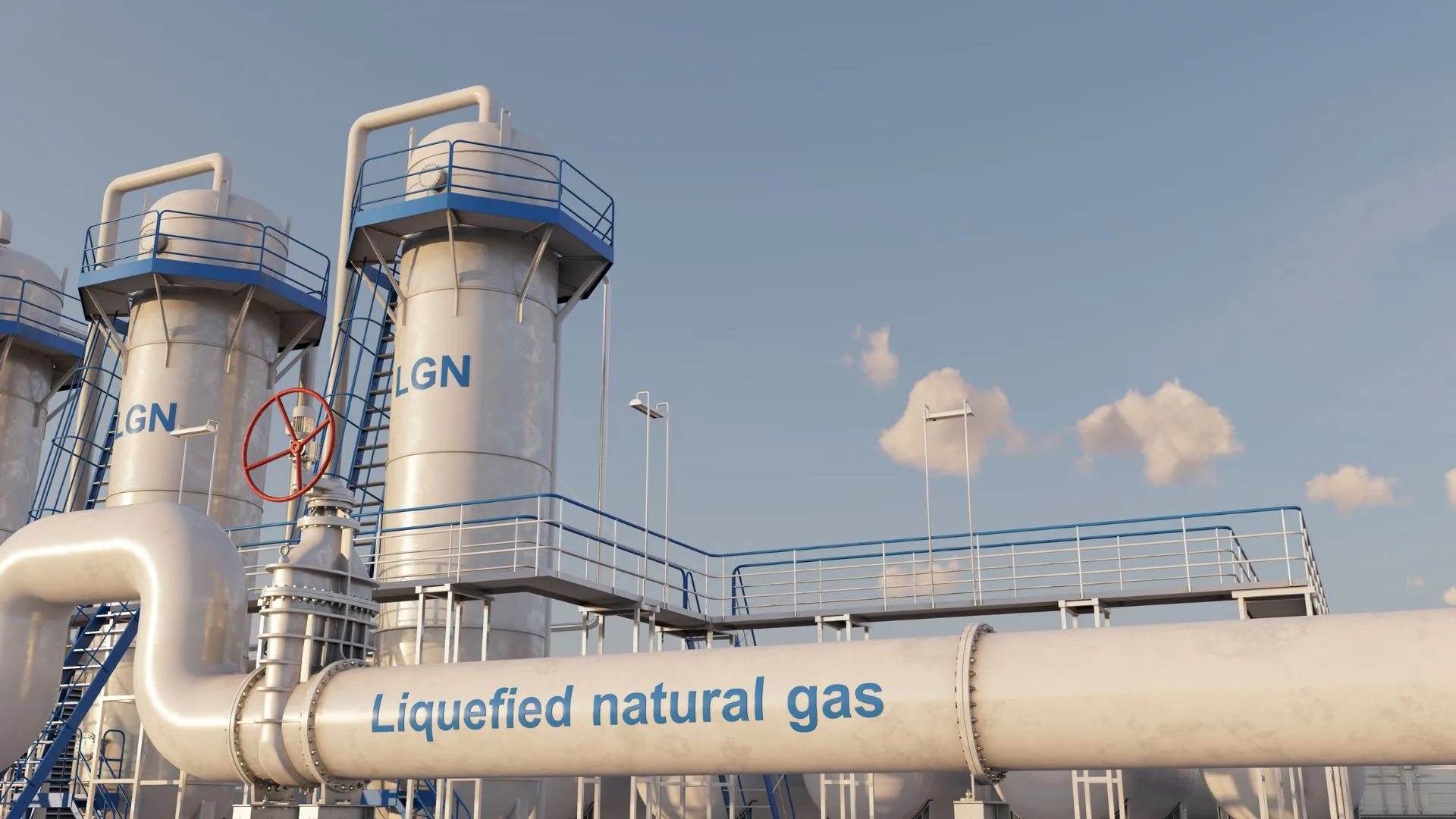
Guangdong China is modifying the operation of its gas-fired power plants through a new energy policy that redefines their role in the country’s largest gas-fired electricity generation market, the plants will shift from serving baseload loads to focusing primarily on peak demand. This change could moderate the long-term growth of gas demand in the Chinese electricity sector, Wood Mackenzie believes that the so-called “Guangdong model” demonstrates how gas-fired generation can adapt to a grid with an increasing presence of solar and wind power.
Guangdong plays a significant role in China’s economy and energy system, the province accounts for approximately 10% of the national GDP and is home to roughly one-third of the country’s gas-fired power generation capacity. Furthermore, in 2025, it consumed 41 billion cubic meters of natural gas and registered an LNG demand of 18 million tons. These figures represented 10% and 28% of the respective national totals.
Guangdong adapts its gas power plants to the renewable energy advance
Between 2020 and 2026, installed solar and wind power capacity in Guangdong increased from 14 GW to 105 GW, this sharp rise in variable energy sources heightened the need for flexible generation capacity capable of responding to fluctuations in renewable production. Meanwhile, gas-fired generation capacity increased from 27 GW to 61 GW during the same period, growth in coal and nuclear power was more moderate, and these technologies continued to meet a significant portion of baseload power needs.
Furthermore, the rise of renewables has given gas-fired power plants a different role within the electricity system, their ability to respond to variations in supply and demand allows them to be used as backup during peak consumption hours or when solar and wind power production falls. Kai Dong, principal analyst at Gas and LNG Wood Mackenzie’s Asia-Pacific representative explained during Gastech 2026 that Guangdong’s experience shows how these power plants can be repositioned within a grid with greater renewable penetration.
Guangdong changes the rules for gas-fired power plants
The reform of Guangdong’s gas-fired power generation policy was approved in July 2025 and modifies the scheme previously used to operate these facilities. Before the change, the plants had guaranteed dispatch hours, an approved electricity tariff, and additional subsidies when the system’s weighted average gas cost exceeded certain levels.
Now, power plants must participate under an economic dispatch scheme and submit bids that allow them to recover their fuel costs. In return, capacity payments have increased and can cover all capital expenditures, the mechanism primarily remunerates the availability of the facilities rather than the volume of electricity generated.
In this way, a central station can remain prepared to respond to the needs of the network even if it operates for fewer hours, the model thus reinforces its function as a backup capacity for periods of higher demand.
The price of LNG limits the substitution of coal
Fuel costs will be a determining factor in how much gas-fired power plants can increase their share of electricity generation in Guangdong, according to the analysis, Wood Mackenzie the spot price of LNG would have to be close to $6 per MMBtu for efficient gas-fired power plants to be economically competitive with subcritical coal-fired plants.
The calculation takes into account taxes, regasification, and pipeline transportation fees, and uses a coal price of $95 per ton as a benchmark, as long as LNG remains above that level, gas plants will likely continue to focus on peak demand, reducing their operating hours and limiting the additional fuel needed to generate electricity.
The Guangdong model could affect Chinese gas demand
The scope of the change could extend beyond the province. Wood Mackenzie notes that other regions in China are moving toward similar schemes to manage electricity systems with a growing share of renewable energy. The country’s gas-fired generation capacity could continue to increase to provide flexibility and stability to the grid, however, greater installed capacity does not necessarily imply a corresponding increase in fuel consumption.
If the new power plants operate primarily during peak demand, their annual operating hours will be lower than those of facilities used for baseload power. This scenario could slow the growth of gas demand for electricity generation in China and alter the outlook for the LNG market. Guangdong thus becomes a key case study for observing how renewable energy expansion is changing the role of gas within the Chinese electricity system.
Source: Wood Mackenzie
Photo: Shutterstock