Table of Contents
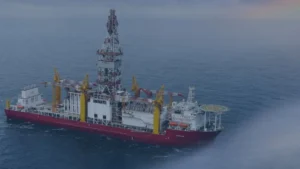
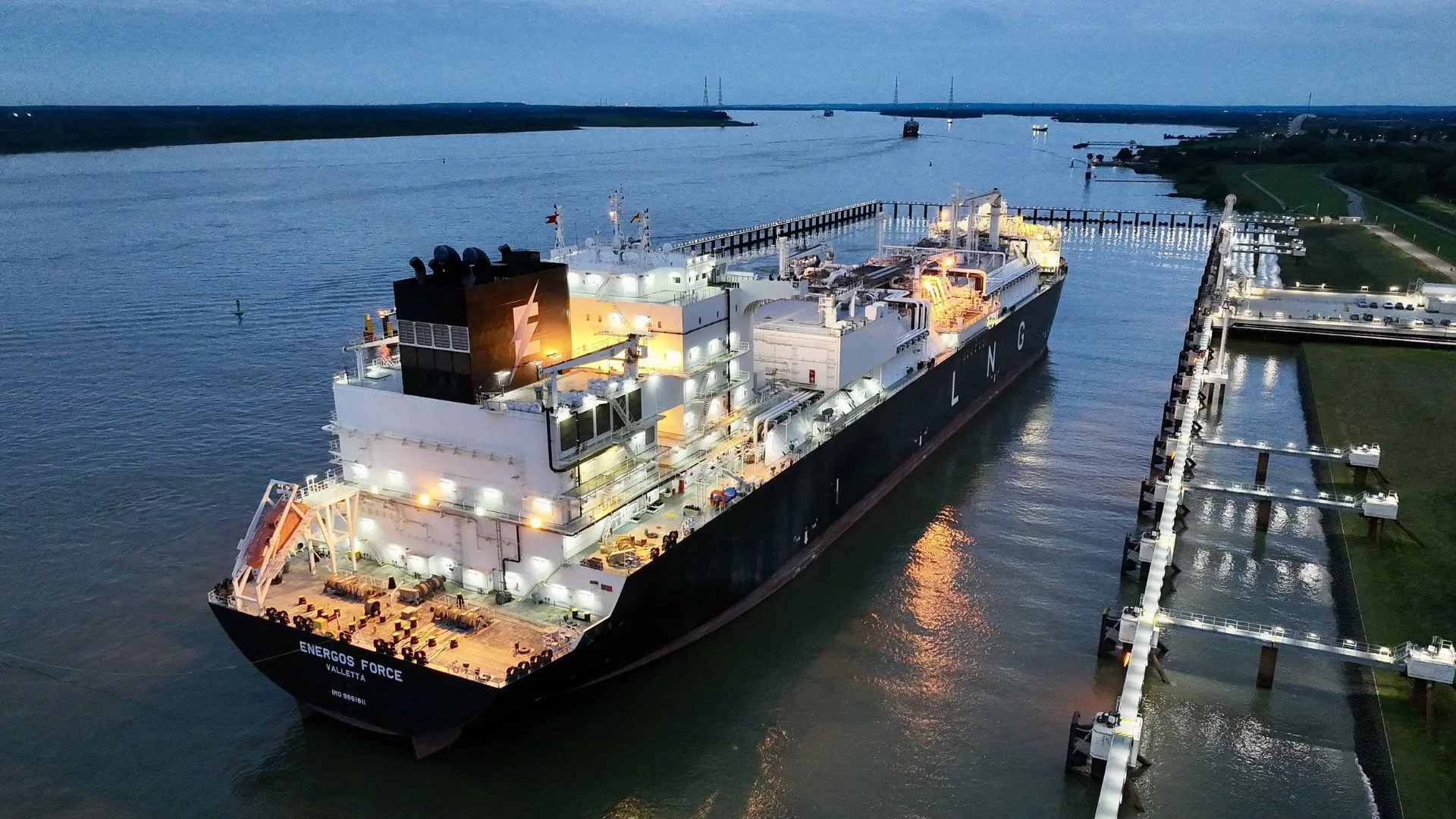
State-owned company Deutsche Energy Terminal has commenced preparatory maneuvers at the Stade-Bützfleth industrial port following the arrival of the Energos Force floating storage and regasification unit.
Commencement of operations at the Stade LNG terminal
Consequently, the facility will begin liquefied natural gas injection into the German transmission grid in early November 2026, coinciding with the scheduled arrival of the first fully loaded LNG carrier.
In this regard, the company’s executive management confirmed that the deployment of this 294-meter-long vessel represents the indispensable preliminary step for the commissioning of the country’s fourth import infrastructure.
Thus, the floating unit built in 2021 features a 47-meter beam and a deadweight of 94,361 metric tons.
Likewise, the operating system allows for the regasification of up to 500 million standard cubic feet per day during the winter season using closed-loop steam boilers, reaching 750 million cubic feet in summer using water from the Elbe River.
Concurrently, technical projections establish that the terminal will reach an injection capacity of up to 3.2 billion cubic meters per year by 2027.
Consequently, this maximum output flow under ideal conditions, referred to as the declared total reference supply value, would provide heating for approximately 2.6 million four-person households.
For its part, the entity Niedersachsen Ports completed the construction of the dedicated jetty to house the floating unit while construction work on the onshore terminal continues.
Similarly, the Federal Ministry for Economic Affairs and Energy emphasized that the incorporation of the Energos Force unit consolidates national energy supply security during high-demand periods.
Finally, the operating company will maintain the comprehensive management of this infrastructure alongside its active terminals in Brunsbüttel and Wilhelmshaven under the federal government’s mandate.
Source and photo: Deutsche Energy Terminal