SED Energy Holdings Plc and Ventura Offshore Holding Ltd. signed a letter of intent to merge through a share exchange, in a transaction that would create an offshore energy services group with an implied pro forma equity value of close to US$1 billion.
The transaction stipulates that Energy Holdings will acquire 100% of Ventura and issue 605 million new shares to its current owners, equivalent to 5.5 Energy Holdings shares for each Ventura share.
Following the transaction, current Energy Holdings shareholders would retain approximately 55% of the combined company, while Ventura shareholders would control about 45%, calculated on a fully diluted basis.
Energy Holdings would continue as the listed parent company, with Kurt M. Waldeland remaining as CEO, while Guilherme Coelho would retain executive leadership of Ventura Offshore.
Strategic Assets Also Include Contracts
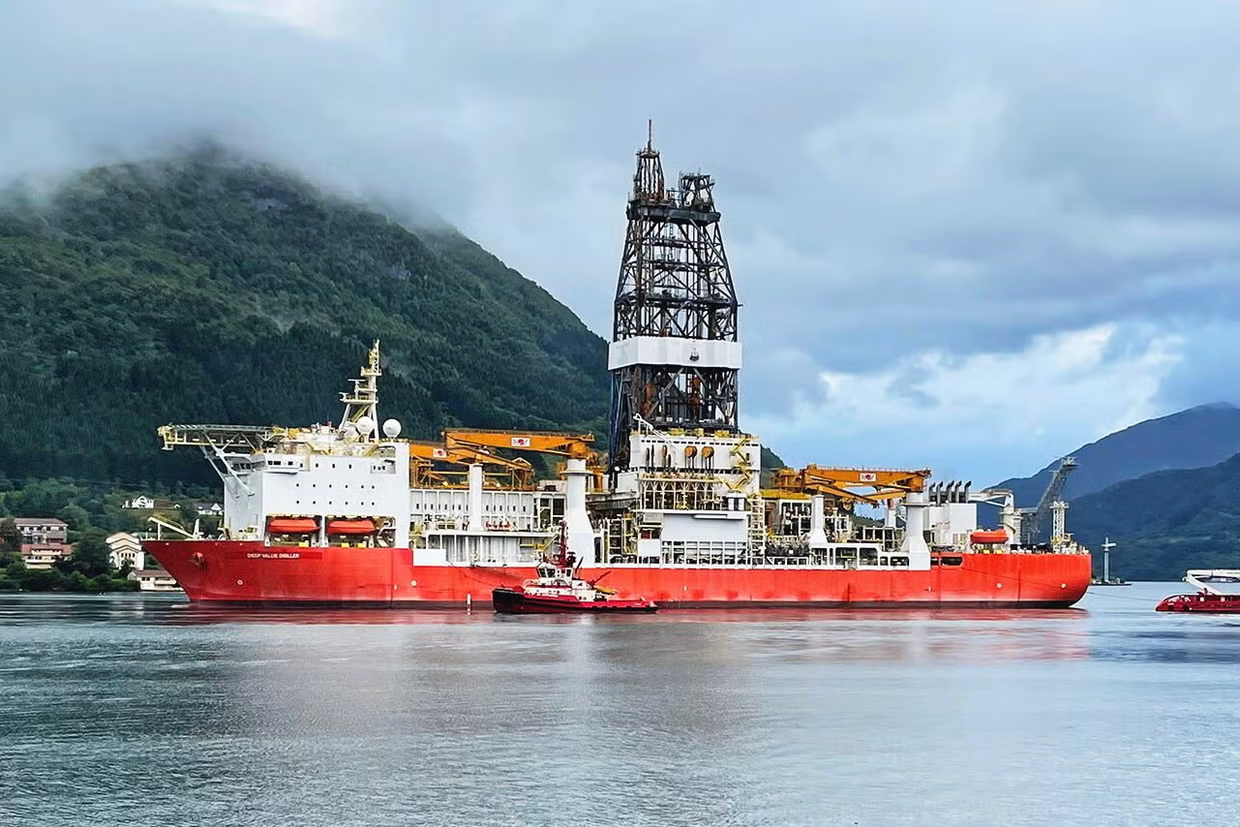
Ventura would retain its specialization in deepwater drilling and continue to operate alongside Energy Drilling and SeaBird Exploration. The combination of these companies provides a particularly relevant element for valuing an offshore company: a portfolio of approximately US$1.3 billion in contracted revenues pending execution.
The difference between an available platform and a contracted platform is fundamental in this sector. A drilling rig represents a capital-intensive asset, but its ability to generate revenue depends on its utilization, the rates obtained, and the duration of contracts.
Therefore, the backlog provides greater visibility into future revenues than the book value of the platforms alone would offer.
The strategy proposed by Energy Holdings seeks to use this contractual base and increased corporate scale to expand its financial capacity and participate in new offshore drilling opportunities and related services. The company also plans to explore a potential dual listing in the United States and an eventual initial public offering after completing the transaction.
DNB Contributes US$250 Million to the Transition
The financial structure constitutes another central component of the operation. DNB Bank ASA committed to providing a US$250 million bridge loan and extending an existing US$30 million revolving credit facility.
The funds are primarily intended to support the refinancing of Ventura’s current bonds and provide liquidity during the period until the transaction closes.
This allows the merger to be viewed from a different perspective: integration not only requires a shareholding structure but also sufficient financing to navigate the transition and maintain the operational capacity of the assets.
In an industry where drilling equipment requires significant investments in maintenance, mobilization, modernization, and preparation for new contracts, the availability of financing can directly condition the ability to convert a contractual portfolio into effective revenue.
Contracted Portfolio Will Be a Critical Variable
The companies expect to complete the merger during the first quarter of 2027, although a definitive agreement has not yet been reached. The transaction is subject to confirmatory due diligence, negotiation and signing of definitive documents, certain drilling platform contracts, relevant shareholder and court approvals, and regulatory authorizations.
Therefore, the announced US$1 billion should be understood as an implied pro forma equity value associated with a proposed transaction, not as a definitive valuation of an already merged company. The companies themselves warn that there is no guarantee that the definitive agreement will be signed or that the transaction will be completed.
Financial and technical monitoring should then focus on three variables: which platforms remain under contract, which revenues are effectively backed by contracts, and how the debt structure will evolve after refinancing. These elements will determine how much of the announced scale can truly be converted into productive capacity and cash flow.
SOURCE and PHOTO: https://worldoil.com/