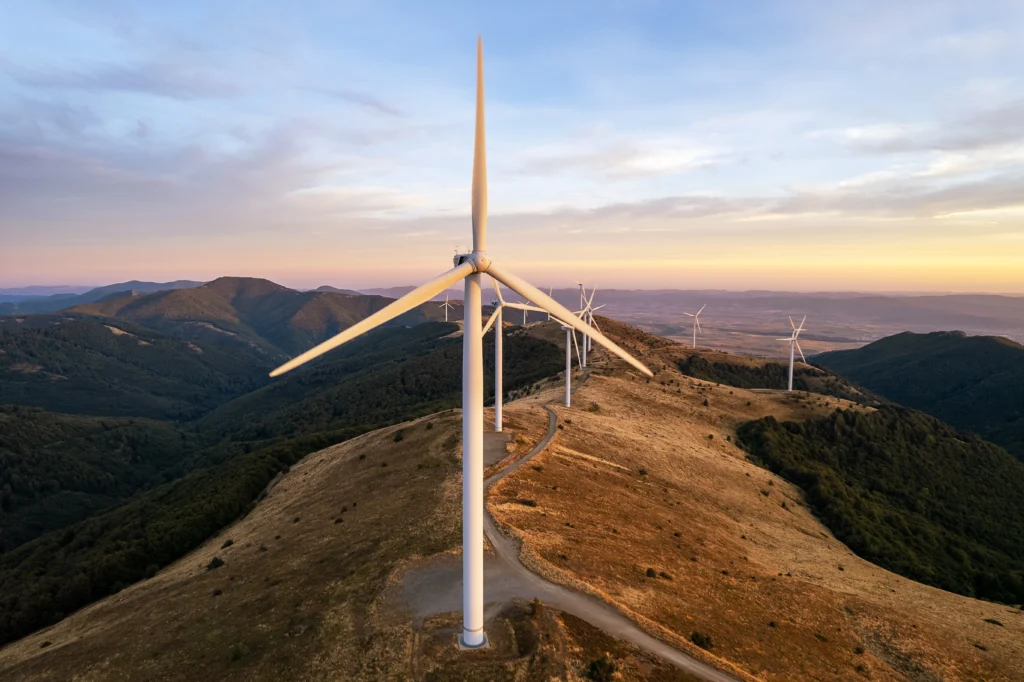
China presented his five-year renewable energy plan for the period 2026-2030, the strategy sets new targets for installed capacity, electricity generation, and consumption of clean energy sources. It aims to accelerate the sector’s expansion and improve its ability to reliably meet energy demand.
The document was published by the National Development and Reform Commission and the National Energy Administration. Both institutions anticipate that the Chinese renewable energy industry will enter a phase marked by greater scale, improved operational quality, and a more reliable replacement of conventional sources.
China aims for 3,500 GW of renewable capacity
By 2030, the total installed capacity of renewable generation it would reach approximately 3.5 billion kilowatts, equivalent to 3,500 gigawatts. The associated annual production would be close to 6 trillion kilowatt-hours.
Furthermore, the combined capacity of wind and solar energy it would exceed 2.8 billion kilowatts; these two technologies would generate more than 4 trillion kilowatt-hours per year under official projections.
Meanwhile, total renewable energy consumption is projected to reach the equivalent of 1.8 billion tons of standard coal. This indicator reflects the significant role clean energy sources will play in China’s energy system during the second half of the decade.
Greater capacity to respond to peak demand
During the 15th Five-Year Plan, China plans to add more than 300 million kilowatts of firm renewable energy capacity to meet peak demand. This objective aims to improve grid stability in the face of the growth of variable energy sources such as solar and wind power.
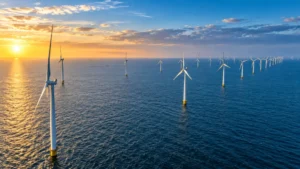
At the same time, the new offshore wind energy projects projects initiated in the country would add approximately 100 million kilowatts. Offshore deployment will allow for the utilization of coastal areas with good wind resources and expand production near major industrial centers.
China also plans to increase its conventional hydropower capacity to approximately 410 million kilowatts. The development of these facilities will need to be coordinated with ecological protection, flood control, water supply, irrigation, and navigation.
Storage, solar thermal and marine energy
China’s five-year renewable energy plan sets a target of nearly 160 million kilowatts of pumped storage by 2030. This technology allows energy to be stored by moving water between reservoirs located at different heights.
Likewise, the country expects to have 15 million kilowatts of solar thermal capacity, to which would be added a marine energy capacity of 400,000 kilowatts.
These technologies will provide backup for the electrical grid and help manage the variability of wind and solar power generation. Their expansion will also promote a more stable integration of new energy sources.
The electricity grid will have approximately 50% renewables
Chinese authorities propose that by 2030 around half of electricity generation will come from non-fossil sources, renewable energies they would represent a proportion close to 50%, while so-called new energies would contribute close to 30%.
In the plan’s terminology, new energies include renewable sources other than hydroelectric power, this group includes solar, wind, biomass, geothermal, and marine energy.
The use of renewable energy outside the electricity sector will also increase; by 2030, this consumption would be 2.5 times higher than the 2025 level and would be equivalent to about 150 million tons of standard coal.
China seeks to expand its international technological presence
The program includes measures to strengthen international cooperation in renewable energy and facilitate the circulation of Chinese green technologies in the global market.
Furthermore, the government will support companies and institutions that participate in the creation of international standards and certifications. The strategy includes promoting the mutual recognition of certifications and expanding the energy management standards developed by the country.
With these goals, China seeks to combine energy security, industrial growth, and a gradual reduction in fossil fuel use. The plan’s implementation will depend on the expansion of power grids, energy storage, and the system’s capacity to integrate large volumes of renewable energy generation.
Source: English
Photo: Shutterstock