Renewable sources generated 9,836 TWh during 2024 and recorded an annual growth of 9.8%, according to new data from IRENA.
Electricity generation from renewable energy reached 31.7% of the global total in 2024. Furthermore, its production increased by 9.8% compared to the previous year, the fastest growth rate recorded to date.
The data is part of the Renewable Energy Statistics 2026 report, published by the International Renewable Energy Agency (IRENA). The document places global renewable production at 9,836 terawatt-hours during the analyzed period.
In contrast, generation from non-renewable sources increased by 1.4%. The difference shows that clean electricity is expanding its share within the global power mix at a faster rate than fossil fuel-based production.
Solar and wind energy accelerated renewable generation
Furthermore, variable renewable energy contributed 14.9% of all electricity produced on the planet. This group primarily includes solar and wind energy.
Both technologies recorded a combined growth of 16.8% compared to 2023. Their progress confirms that the expansion of new solar and wind farms is having a direct effect on electricity production.
Solar energy maintained a particularly strong performance. Its increased presence in power systems across Asia, Europe, and the Americas helped raise renewable generation even in regions where electricity demand also increased.
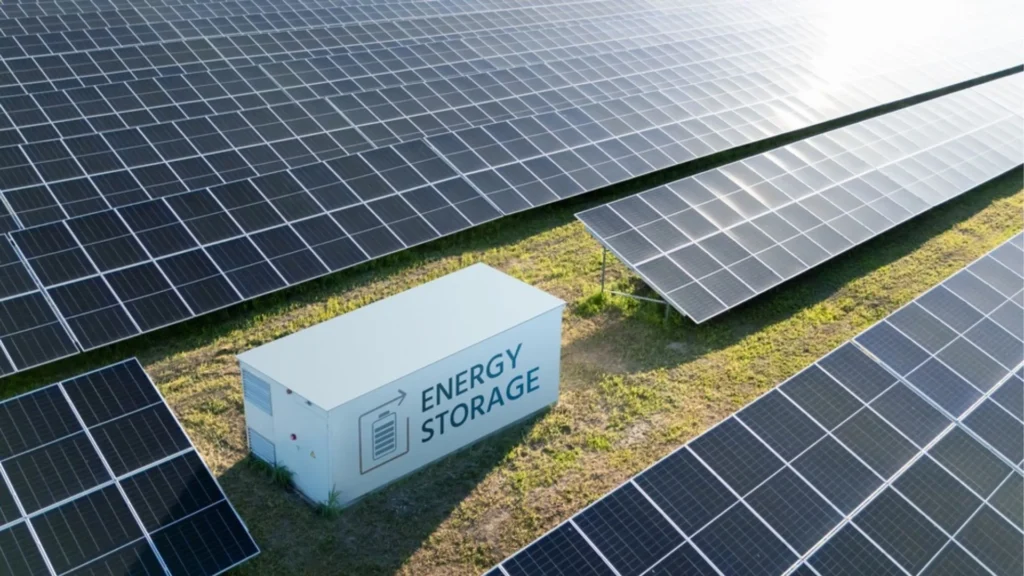
Likewise, the growth of these sources poses new requirements for grids. Energy storage, power transmission, and flexible demand management will be key elements for integrating larger volumes of variable generation.
Asia accounted for nearly half of renewable electricity
Regionally, Asia was the largest producer of renewable electricity in 2024. The region generated 4,589 TWh and recorded a year-on-year growth of 14.3%.
This volume represents nearly 47% of all global renewable generation. Solar and wind expansion played a significant role, although other technologies such as hydropower also contributed.
Europe produced 1,758 TWh and increased its renewable generation by 7.2%. The growth was supported by new solar installations and higher hydropower production.
For its part, North America reached 1,535 TWh with a 5.8% increase. South America produced 1,047 TWh and grew by 2.9%.
Eurasia recorded 411 TWh, while Africa reached 227 TWh. Oceania produced 138 TWh, and the Middle East reached 76 TWh. Although its volume was lower, the Middle East showed the highest regional growth at 17.3%.
The renewable share must reach 78% by 2035
Despite the progress in 2024, IRENA believes that renewable generation will need to grow much faster over the next decade.
The upcoming Turkish presidency of COP31 announced an electrification target equivalent to 35% of final energy demand by 2035. To achieve this, the share of renewable energy in global electricity generation would need to rise from 31.7% to 78%.
This implies multiplying the current share by approximately 2.5 times. The increase must be accompanied by investments in grids, storage, energy efficiency, and new clean generation plants.
Francesco La Camera, Director-General of IRENA, noted that electrification is becoming established as a cornerstone of the energy transition. According to the agency, greater availability of clean electricity can strengthen energy security, system resilience, and industrial competitiveness.
Global renewable capacity reached 5.2 TW
IRENA also slightly revised its figures for installed renewable capacity for 2025. New installations totaled 693 GW during that year, bringing global capacity to 5.2 TW.
With this result, renewable sources accounted for 49.5% of all installed power capacity on the planet at the end of 2025.
Furthermore, renewable energy accounted for 85.7% of the new capacity added during the year. The proportion was lower than the 92.7% recorded in 2024, although renewable deployment continued to outpace the growth of non-renewable technologies.
The data shows that the transition of installed capacity toward clean sources continues to progress. However, the main challenge will be converting that expansion into sufficient electricity generation to cover the increase in demand and meet the targets set for 2035.
Source: Renewables Now
Photo: Shutterstock