Taiwan it is preparing new auctions and floating projects to expand its offshore wind capacity in response to growing electricity demand.
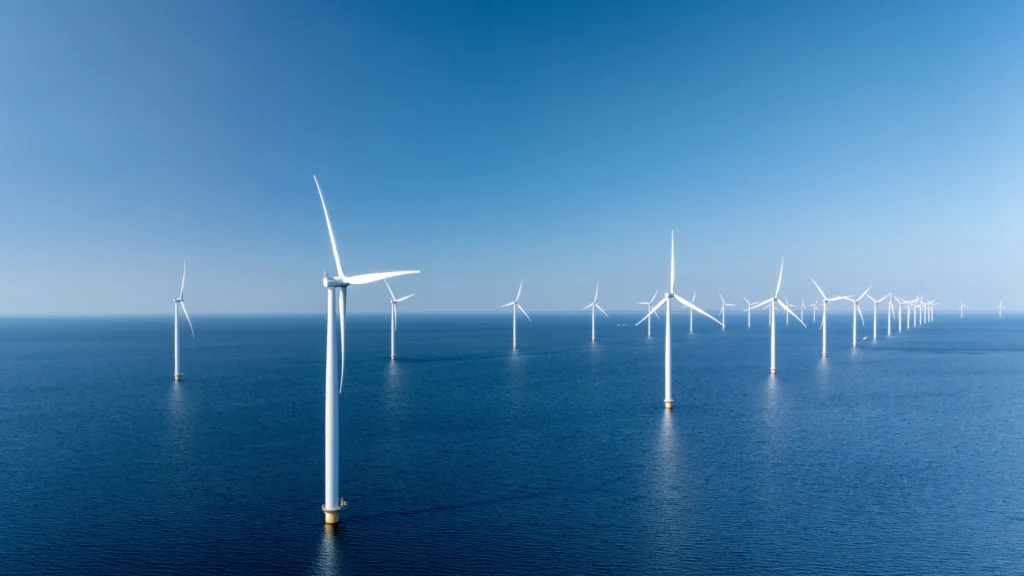
He Taiwan Ministry of Economic Affairs presented a roadmap for expand offshore wind energy between 2026 and 2039 the plan establishes an installed capacity of up to 27.9 GW by the end of the period and provides for new tenders every four years.
According to the strategy, the country will seek to incorporate between 15 and 18 GW of new capacity, with this deployment, offshore wind will gain weight within Taiwan’s electricity mix and support the national goal of achieving net-zero emissions by 2050.
Taiwan sets targets for 2035 and 2039
First, the Government hopes to reach between 18,3 of 19,9 GW of installed offshore wind capacity by 2035, after that, the range would increase to between 24.7 and 27.9 GW in 2039.
The immediate goal is to reach 10.9 GW by 2030; this objective will serve as the basis for the next phase of expansion, although industry representatives believe it will be necessary to accelerate permits, investments, and construction to meet it.
Currently, Taiwan has around 4.9 GW of cumulative capacity, and the country already has eight offshore wind farms installed, a sign of the progress achieved in recent years.
Auctions of 8 GW every four years
Furthermore, the Ministry of Economic Affairs plans to hold regular bidding rounds to allocate approximately 8 GW of capacity every four years. This timeline aims to provide a stable portfolio of projects for developers, manufacturers, and investors.
This predictability will be relevant for securing capital and planning infrastructure construction; it will also allow companies to prepare vessels, components, port services, and specialized equipment further in advance.
At the same time, the government plans to combine financial incentives, industrial development programs, and administrative improvements. The goal is to reduce delays and strengthen the local supply chain linked to the offshore wind energy.
Electricity demand drives expansion
In this context, Taiwan estimates that its electricity demand will grow by about 2.5% annually between 2026 and 2035. The expansion of the semiconductor, artificial intelligence, and high-tech industries will be one of the main drivers of that increase.
Therefore, offshore wind energy is considered a strategic source for expanding the low-carbon electricity supply its development can also help reduce the country’s exposure to price fluctuations in imported fuels.
Liquefied natural gas and coal still occupy a significant part of the Taiwanese power generation Therefore, increasing renewable capacity will be essential to diversify the energy mix and improve energy security.
Taiwan opens up space for floating wind power
In addition, the roadmap incorporates demonstration projects of floating offshore wind energy this technology allows turbines to be installed in deep areas where fixed foundations are less viable.
The initial projects will serve to assess costs, performance, and operating conditions before moving to a commercial scale. Their development could expand the offshore areas available for future wind farms.
Finally, the government coordinated the identification of suitable areas with the Ministries of National Defense, Transport and Communications, and Agriculture. This review aims to balance electricity production with navigation, defense, fishing, and other uses of maritime space.
With objectives defined until 2039, Taiwan is trying to bring greater clarity to the wind energy market; the challenge will be to convert the planned auctions into operational projects within the established deadlines.
Source: Oceaneconomist
Photo: Shutterstock