JPMorgan Chase and Banco Santander they are leading the structuring of financing of between US$14 million and US$15 million for Argentina LNG, the project promoted by YPF, Eni and XRG to produce and export liquefied natural gas from Argentina.
According to information published by Bloomberg and attributed to sources familiar with the negotiations, the partners are continuing talks with other financial entities and export credit agencies to complete the necessary resources.
The financial transaction will be fundamental for a project whose total cost is estimated at around US$24 million the companies have not yet made a final decision on the investment, and the terms of the deal could change as negotiations progress.
Argentina LNG aims for an investment decision in November
Furthermore, YPF, the Italian company Eni, and XRG of Abu Dhabi are participating in Argentina LNG with roughly equivalent shareholdings. The consortium expects to reach a final investment decision towards the end of November, according to sources cited by Bloomberg.
The financial operation is of considerable scale for the Argentine market, the amount that JPMorgan and Santander are seeking to structure could cover more than half of the estimated cost of Argentina LNG.
The project is also progressing with the necessary documentation for analyzing potential lenders, YPF’s president and CEO, Horacio Marín, previously indicated that the documentation was ready for the due diligence process and that candidates had already been selected to design, supply, and build certain parts of the infrastructure.
An initial capacity of 12 million tons of LNG
Argentina LNG envisions a production capacity of 12 million tons of LNG per year through infrastructure located off the Argentine Atlantic coast.
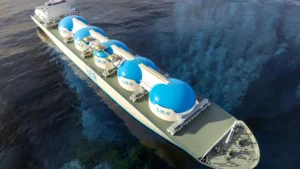
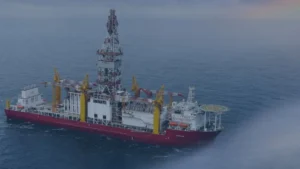
In addition, the complete development includes two floating liquefaction units, gas pipelines to transport the resource to the coast, and a facility for processing natural gas liquids.
The capacity could later be increased to 18 million tons annually, expanding the volume of gas available for international markets.
The scale of the project makes financing a central element to advance its execution, in addition, there is a need to coordinate transport, processing, and liquefaction infrastructure before large-scale exports can begin.
Vaca Muerta will supply Argentina with LNG gas
In parallel, Vaca Muerta it will be the main source of natural gas for Argentina LNG the shale formation located in the Neuquén Basin contains one of the world’s largest technically recoverable shale gas reserves.
The development of this production requires simultaneously expanding the infrastructure necessary to transport larger volumes from the producing areas to the Argentine coast.
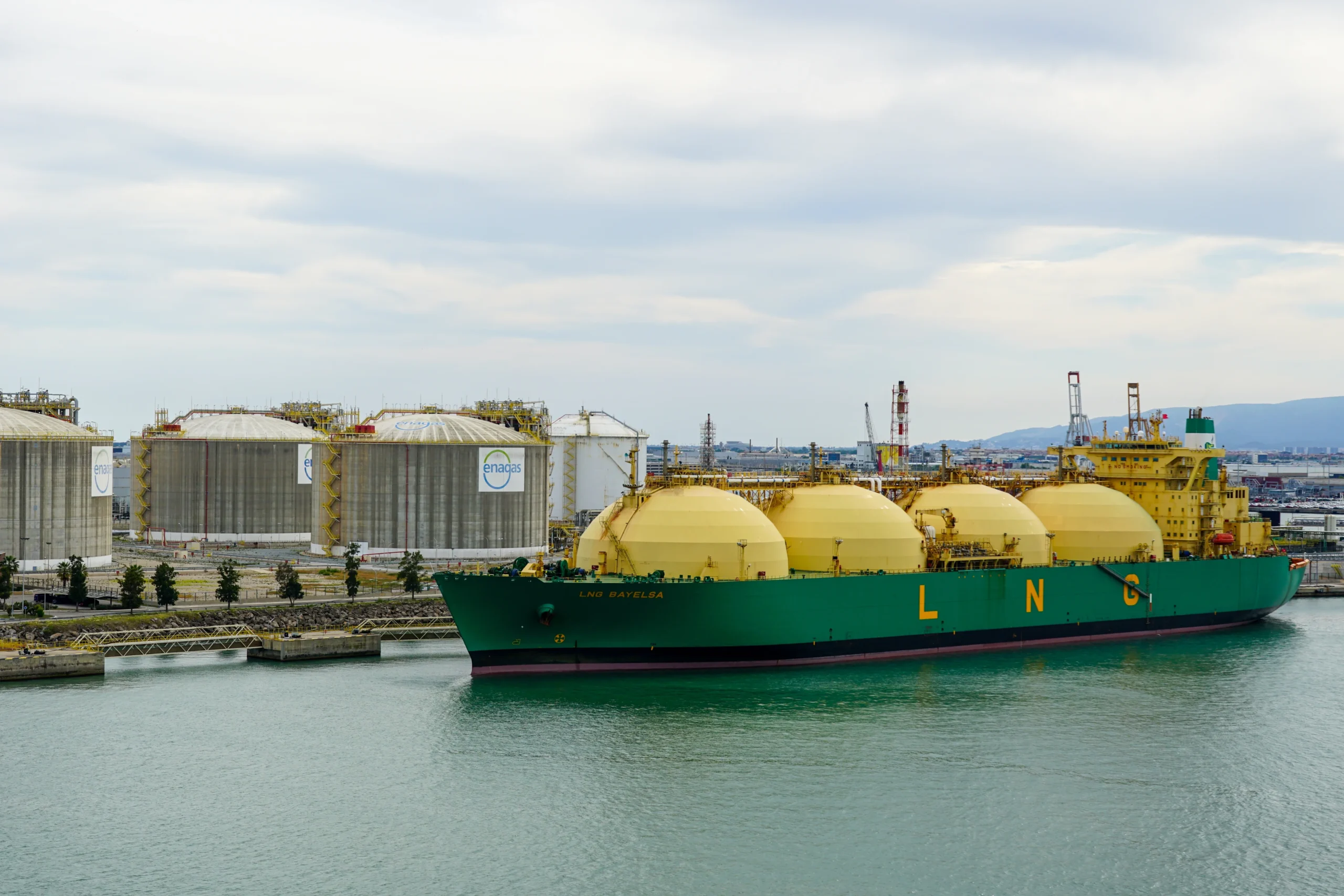
For this reason, Argentina LNG integrates the production of Vaca Muerta with gas pipelines and liquefaction systems designed to convert the gas into LNG for maritime transport.
This chain would allow a growing part of Argentine production to access the international market without depending exclusively on regional gas pipeline connections.
The financing opens a decisive stage for Argentina LNG
While financial discussions continue, the project has also made progress in its investment framework, Argentina LNG has applied to join the Incentive Regime for Large Investments (RIGI), a mechanism created to offer specific conditions to large-scale developments.
The closing of the financing and the final investment decision scheduled for November now appear as two key points in defining the project’s timeline.
If the scheme currently under negotiation is finalized, JPMorgan and Santander would lead an operation worth up to US$15 million intended to transform the Vaca Muerta gas field into a new Argentine platform for LNG production and export.
Source: Oil Price
Photo: Shutterstock