Jackdaw moves towards approval in the UK
The UK government is nearing a new decision on Jackdaw, the North Sea natural gas project that has been at the center of an energy and environmental dispute for years. Authorization could come in September and would pave the way for production to begin in the following months.
The potential breakthrough comes as the UK seeks to bolster its energy security and reduce its reliance on imports. At the same time, the government must balance this strategy with its climate commitments and the opposition from various environmental groups.
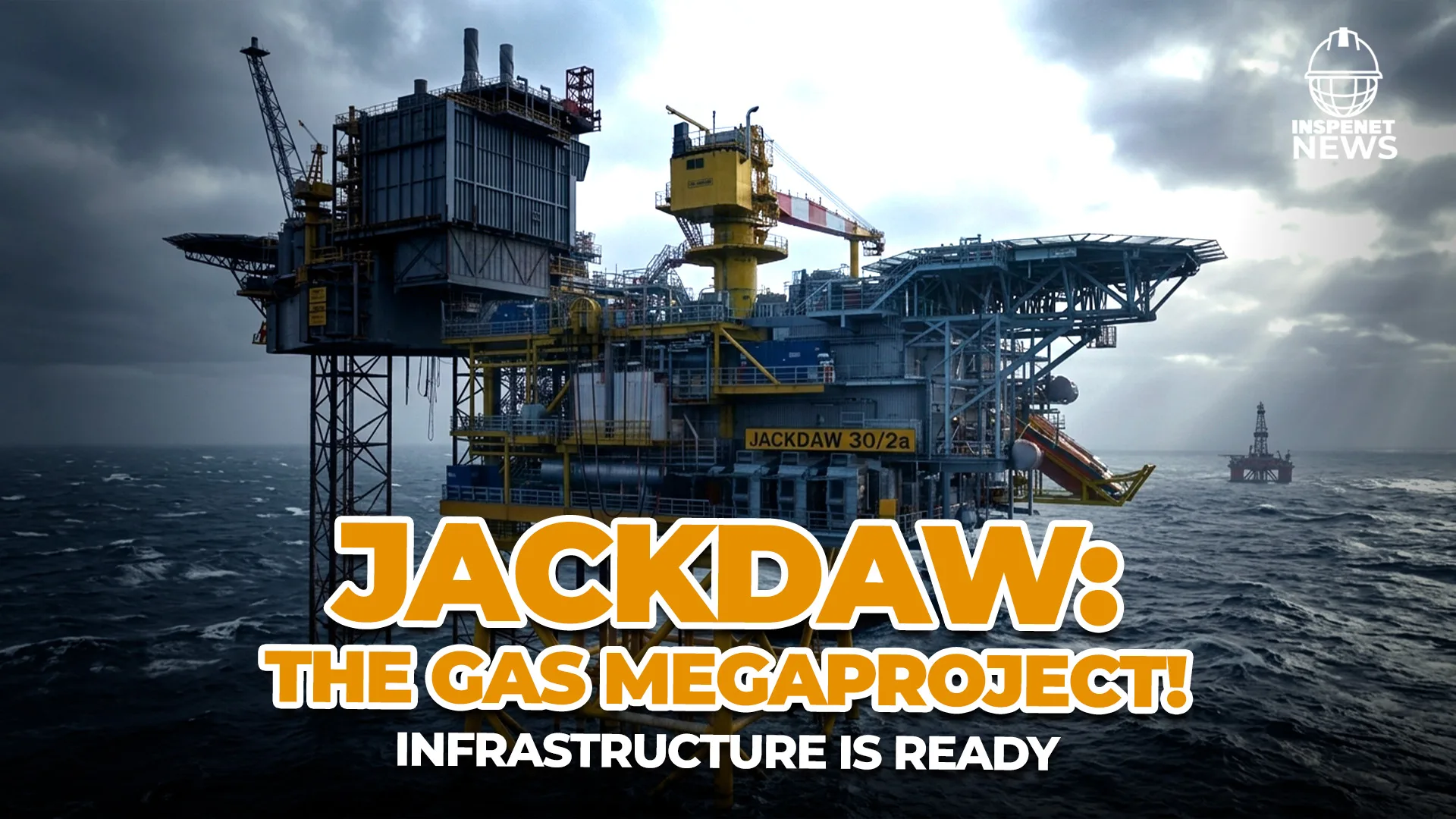
Jackdaw is particularly significant because much of the necessary infrastructure is already in place. Therefore, authorization would allow the integration of new British gas production in a much shorter timeframe than is typical for an energy project of this scale.
Jackdaw could begin supplying gas this winter
The project is in a very advanced stage, Shell and Equinor operate Jackdaw through Adura and assure that the necessary infrastructure is 99% complete.
This means that natural gas could begin flowing during the coming winter if the authorities complete the authorization process on time.
In this way, Jackdaw presents a significant difference compared to projects that still require years of construction. Much of the investment and physical work has already been completed, so the regulatory decision has become one of the last obstacles to commencing operations.
However, the approval is not yet finalized; Energy Secretary Miatta Fahnbulleh must issue her recommendation, and subsequently the North Sea Transition Authority must complete the corresponding process.
How much gas can Jackdaw supply to the UK?
On the other hand, the volume that the project could bring is one of the main arguments of its operators.
According to estimates presented by the responsible companies, Jackdaw would have the capacity to represent around 6% of British gas production during its peak activity period.
That percentage is significant in a country that relies on foreign supplies to meet some of its energy needs. Increased gas production within British waters would add a domestic source to the system.
However, the impact on the market must be analyzed with caution; production from a single deposit does not eliminate dependence on imports nor does it guarantee a reduction in the prices paid by households and businesses.
Furthermore, the North Sea industry is in a mature stage; much of its commercially attractive reserves have already been exploited, and this limits the scope for recovering production levels recorded decades ago.
Energy security returns to the center of the British debate
The government led by Andy Burnham has taken a pragmatic stance on oil and gas. The Prime Minister has acknowledged that these sources will remain part of the energy system for an extended period while the transition to other technologies progresses.
This proposal places the North Sea back at the heart of the energy security debate. The issue is no longer solely about how much fuel remains available; it also addresses how much the UK should produce domestically versus how much it is willing to import.
The government also believes that the sector remains linked to jobs and economic activity in areas that have been tied to hydrocarbon extraction for decades. The impact of the energy transition on workers in northeast Scotland is also part of this debate.
Why was Jackdaw's previous authorization revoked?
However, Jackdaw had already completed a significant part of the administrative process.
The project obtained permits years ago, along with other North Sea projects. Subsequently, environmental groups took the case to court and challenged how its climate impacts had been assessed.
A judge ruled that the assessments must take into account the emissions generated when the extracted oil and gas are ultimately used. As a result, the previous environmental permits for Jackdaw and Rosebank were invalidated.
The companies then had to resubmit the necessary environmental documentation.
For this reason, the current process is not simply about granting a new exploration license. Jackdaw already has a license, and the outstanding issue is the environmental permits required to develop the operation under the criteria established after the court decision.
Shell and Equinor have the project practically finished.
Likewise, the state of the facilities explains why a government decision could have consequences in a relatively short period.
Shell and Equinor have invested heavily in the development of Jackdaw and now jointly operate their British assets through Adura. The infrastructure built brings the project close to the stage where gas can be brought to market.
For companies, starting production would allow them to capitalize on an investment that is already well underway. For the UK, it would mean adding to domestic supply during a period marked by increased attention to energy costs and fuel availability.
The situation also highlights the regulatory risks associated with large hydrocarbon projects. Even an operation with nearly completed infrastructure can be halted when its permits are challenged in court.
The Rosebank site will be the next big decision
Meanwhile, the Rosebank field is keeping another far-reaching decision open for the British energy sector.
Although both projects are often mentioned together in the North Sea debate, their processes are being studied separately. Therefore, authorization for Jackdaw does not automatically imply that Rosebank will receive the same treatment.
Rosebank is also on a different scale; estimates place its resources at up to 500 million barrels of oil or its equivalent, making it the largest undeveloped deposit in British waters.
Authorities are still studying its environmental impact; a decision could come later, and the government is analyzing ways to allocate some of the revenue related to the project to clean energy investments.
Thus, the outcome of the Rosebank field will serve as another signal regarding the strategy that the United Kingdom intends to pursue with the remaining North Sea reserves.
Environmental groups maintain their opposition
On the other hand, any eventual authorization of Jackdaw will hardly put an end to the conflict.
Environmental groups argue that developing new oil fields prolongs dependence on fossil fuels and generates emissions incompatible with climate goals. These organizations also question whether the increase in domestic supply will directly translate into cheaper energy for consumers.
The opposition has already had concrete consequences; previous legal actions forced a review of the environmental assessments of Jackdaw and Rosebank and delayed the development of both projects.
Therefore, any new authorization will have to be based on an assessment capable of meeting the environmental requirements established by the courts. The government will have to justify how the project fits within its energy and climate strategy.
Jackdaw tests the UK's energy future
Ultimately, the decision regarding Jackdaw will have a significance that goes beyond a single site.
Its potential launch will show the extent to which the United Kingdom is willing to maintain North Sea gas production while increasing investments aimed at transforming its energy system.
The country faces two simultaneous pressures. It needs to ensure sufficient energy for homes and businesses while simultaneously seeking to reduce emissions over the coming decades.
Jackdaw sits squarely at the heart of this tension. If it receives final approval, the UK will add new domestic natural gas production in a relatively short time. However, the project will also keep alive the debate about how much oil and gas the country should continue to extract during its energy transition.
Next will come another, larger-scale test: the Rosebank field. Decisions on both projects will help define the role the North Sea will play in British energy policy for years to come.
News of additional interest
Milei intensifies pressure over Falklands oil
Argentine President Javier Milei escalated tensions over the Falkland Islands by warning that his government will impose sanctions on oil companies involved in projects in the area that lack Argentine authorization. The president reiterated Argentina's sovereignty claim and described the Sea Lion oil development, located approximately 220 kilometers north of the archipelago, as a "clear and imminent danger."
The warning specifically targets the project operated by Navitas Petroleum Development and Production and Rockhopper Exploration. Sea Lion has already reached its final investment decision, and its managers expect to begin oil extraction in March 2028. The development includes a first phase of 11 subsea wells and a second phase with another 12 wells. Production could be sustained for more than 30 years.
AI is changing the rules of the energy game
The energy industry is learning from the lessons of five years of transitioning to cleaner energy sources. During a panel at the AFPM Summit, experts suggested that new projects must respond to proven regional demand, manage capital wisely, and identify logistical problems from the outset. They also recommended evaluating suppliers, raw materials, and equipment in advance to avoid delays once investments have already been committed.
Now another pressure is emerging: the rapid growth of artificial intelligence and data centers. Electricity availability is already a key part of initial discussions with clients, while equipment such as transformers and compressors face supply constraints. Added to this is a shortage of skilled workers. The panel also highlighted that sustainable aviation fuel production remains below targets despite airline demand and refinery capacity.
Diesel breaks records and threatens wallets
The average price of diesel in the United States reached a record $5,820 per gallon amid increasingly tight global supply. Tensions with Iran and Ukraine's attacks on Russian refineries have reduced international supply. Russia even suspended its diesel exports until September 30. Since the end of February, the price of the fuel has risen by 55%.
The pressure comes as US fuel reserves are at very low levels. In August, distillate inventories reached their lowest average for that month since 1982. The situation is most critical on the East Coast, where stocks have fallen to 19.3 million barrels. Furthermore, autumn will bring increased consumption due to harvests and transportation, while winter will raise the demand for heating oil.
Arcadia and MB Energy are preparing the eSAF route
Arcadia eFuels and MB Energy have signed a memorandum of understanding to explore the development of a European synthetic aviation fuel (eSAF) supply chain. Arcadia will contribute its production expertise, while MB Energy will assess its role in fuel procurement and distribution. The goal is to connect production plants with airlines and other customers in the European market.
The collaboration will study the entire eSAF commercial lifecycle, from transport and storage to blending and final delivery. The companies aim to create a system capable of handling larger volumes as demand grows and European regulations to reduce aviation emissions become more stringent. The agreement will also allow them to explore how to leverage MB Energy's existing infrastructure and business relationships within the energy sector.