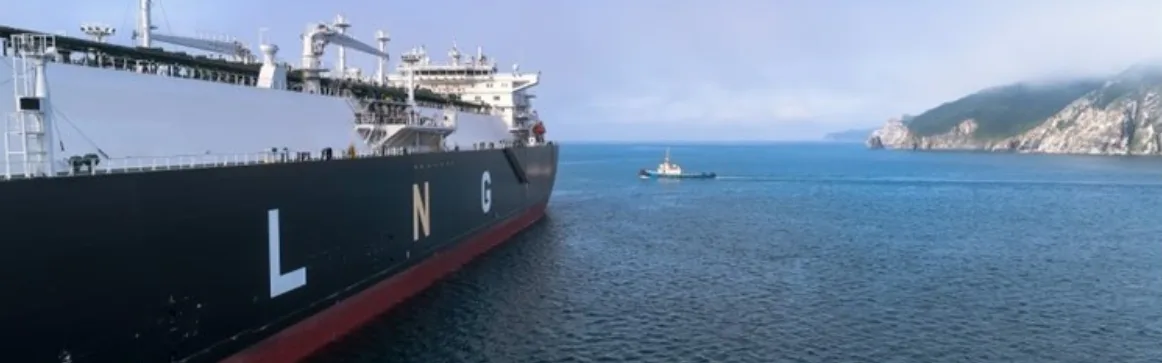
YPF, Eni, and XRG have submitted the Argentina LNG project for approval under the Large Investment Incentive Regime (RIGI). This integrated initiative seeks to transform Vaca Muerta’s gas production into a large-scale liquefied natural gas export platform.
The project contemplates an estimated investment of US$51 billion over its entire lifespan, according to its promoters, making it the largest proposed private investment in Argentina and the highest-value project submitted to date under the RIGI.
The planned infrastructure would cover virtually the entire LNG value chain: gas production in Neuquén, new gas pipelines, processing and fractionation facilities for liquids, and two floating liquefaction units, known as FLNG, off the coast of Río Negro, in the San Matías Gulf.
Argentina LNG: US$29 billion before 2031
Although the US$51 billion corresponds to the projected expenditure over the project’s life, the initial projected investment is considerably lower. Argentina LNG estimates approximately US$29 billion in investment until 2031, when the two FLNG units are expected to become operational.
Of that amount, some US$24 billion would be allocated to infrastructure: gas pipelines, industrial facilities, port infrastructure, and the floating liquefaction units themselves.
Another US$5 billion would be directed to the initial development and drilling of the wells necessary to guarantee the gas supply from Vaca Muerta.
The technical challenge lies in feeding the FLNGs
An LNG plant requires a continuous and stable gas supply. A liquefaction train cannot be designed solely based on the total volume of existing reserves.
A supply curve compatible with liquefaction capacity must be guaranteed for decades.
This means that the development of Vaca Muerta will need to be coordinated with the expansion of: production capacity; collection networks; processing; gas transportation; compression; operational storage; port infrastructure; FLNG units.
The nominal capacity of 12 MMtpa does not, by itself, guarantee equivalent annual production.
Actual availability will depend on gas feed, maintenance, infrastructure constraints, liquefaction unit efficiency, and operational conditions.
An export platform, not just a plant
Developers estimate that Argentina LNG could generate approximately US$10 billion annually in export revenues for two decades.
Construction is planned between 2026 and 2030 and is estimated to generate around 20,000 direct, indirect, and induced jobs annually, with a maximum of approximately 40,000 workers during the period of highest activity. Additionally, promoters calculate acquisitions of about US$15 billion from Argentine suppliers over the project’s life.
This means that the potential industrial impact extends far beyond the FLNG units.
The supply chain will need to involve manufacturing, construction, engineering, piping, valves, instrumentation, rotating equipment, electricity, structures, logistics, and specialized services.
Reliability engineering at offshore scale
From a maintenance perspective, the FLNG concept significantly changes the strategy compared to a land-based facility.
A compressor or critical turbomachinery installed onshore can have relatively direct access for major maintenance. On a floating unit, the availability of equipment, spare parts, specialized personnel, and lifting means is conditioned by the marine environment.
Therefore, the design must incorporate criteria for reliability, maintainability, availability, and safety from the outset. The architecture of redundant equipment can acquire special importance in systems whose unavailability could halt LNG production.
In a facility with millions of tons per year capacity, an equipment failure in a process unit can represent not only a technical repair but also a significant loss of export capacity.
SOURCE and PHOTO: https://worldoil.com/