Table of Contents
- Remote inspections with resident subsea capability
- Subsea availability during IMR activities
- Liberty™ Resident System: docking station for ROVs and AUVs
- Onshore control using OROC and RPACT
- Remote visual inspection and data traceability
- Åsgard B case: 56 days of remote subsea operation
- 1,344 operating hours completed from shore
- Criteria for integrating a resident ROV into an IMR plan
- Conclusions
- References
- Frequently Asked Questions (FAQs)
Subsea infrastructure inspection depends on coordinating asset access, vessel availability, specialized personnel, weather windows, positioning systems, and inspection resources. In certain fields, mobilization time can significantly exceed the time required to observe a connection, verify a barrier, or confirm a condition before proceeding with an inspection, maintenance, and repair (IMR) activity.
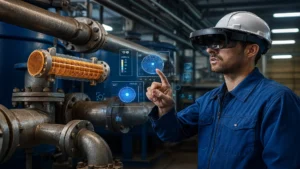
Remote inspections allow part of the piloting, supervision, and analysis to be performed from shore. In subsea applications, resident ROVs can remain deployed near the infrastructure for extended periods, with power supply, communications, and return to a docking station. This configuration reduces reliance on a dedicated vessel when the scope requires observation, monitoring, or technical support across multiple phases of a campaign.
Selection of this architecture depends on the inspection scope, access frequency, required tooling, autonomy, and reliability of the control link. Its application is particularly suitable when the asset requires successive verification activities and conventional mobilization affects availability, cost, or personnel exposure.
Remote inspections with resident subsea capability
Industrial remote inspections use different platforms depending on geometry, accessibility, and operating environment. Drone inspection is applicable to elevated structures, open areas, and selected topside locations; ground-based robotic systems cover surfaces, tanks, and confined spaces; while ROVs operate on submerged infrastructure and can combine visual inspection with tooling, sensors, and manipulation.
During a conventional IMR campaign, the ROV is deployed from a vessel, executes the planned scope, and is recovered when the scheduled activity is complete. If a subsequent requirement arises to confirm a leak, verify a barrier, track a pig, or inspect a connection, subsea access again depends on the availability of surface resources.
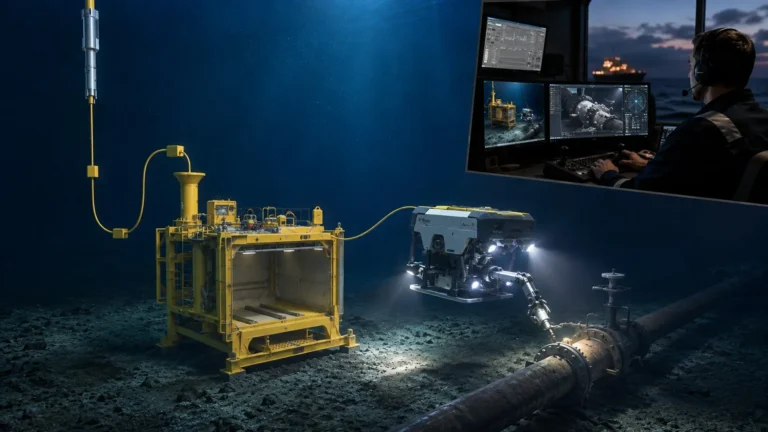
A resident system keeps the vehicle associated with a subsea station to provide power and communications over extended periods. The ROV can undock to perform a task, transmit video and data to the control center, and return to the station once the scope is complete. Robotic inspection remains available within the field without requiring a full mobilization for each observation.
Subsea availability during IMR activities
During an IMR campaign, verification requirements often occur between work phases. Testing may require observation for potential leaks; an isolation activity may require barrier verification; pigging may require active pig tracking; and a tie-in may require visual confirmation before the next phase is released.
Under these conditions, keeping the vehicle subsea allows observations to be scheduled in line with the actual work sequence. Deployment and recovery continue to require dedicated resources, and certain interventions will still depend on vessels, heavy-duty tooling, or offshore personnel. Maintaining the ROV subsea can reduce the need for a dedicated vessel spread used solely for observation and subsea support.
For asset integrity, vehicle availability must be supported by control of data quality. Each record should retain component identification, position, orientation, date, operating condition, and a reference to the activity being performed. Without these references, video captured from the same asset may show differences caused by the observation point rather than an actual change in asset condition.
Liberty™ Resident System: docking station for ROVs and AUVs
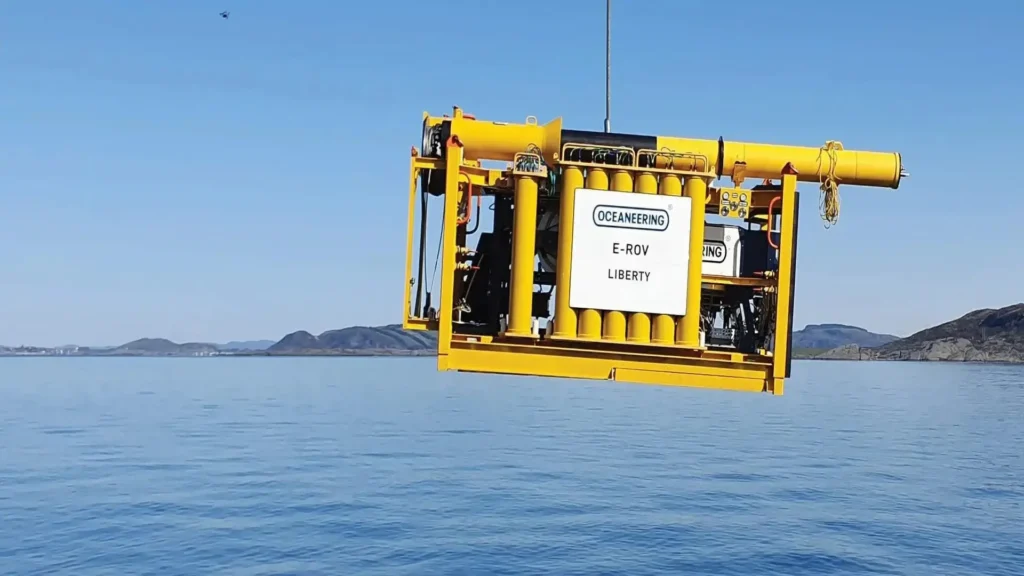
Oceaneering developed the E-ROV concept as a self-contained, battery-powered work-class ROV designed to remain deployed on the seabed and be controlled from shore. The program included developing, manufacturing, testing, and mobilizing the system. The company now incorporates this resident subsea approach within its ROV portfolio, including the Liberty™ Resident System.
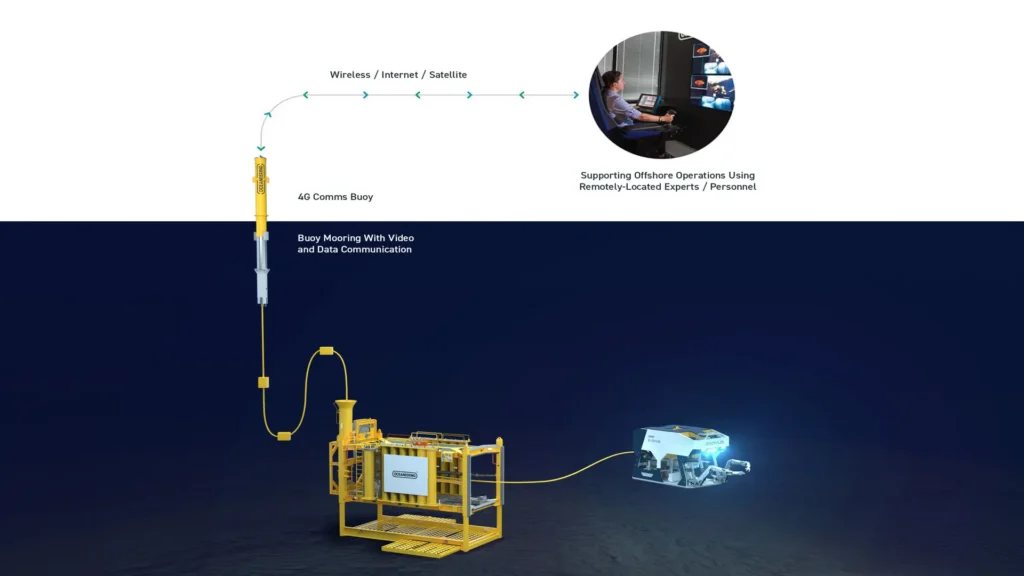
The Liberty™ Resident System from Oceaneering is a mobile, self-contained docking station for resident ROV and AUV operations. Technical documentation specifies 550 kWh of battery power and communication options with an Onshore Remote Operations Center (OROC) via an integrated buoy, rig downline, or subsea infrastructure connection.
The station keeps the vehicle available in the field and supports IMR applications, decommissioning, infrastructure monitoring, and operations in fields with a high concentration of subsea assets. Within an offshore inspection strategy, the system allows the vehicle to remain close to the asset while piloting, supervision, and selected specialist support are performed from onshore facilities.
The following Oceaneering video presents the Liberty™ Resident System concept of operation, its configuration as a resident docking station for ROVs and AUVs, and its deployment model for subsea operations.
Onshore control using OROC and RPACT
Remote ROV control depends on a communications chain capable of transferring commands, video, and operational data with sufficient continuity to maintain control of the vehicle and its tooling. Oceaneering’s Onshore Remote Operations Centers integrate with RPACT (Remote Piloting and Automated Control Technology), Oceaneering’s proprietary technology for remote piloting and automated control functions.
RPACT supports vessel-to-vessel radio frequency communications, satellite/Internet connectivity, and subsea optical links. The platform incorporates preprogrammed and automated commands, together with video processing functions that analyze imagery, determine spatial distances, and recognize shapes to support ROV movement.
Operational planning should address latency, link availability, loss of communications, vehicle recovery, energy status, and the operating limits of installed tooling. These parameters define the tasks authorized during a remote mission and the actions required following communications degradation.
Remote visual inspection and data traceability
Remote visual inspection can document external condition, connection status, debris, visible damage, component position, and indications of leakage. The scope can be expanded when the ROV carries intervention tools, sensors, or additional measurement systems.
Result quality depends on retaining references that make observations repeatable and comparable. For mechanical integrity activities, recorded footage should be tied to the inspected component and the conditions under which it was acquired. ROV position, camera orientation, date, activity in progress, and acquisition configuration allow the evidence to be reconstructed during subsequent technical review.
Åsgard B case: 56 days of remote subsea operation
At Åsgard B, Equinor used the Liberty™ E-ROV System during an IMR campaign involving pigging and spool replacement activities in approximately 300-meter water depths. Operated from Oceaneering’s OROC in Stavanger, the vehicle provided continuous subsea presence, real-time data, and operational support throughout execution.
The system remained on the seabed for 56 days. A vessel was used for deployment and recovery; during operations, the system required no dedicated offshore personnel. The E-ROV monitored isolation tools acting as secondary barriers, supported active pig tracking, detected potential leaks during testing activities, and verified barrier integrity during tie-in operations.
1,344 operating hours completed from shore
At the end of the campaign, the Liberty™ E-ROV completed 1,344 subsea operating hours from shore and was recovered with a 16% battery reserve. Its continuous subsea presence also allowed essential monitoring and verification activities to continue during periods when weather conditions restricted surface vessel operations.
The scope also incorporated specialists located onshore. The isolation specialist responsible for validating well isolation activities participated from the OROC in Stavanger, maintaining technical support during critical phases of the operation without additional offshore mobilization.
The reduction in personnel exposure results from relocating selected piloting, supervision, and technical validation functions onshore. Human control remains part of the operation; what changes is the physical location from which those functions are performed.
Criteria for integrating a resident ROV into an IMR plan
Selection should consider field access frequency, water depth, distance from shore, subsea asset density, vessel availability, autonomy, required tooling, and the type of information needed. Fields containing multiple manifolds, pipelines, tie-ins, and distributed subsea equipment may justify a resident platform when verification activities are recurrent.
Communications dependency must also be evaluated. A scope requiring manipulation, intervention, or real-time data acquisition needs defined operating limits for link degradation, battery status, loss of control, and vehicle recovery. Procedures should specify which activities may continue, which must be suspended, and which conditions require the system to be secured or recovered.
Where the scope is limited to a single inspection and a conventional campaign can adequately provide subsea access, resident deployment may offer limited operational benefit. For campaigns involving successive verifications, test support, and frequent observation requirements, reduced vessel standby and specialized mobilization can materially change IMR planning.
The generated data must also be incorporated into the asset integrity management system. Images, video, sensor outputs, and intervention records should be directly linked to the inspected component, its location, and the operating condition. This traceability enables comparison between campaigns and helps determine whether an observed difference is associated with the asset itself or with the data acquisition process.
Need to evaluate a remote subsea inspection solution?
Explore Oceaneering’s resident ROV and remote operations solutions, or contact Oceaneering International through Inspenet Corporate to learn about the options available for your application.
Conclusions
Remote inspections using resident ROVs should be evaluated based on subsea access frequency, energy autonomy, communications availability, required tooling, criticality of IMR activities, and defined procedures for loss of link or vehicle recovery. Resident deployment is particularly applicable when an asset requires successive verification activities and vessel dependency affects operational continuity.
For asset integrity, system effectiveness depends on maintaining traceability between images, video, sensor data, intervention records, the inspected component, its location, and the operating condition. A resident ROV provides technical value when it enables repeatable observations, supports integrity decisions, and preserves technical control over the information generated throughout the campaign.
References
- Oceaneering International. Liberty™ Resident System.
- Oceaneering International. Liberty™ E-ROV System Supports Fully-Remote Subsea IMR Campaign at Åsgard B.
- Oceaneering International. Onshore Remote Operations Centers (OROCs).
- Oceaneering International. Remote Piloting and Automated Control Technology (RPACT).
- Oceaneering International. Oceaneering Announces Contract with Statoil for E-ROV Concept Development and Testing. 2017.
Frequently Asked Questions (FAQs)
What is a resident ROV?
A resident ROV remains deployed close to the asset and uses a subsea docking station for power, communications, and docking between operations.
What is the difference between a resident ROV and a conventional ROV?
A conventional ROV is deployed and recovered during a campaign; a resident ROV can remain subsea and execute successive tasks without repeating the full mobilization.
Can a resident ROV be operated from shore?
Yes. Systems such as Liberty™ use onshore operations centers and remote piloting technologies to transfer commands, video, and operational data between the ROV and its operators.
What can a resident ROV inspect?
The scope depends on the installed cameras, sensors, and tooling. It can support visual inspection, connection and barrier verification, leak observation, and other activities defined within the IMR scope.
When is a resident ROV appropriate?
When subsea verification is recurrent, vessel dependency is significant, or continuous observation is required across multiple phases of an IMR campaign.