Table of Contents
- Corrosion as a strategic integrity variable
- Condition based decision making
- Non Destructive Testing as a foundation of integrity
- Engineering strategies for corrosion control
- Integration with Risk Based Maintenance
- Benefits for reliability and sustainability
- Technical training: A key factor in corrosion management
- Conclusions
- References
The corrosion management modern management has evolved from an approach focused exclusively on identifying damage mechanisms to a strategic discipline integrated into mechanical integrity, reliability, and asset management programs. The objective is no longer simply to detect corrosion, but to understand its progression, anticipate its consequences, and transform technical data into decisions that reduce risk and optimize operational performance.
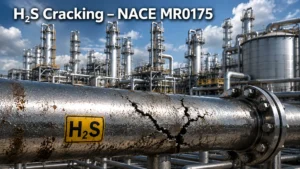
Corrosion remains one of the leading causes of deterioration in industrial facilities, but its impact extends far beyond material degradation. In industries such as oil and gas, petrochemicals, power generation, mining, and manufacturing, corrosion processes can compromise personnel safety, affect operational continuity, increase maintenance costs, and significantly reduce asset service life.
Corrosion as a strategic integrity variable
In complex industrial environments, where metallurgical, chemical, thermal, and hydrodynamic factors interact, corrosion must be analyzed as a variable that directly influences the structural integrity of equipment.
Progressive material loss can affect the containment capacity of pipelines, pressure vessels, storage tanks, and heat exchangers, increasing the likelihood of failures that impact production and process safety.
From this perspective, corrosion management focuses on identifying deterioration trends, assessing risks, and establishing mitigation strategies that extend asset service life without compromising safety or operational profitability.
Condition based decision making
The most advanced organizations have migrated from reactive approaches to condition-based maintenance models, where decisions are supported by information obtained directly from the actual condition of equipment.
This approach combines continuous monitoring, trend analysis, and integrity assessment to determine when an asset should be serviced, avoiding both unnecessary repairs and unexpected failures.
In this context, data ceases to be merely inspection records and becomes a tool that supports maintenance planning, risk management, and resource optimization.
Non Destructive Testing as a foundation of integrity
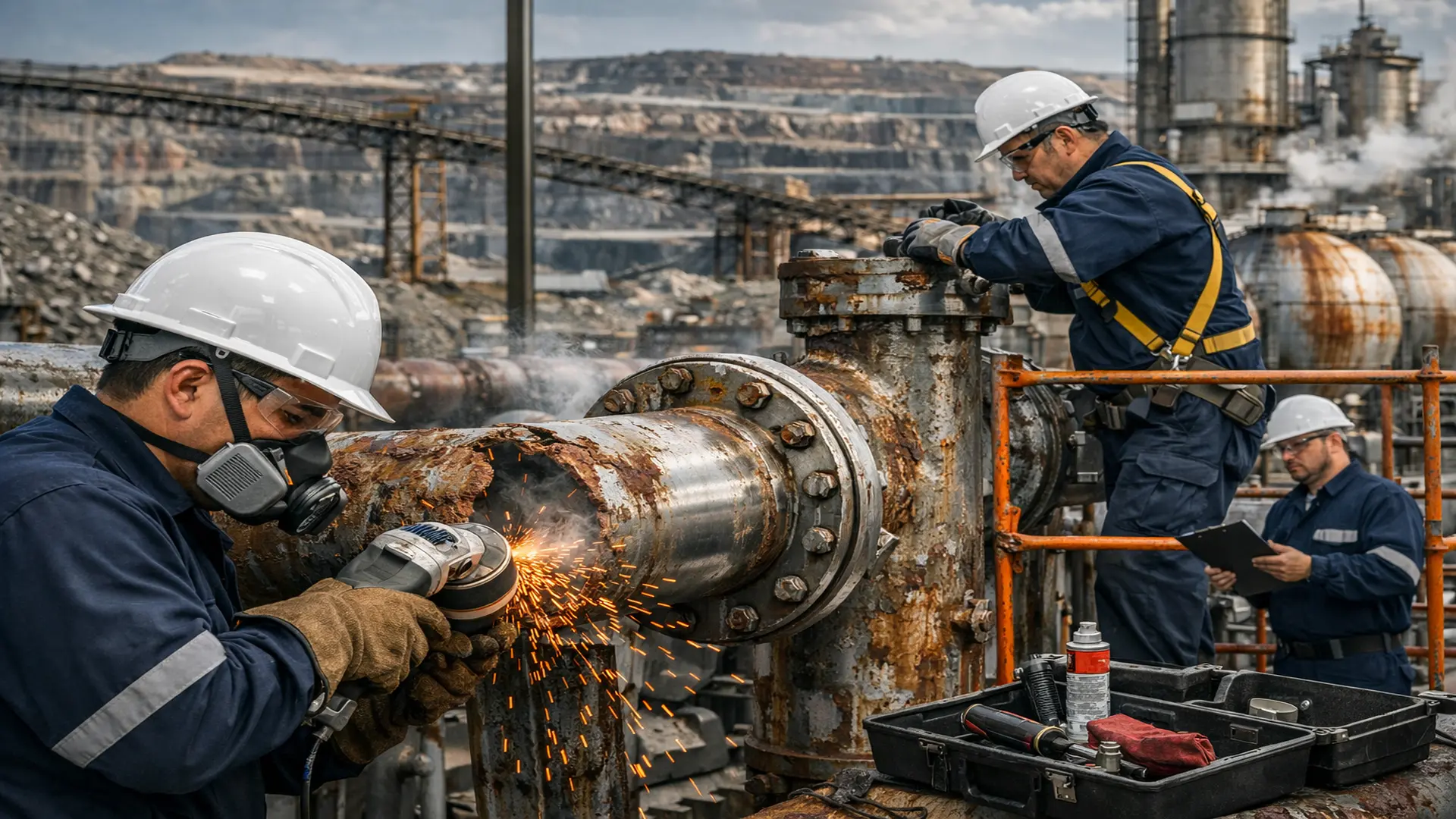
Non-Destructive Testing (NDT) plays an essential role in corrosion management because it allows assets to be evaluated without interrupting their operation.
Among the most widely used techniques are Ultrasonic Testing (UT) and Industrial Radiography (RT), both recognized for their ability to detect and characterize deterioration mechanisms associated with corrosion.
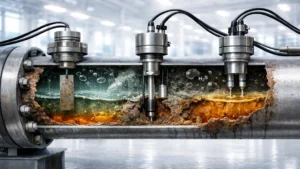
Ultrasonic testing enables the measurement of remaining wall thickness, identification of localized material loss, and establishment of corrosion rates over time. This information is essential for estimating remaining life and defining inspection intervals.
Industrial radiography, in turn, provides information on internal conditions, corrosion product accumulation, associated defects, and discontinuities that could compromise component integrity.
The integration of NDT results with integrity assessment methodologies makes it possible to develop predictive maintenance strategies and risk-based inspection programs.
Engineering strategies for corrosion control
Effective corrosion mitigation requires a combination of technical measures adapted to actual service conditions.
Proper material selection
The first line of defense against corrosion is proper material selection. Compatibility between the material and the operating environment must be evaluated considering temperature, pressure, fluid chemistry, and potential degradation mechanisms.
Appropriate material selection significantly reduces the likelihood of accelerated corrosion and lowers costs associated with repairs and premature replacements.
Integrity oriented design
Design decisions have a direct influence on corrosion performance. Configurations that promote stagnant zones, solids accumulation, or electrochemical potential differences can accelerate localized deterioration.
Therefore, design should aim to minimize susceptible areas while facilitating equipment inspection and maintenance.
Control of operating variables
Factors such as temperature, pH, flow velocity, contaminant concentration, and fluid chemistry directly influence the kinetics of corrosion processes.
Maintaining these variables within limits established by integrity criteria helps preserve operating conditions and reduce degradation rates.
Protection systems and continuous monitoring
Protective coatings, corrosion inhibitors, and cathodic protection are fundamental tools within an integrated mitigation strategy.
However, their effectiveness depends on monitoring programs capable of verifying performance over time. The periodic application of NDT techniques facilitates evaluation of these systems without interrupting production.
Integration with Risk Based Maintenance
Corrosion management reaches its maximum potential when integrated with risk-based maintenance programs and asset management methodologies.
Condition-Based Maintenance (CBM) allows interventions to be scheduled according to the actual evolution of damage, optimizing resources and reducing operating costs.
Complementarily, criticality analyses make it possible to prioritize equipment according to its impact on safety, the environment, production, and operational continuity.
The combination of inspection, monitoring, risk analysis, and maintenance creates a comprehensive perspective that supports more efficient technical decision-making.
Benefits for reliability and sustainability
The implementation of effective corrosion management programs generates tangible benefits for organizations.
Reducing unplanned failures increases asset availability, while decreasing loss-of-containment events strengthens process safety and environmental performance.
Likewise, optimization of operating conditions contributes to improved energy efficiency and extends the service life of existing infrastructure, reducing the need for premature investments in replacements or expansions.
Technical training: A key factor in corrosion management
Technology and procedures are essential, but their effectiveness depends on the knowledge and technical capabilities of the professionals responsible for interpreting inspection data.
Specialized training in Non-Destructive Testing, mechanical integrity, and damage assessment enables the transformation of data into engineering criteria applicable to asset management.
In this regard, the training programs developed by Inspenet strengthen the competencies required to perform inspections, interpret results, and actively participate in decision-making related to reliability, maintenance, and the integrity of industrial equipment.
Continuous training contributes to improving the quality of assessments, optimizing inspection cycles, and reducing risks associated with critical assets.
Conclusions
Corrosion management is currently an essential component of asset integrity and operational reliability. Its scope goes beyond controlling a degradation mechanism; it involves using technical information to anticipate risks, optimize interventions, and ensure safe and sustainable long-term performance.
Organizations that integrate monitoring, non-destructive testing, condition-based maintenance, and risk analysis are better positioned to extend asset service life, reduce operating costs, and strengthen the continuity of their operations.
References
- Inspenet. Programas de formación en inspección y ensayos no destructivos (UT y RT). https://inspenet.com
- International Organization for Standardization. (2019). ISO 9712: Non-destructive testing, Qualification and certification of NDT personnel. ISO.
- API. (2021). API 580: Risk-Based Inspection. American Petroleum Institute.
- API. (2021). API 570: Piping Inspection Code. American Petroleum Institute.
- ASM International. (2006). ASM Handbook, Volume 13A: Corrosion: Fundamentals, Testing, and Protection. ASM International.