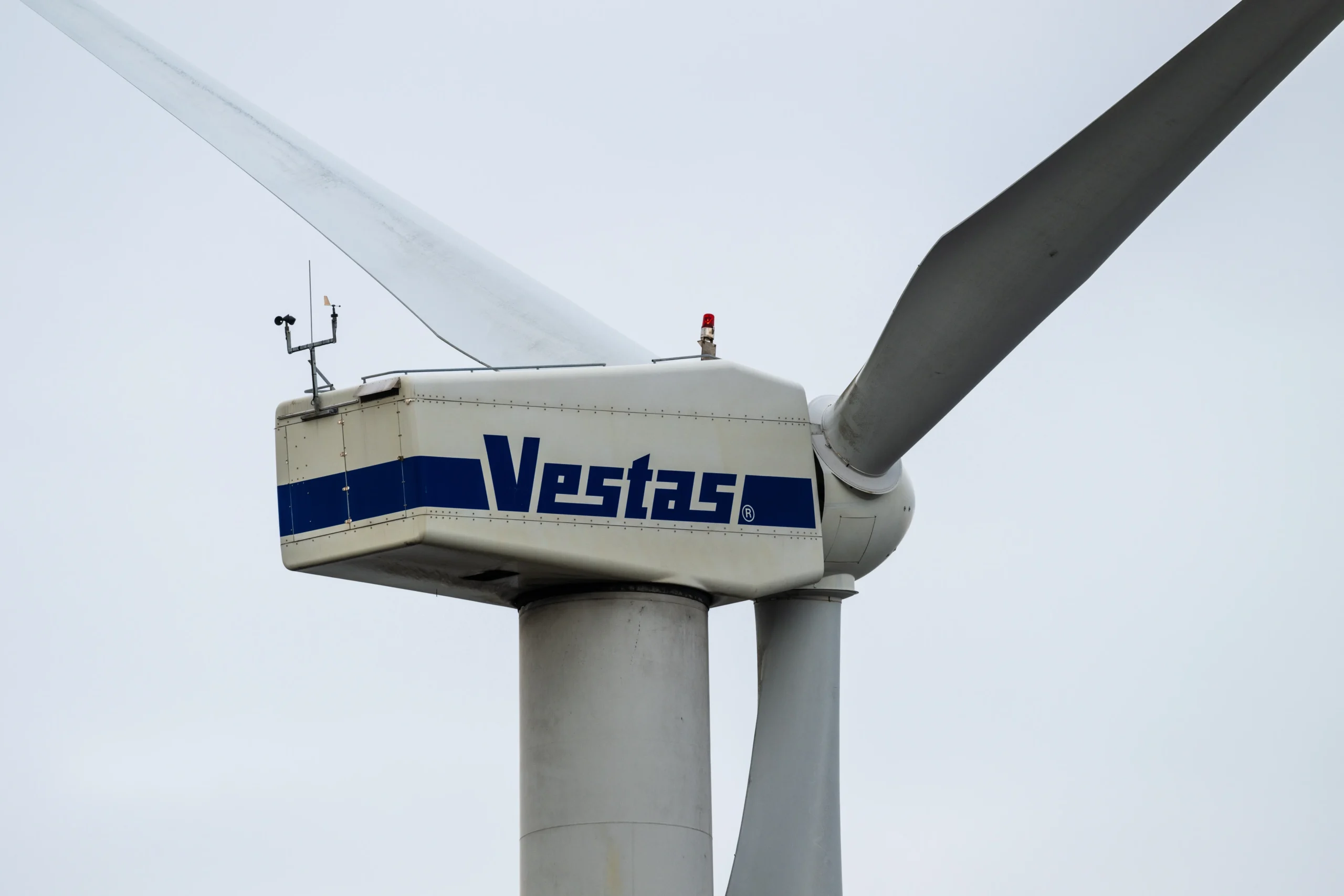
The shares of Vestas Wind Systems they registered a sharp rise after the Danish wind turbine manufacturer reported second quarter 2026 results that exceeded expectations and raised its profitability forecasts for the year.
Investor reaction led to Vestas shares rising by around 20% on Wednesday, August 12, this move placed the company among the best-performing stocks on the European market.
Furthermore, the results show a recovery in profitability after several years marked by rising material costs, supply chain problems, and pressure on margins in the wind energy sector.
Vestas improves its results during the second quarter
Between April and June, Vestas recorded income from 4.723 billion euros, a year-on-year growth of 26.1%, net profit reached 285 million euros compared to 34 million euros obtained during the same quarter of 2025.
Furthermore, operating profit before extraordinary items amounted to 446 million euros, a figure well above the 205 million expected by the market according to the estimate collected by the company.
The improvement was also reflected in the margin, Vestas achieved a EBIT margin before special items of 9.4%, with an improvement of 7.9 percentage points compared to the previous year.
Furthermore, the gross margin increased to 17%, compared to 11.1% in the second quarter of 2025, Vestas CEO Henrik Andersen highlighted the business recovery and increased activity. This performance was supported by Power Solutions and the development of onshore and offshore wind operations.
Vestas’ order book reaches 76.9 billion euros
In addition to the financial improvement, commercial activity gained strength, during the quarter, new orders for wind turbines reached 3.349 MW, a year-on-year increase of 67%.
At the end of June, the turbine order backlog was valued at approximately €36 billion, this amount was supplemented by €40.9 billion linked to future revenue from service contracts.
In this way, the Vestas’ combined portfolio reached 76.9 billion euros, about 9.6 billion more than a year earlier. The evolution of orders is especially relevant for the manufacturer due to the growth in demand for wind energy and the increase in activity expected during the second half of the year.
Vestas raises its margin forecast for 2026
Following the quarterly results, Vestas raised its profitability outlook, the company now expects a EBIT margin before special items of between 7% and 9% during 2026 compared to the previous range of 6% to 8%.
However, it maintained its annual revenue forecast between 20 billion and 22 billion euros the planned investments remain at around 1.2 billion euros.
The review represents another sign of recovery for a manufacturer that in recent years has had to cope with inflation, higher industrial costs and disruptions to international supply chains.
Added to these factors is the political uncertainty surrounding some wind energy projects, especially in the United States, where the policies of the Donald Trump administration have increased pressure on the development of offshore wind energy.
Share buyback for around 400 million euros
Vestas accompanied the results with a measure aimed at its shareholders, the company announced a share buyback program of up to 3 billion Danish kroner, equivalent to about 400 million euros.
The program begins on August 13 and can be maintained until December 16, 2026, the operation contemplates a maximum of 34 million shares, equivalent to approximately 3.4% of the share capital.
With revenue growth, recovering margins, and a larger order backlog, Vestas faces the second half of 2026 with improved operational prospects. However, the company continues to consider geopolitical uncertainty and the evolution of international energy policies as key risks.
Source: Baird Maritime
Photo: Shutterstock