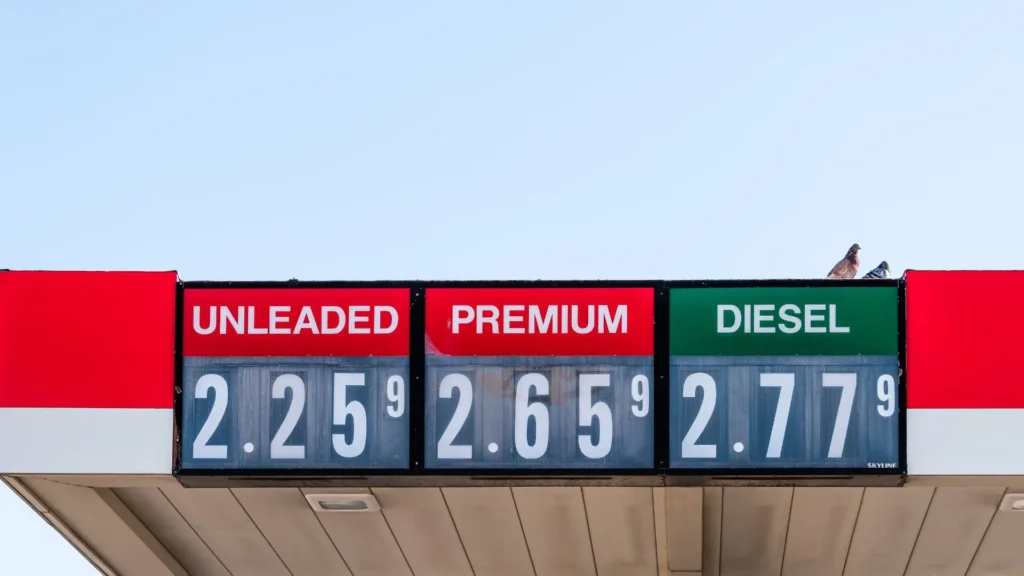
Diesel pricein the US it reached a record high of $5,820 per gallon Amid growing pressure on the global supply of distillate fuels, according to GasBuddy, the new record surpassed the $5.819 per gallon recorded on June 17, 2022, months after the start of the war between Russia and Ukraine. Furthermore, the fuel has remained above $5 per gallon since mid-July. Patrick De Haan, head of petroleum analysis at GasBuddy, believes that 2026 is on track to become the year with the highest nominal diesel prices on record in the United States.
Diesel prices rise amid supply tensions
The market is facing renewed tensions stemming from the hostilities between the United States and Iran, Ukrainian attacks on Russian oil facilities have impacted one of the world’s leading fuel suppliers, and Russia has responded to the attacks on its refineries by restricting diesel exports until September 30. This measure adds pressure to a market already showing signs of shortages.
Before the conflict with Iran, around 900.000 barrels of diesel per day they were traveling through the Gulf along with some 350,000 barrels of jet fuel per day according to Vortexa, these volumes represented approximately 10 % and 20 % of the global maritime supply of both products, respectively. At the same time, tensions over major international energy routes are increasing competition for available distillate fuels.
Inventories of distilled spirits remain at critical levels
Pressure on the US market also comes from its own inventories; data from the Energy Information Administration (EIA) shows that distillate stocks remain at exceptionally low levels. During August, reserves that include diesel and heating oil recorded their lowest average for that time of year since 1982.
The situation is especially tight in the East Coast of the United States where distillate inventories fell to a record low of 19.3 million barrels during the week ending August 28, according to EIA data dating back to 1990, this level takes on greater significance as winter approaches, due to the use of heating oil in homes and businesses across the region. David Russell, global director of market strategy at TradeStation, warned that the United States is entering a key consumption period with exceptionally low inventories at the beginning of September.
Demand from farmers and truckers could increase
The timing of the season also doesn’t favor a quick market recovery, harvests in the Northern Hemisphere typically increase fuel consumption by agricultural machinery during the autumn, this is compounded by preparations for the planting season in the Southern Hemisphere and the gradual increase in demand for heating oil before winter. Road transport also remains highly dependent on diesel, therefore, a simultaneous increase in agricultural, logistics, and heating consumption could put even more pressure on already low reserves.
Diesel refining margins skyrocket
The shortage is also reflected in the refining market; the US diesel refining margin reached an intraday high of $108.02 per barrel before falling back to around $101.1 per barrel. These high margins give U.S. refineries a strong incentive to produce more fuel, in fact, the plants have increased their operating rates to multi-year highs.
However, Giovanni Staunovo, an analyst at UBS, pointed out that the increase in activity in the United States does not eliminate the limitations caused by refinery disruptions in other markets; consequently, greater US production could alleviate some of the pressure, although without completely resolving the international imbalance.
Expensive diesel fuel increases transportation and production costs
The consequences of rising fuel prices extend beyond energy market Diesel fuel powers a significant portion of freight transport, agricultural machinery, and numerous industrial activities, andy Lipow, president of Lipow Oil Associates, explained that higher fuel prices increase transportation and production costs, and some of that increase may ultimately be passed on to the price of food and other goods.
The food supply chain is particularly vulnerable, as it uses diesel at various stages, from agricultural operations to the transport of products to distribution centers and supermarkets, thus, the combination of low inventories, seasonal demand, and international supply issues continues to put significant pressure on the US market. The performance of Russian refineries, international fuel flows, and distillate reserves will be crucial in determining whether prices begin to ease before winter.
Source: Hydrocarbon Processing
Photo: Shutterstock