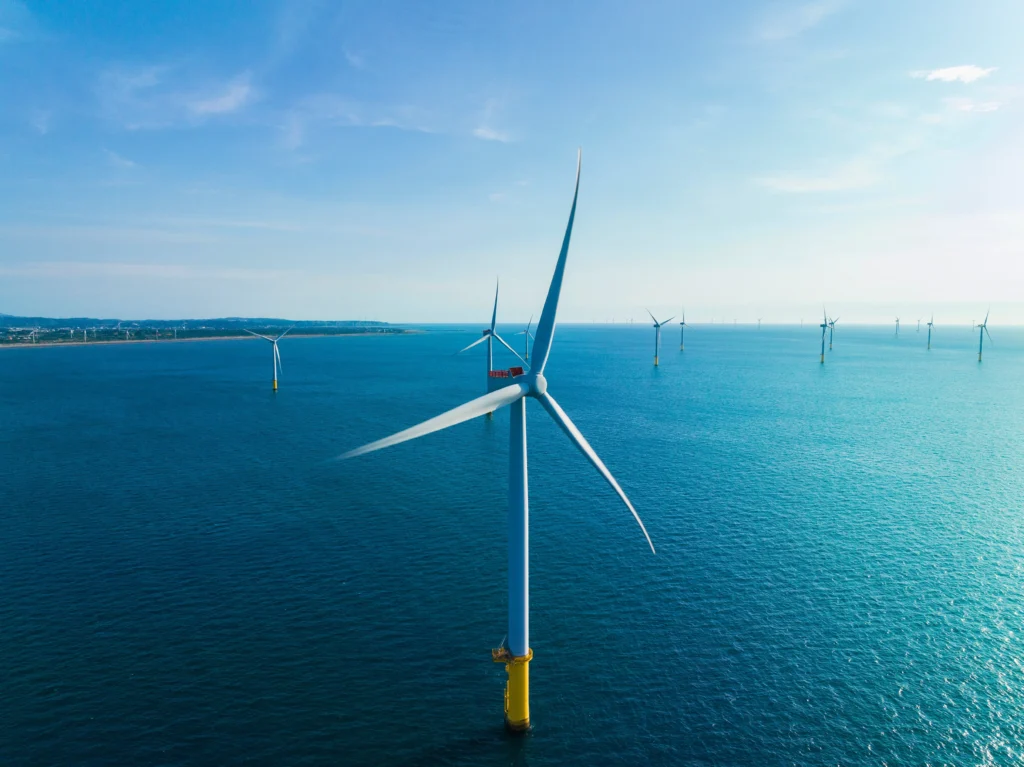
The Crown Estate opened a competitive process to select a new developer to build and operate the Morgan wind farm, a planned facility of up to 1.5 GW in the Irish Sea.
The British entity seeks to maintain the progress of one of the offshore wind projects more developed in the country after the previous developer returned the site rights in early 2026.
With this accelerated procedure, The Crown Estate aims to select the preferred bidder by the end of 2026. The project could supply with renewable electricity to approximately 1.5 million homes once it becomes operational.
Morgan Wind Farm new developments and strategic permits
First, Morgan offers potential investors a higher degree of maturity than a wind farm site starting from scratch. The park obtained Development Consent Order for its generation assets in August 2025. This permit represents a significant part of the regulatory process required to build an offshore wind farm in British waters.
Furthermore, Morgan has a grid connection agreement with the UK’s National Energy System Operator, this reduces one of the main uncertainties typically faced by large renewable energy projects.
Furthermore, the application for the transmission assets is still being processed; the documentation was submitted jointly with the transmission infrastructure of the 480 MW Morecambe offshore wind farm.
The Crown Estate it is now working with the stakeholders to preserve existing studies, permits, and technical advancements. The goal is for the future developer to be able to build upon the work already completed and avoid unnecessary delays.
An accelerated bidding process to reduce risks
Next, the competitive process will be developed through an ascending clock auction; under this mechanism, participants will define the value of an exclusivity fee linked to the location.
Although the offer will be expressed as a lump sum, the selected developer may pay it in installments over 20 years from the start of the lease.
The fee will only be payable when the project progresses to that stage; this design aims to limit financial pressure during the development period, when developers must face expenses related to engineering, permits, contracts, and supply chain.
The Crown Estate has also proposed a more streamlined process than in previous leasing rounds, bidders will submit their proposals during the summer, and the auction is expected to take place before the end of the year.
Costs and risks shaped the previous stage
The Morgan project was part of a portfolio developed by EnBW and the current JERA Nex BP the collaboration also included the Mona wind farm, located in an area near the Irish Sea.
However, the business structure was dissolved in January 2026, JERA Nex BP retained the rights to Mona while the Morgan site reverted to The Crown Estate.
The previous stage was marked by a complex economic environment for the offshore wind energy among the factors mentioned were increased costs in the supply chain, high interest rates, and risks associated with the execution of large-scale projects.
Furthermore, Morgan and Mona failed to secure contracts for difference (CFDs) in the UK’s seventh allocation round. These mechanisms guarantee a benchmark price for electricity and are crucial for the financial viability of renewable energy installations.
The park could bolster Britain’s wind power capacity.
From an energy perspective, recovering Morgan would allow the UK to maintain 1.5 GW within its portfolio of offshore wind projects.
The UK maintains ambitious targets for expanding its offshore capacity and reducing its reliance on imported fuels. Therefore, retaining projects with advanced permits may be faster than initiating new developments from their earliest stages.
There is also a potential economic impact; the construction of the park would require engineering services, component manufacturing, shipping, turbine installation, submarine cables, and maintenance.
The Crown Estate believes the new tender can sustain investment and employment within the British wind energy supply chain. At the same time, the entity is preparing a separate bidding round for approximately 6 GW off the northeast coast of England.
That initiative, called Offshore Wind Leasing Round 6, is scheduled to begin during the first half of 2027, its development will be independent of the Morgan wind farm tender.
The developers’ response will allow us to gauge market interest in an advanced asset that combines permits, grid access and capacity relevant to the British electricity system.
Source: Thecrownestate.co.uk
Photo: Shutterstock