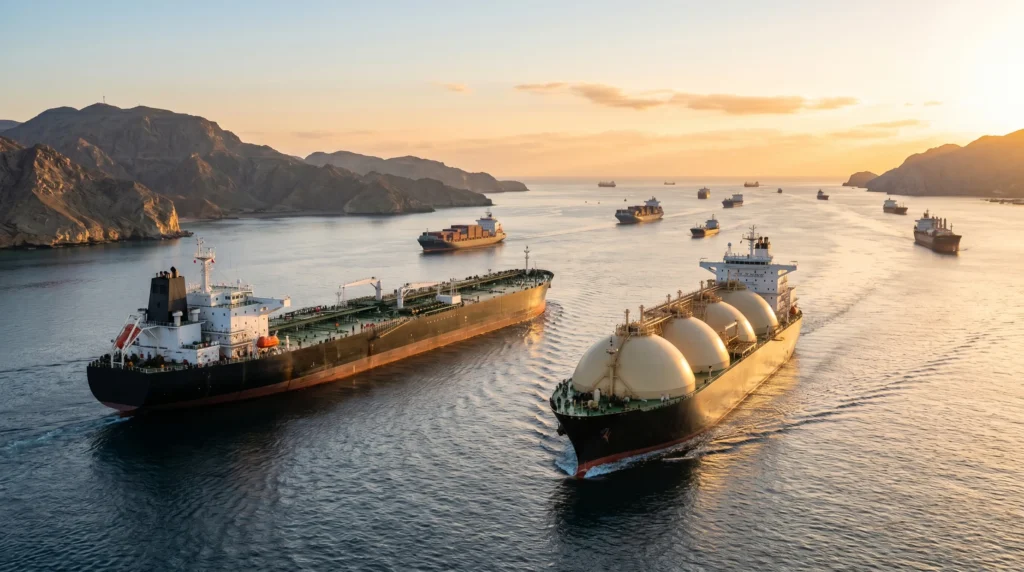
The Strait of Hormuz is once again operating as one of the planet’s main energy arteries following the announcement of an agreement between the United States and Iran that includes the reopening of this strategic maritime route. The measure allows for the progressive restoration of oil and liquefied natural gas (LNG) transit from the Persian Gulf to international markets, reducing one of the main factors of uncertainty that had affected global energy supply in recent months.
The normalization of maritime transit occurs after more than three months of tensions that disrupted hydrocarbon trade flows and forced producers, refiners, and logistics operators to reorganize supply chains across different continents. The announcement has been interpreted by markets as a sign of relief for global energy availability, although the definitive implementation of the agreement must still be completed in the coming days once the agreement is formalized and the mechanisms foreseen by both parties come into effect.
Strait of Hormuz Recovers Global Energy Transit
The importance of the Strait of Hormuz transcends any regional dimension. This maritime route connects the main oil exporters of the Gulf with consumption centers in Asia, Europe, and other regions of the world. Its operability is essential to ensure the continuous movement of millions of barrels of crude oil and energy products daily.
During the period of restrictions, numerous shipments experienced delays, route modifications, and increased operational costs. The reopening allows for the recovery of critical logistical infrastructure for international energy trade and facilitates the gradual return of volumes that had been constrained by the geopolitical situation.
Nearly 20% of Global Oil Circulates More Normally Again
One of the most relevant elements for markets is that approximately one-fifth of globally traded oil transits through this maritime route. In addition to crude oil, significant volumes of liquefied natural gas from Qatar and other regional producers use the strait as their primary export corridor.
The recovery of this logistical capacity could help stabilize international energy flows and reduce some of the accumulated pressure on supply. For importing countries, especially in Asia, normalization represents a significant improvement in terms of operational predictability and purchasing planning.
Energy Market Reduces Some Supply Pressure
The reopening of Hormuz also has direct implications for risk perception within the oil market. During the months of conflict, crude oil prices incorporated a premium associated with the possibility of prolonged supply disruptions, particularly from Gulf exporting countries.
Now, with the progressive restoration of maritime transit, operators are beginning to evaluate a scenario where the physical availability of barrels could gradually improve. Nevertheless, price evolution will continue to depend on additional factors such as global inventories, OPEC+ production, and international demand behavior.
Gulf Producers Recover Strategic Export Route
The main exporters in the region are among the biggest beneficiaries of the reopening. Saudi Arabia, the United Arab Emirates, Kuwait, Iraq, and Qatar largely depend on the Strait of Hormuz to move oil, condensates, and liquefied natural gas to international markets.
The recovery of this transport route once again strengthens regional export capacity and improves the logistical efficiency of energy shipments. For international buyers, the return of one of the world’s most important routes represents a positive signal regarding the future stability of supply.
What Does the Reopening Mean for the Energy Industry?
Beyond its diplomatic implications, the reopening of the Strait of Hormuz represents a global event for the entire energy chain. Producers, refiners, marketers, port operators, and transport companies are closely monitoring developments, aware that any alteration in this route has immediate repercussions on the market.
The recovery of maritime transit reduces one of the main risks that conditioned the global hydrocarbon supply. However, long-term stability will depend on the ability of the involved parties to maintain the commitments reached and avoid new disruptions that could once again affect international energy flow.
Sources: