Table of Contents
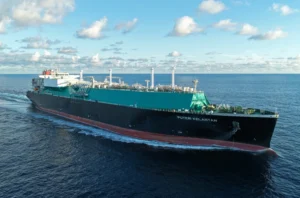
Twelve LNG cargoes in Hormuz have successfully navigated the Strait since the onset of the crisis between the United States and Iran, according to maritime tracking data published by Reuters on June 11, 2026. The LNG carriers Lebrethah and Rasheeda, operated by QatarEnergy, and the vessel Marigold, from ADNOC, reappeared outside the Strait bound for Pakistan, India, and Southeast Asia. The sustained transit confirms that the maritime corridor remains functional despite active hostilities.
LNG Cargoes in Hormuz: QatarEnergy and ADNOC Vessels Resume Routes
LSEG and ICIS LNG Edge tracking systems recorded the position of the three LNG carriers west of the Arabian Sea on June 11. The Lebrethah and Rasheeda transport liquefied natural gas from Qatar’s export terminals—the world’s largest LNG producer—to South Asian markets. The Marigold, from UAE state-owned ADNOC, represents the first ADNOC LNG vessel detected outside the strait amid the crisis, signaling that Gulf operations are not completely paralyzed.
The Strait of Hormuz Accounts for 21% of Global Oil and 27% of LPG
The maritime passage separating Iran from the Arabian Peninsula is the strategic chokepoint through which 21% of global oil transits and approximately 27% of global liquefied petroleum gas consumption, according to estimates from the U.S. Department of Energy. Any sustained disruption would be equivalent to removing more than 20 million barrels per day of crude oil, LNG, and derivatives from the market. The 12 cargoes accumulated since the conflict began represent a partial but significant export volume for long-term supply contracts in Asia.
LNG Cargoes in Hormuz Under Fire: Context of U.S.–Iran Attacks
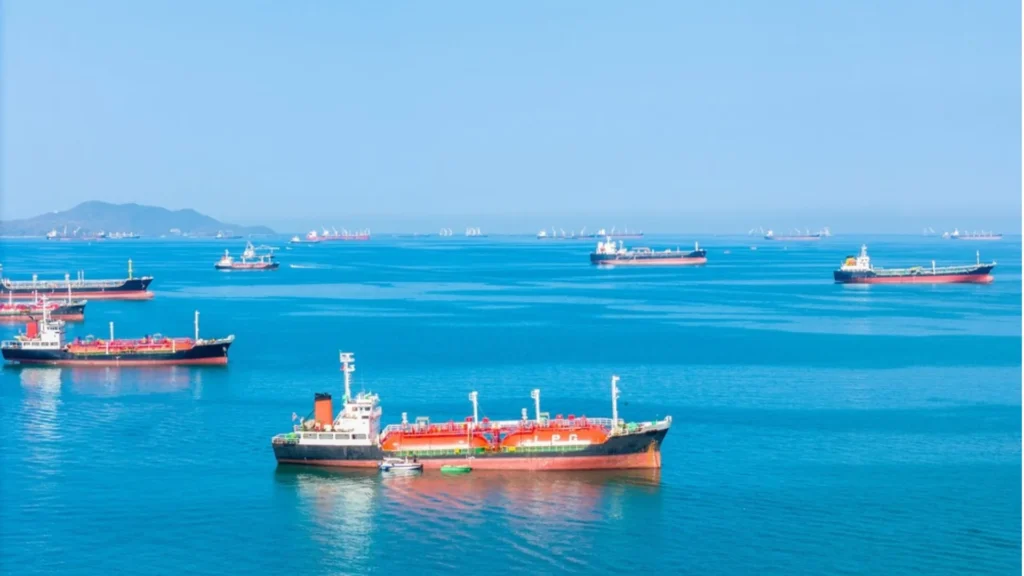
Military exchanges between Washington and Tehran continued during the week of June 9 without a formal blockade of the strait being recorded. Iran has reiterated its capacity to close the passage to navigation, but fleet operators have maintained transits relying on high-premium war risk insurance and informal naval escort. MarineTraffic data indicates that waiting times in the traffic separation zone have extended between four and six hours compared to pre-conflict levels, raising operational costs without preventing passage.
Impact on LNG Cargoes in Hormuz: Asian Market Signals
Spot LNG re-exports to South and Southeast Asia registered premiums of between $2 and $3.5 per MMBtu over the JKM index during the first week of June, according to ICIS LNG Edge data. “Buyers in India and Pakistan are prioritizing inventory replenishment ahead of any further escalation,” market analysts cited in the LSEG report of June 10 noted, reflecting short-term supply chain tension. The price pressure adds to the tension that has kept Brent above $90 since mid-May.
Outlook: LNG Flows Depend on Diplomatic Developments
Tracking of LNG cargoes in Hormuz by logistics operators in Asia confirms that demand for spot contracts is increasing. QatarEnergy’s long-term supply contracts with Japanese, South Korean, and Indian buyers include force majeure clauses that have not yet been activated, indicating that the Qatari exporter is confident in maintaining the corridor operational. ADNOC, meanwhile, began evaluating alternative routes via the Abu Dhabi Crude Oil Pipeline (ADCOP) to reduce its exposure to the strait. “The continuity of LNG shipments is the best signal markets could receive at this time,” an ICIS LNG Edge analyst stated in remarks reported by Reuters on June 11, emphasizing that each additional cargo helps contain price spikes in Asian spot markets.
Sources: Reuters, June 11, 2026 | ICIS LNG Edge / LSEG — maritime tracking data