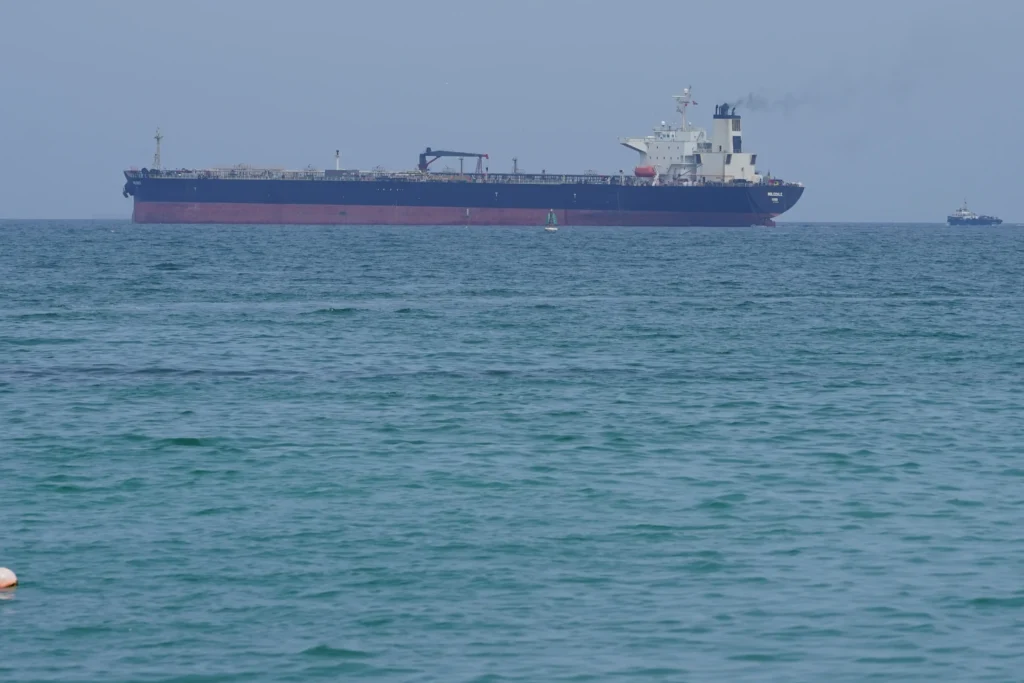
Major Middle Eastern producers continue to ship oil and liquefied natural gas (LNG) through the Strait of Hormuz despite recent attacks on vessels and escalating tensions between the United States and Iran. Maritime tracking data shows that energy operations remain active as the two countries resume diplomatic talks.
Gulf terminals sustain the flow of oil
Over the past few days, several large tankers loaded crude oil at strategic terminals in Saudi Arabia and the United Arab Emirates. Some of these vessels temporarily deactivated their automatic identification systems upon leaving the Gulf, a practice used to reduce risks while navigating in high-tension areas.
Likewise, other supertankers crossed the Strait of Hormuz to head towards Asian markets such as Japan, while new units entered export terminals to load crude oil destined for international trade.
Although maritime traffic remains below pre-conflict levels, operations show signs of stability in the face of a geopolitical scenario that continues to be uncertain.
Iran accelerates shipments after temporary sanctions relief
Iranian exports also saw an increase after the United States temporarily suspended some restrictions on oil sales.
According to maritime intelligence firms, the terminals on Kharg Island operated simultaneously for the first time in several days, as several supertankers transported millions of barrels of crude oil from the Gulf.
This increase in supply strengthens the availability of oil in international markets and helps to moderate pressure on Brent prices, although analysts warn that any new episode of violence could again disrupt the market balance.
Qatar and the Emirates maintain the supply of LNG
Liquefied natural gas exports also continue to develop relatively normally, with vessels operated by QatarEnergy and ADNOC maintaining scheduled deliveries to India, China and other Asian markets, confirming that LNG logistics chains continue to function despite the existing security conditions in the region.
The Strait of Hormuz remains one of the most important maritime corridors for global energy supply, as a significant portion of international trade in oil and liquefied natural gas passes through this route.
The market continues to closely monitor the evolution of the conflict.
Analysts believe that continued exports reduce the immediate risk of disruptions to the global energy supply. However, they caution that market stability will depend on the progress of negotiations between Washington and Tehran and the safety of commercial shipping in the Strait of Hormuz in the coming weeks.
Source: Reuter
Photo: Shutterstock