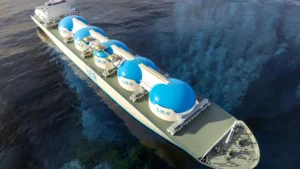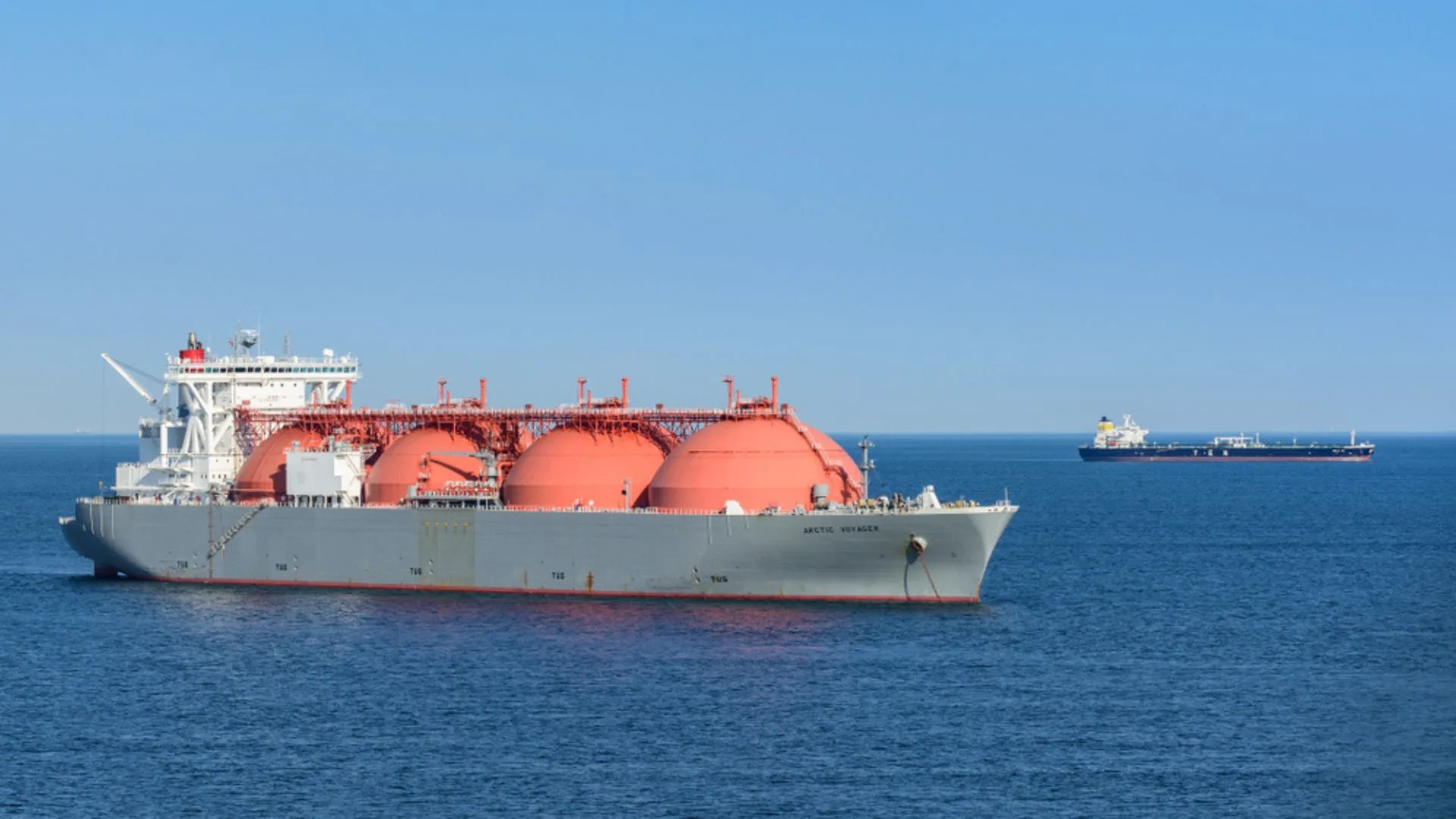
Four LNG carriers controlled by Qatar crossed the Strait of Hormuz again this Monday, a sign that liquefied natural gas (LNG) exports are beginning to recover activity despite persistent geopolitical uncertainty in one of the world’s most important energy routes.
According to maritime tracking data, the vessels Wadi Al Sail, Mekaines, Al Sadd, and Mesaimeer entered the strait through the Iranian route. This marks the first movement of this type since the start of recent military tensions involving the United States, Israel, and Iran.
Maritime Traffic Declines Drastically
While some energy carriers resume operations, the total volume of vessels crossing the strait continues to decrease. Records from specialized vessel tracking companies show that only five vessels crossed the maritime route on Sunday compared to 26 recorded the previous day.
Among the ships that continued transiting were several supertankers loaded with millions of barrels of crude oil and fuels from Saudi Arabia. Industry analysts indicate that the actual figure could be higher because some vessels temporarily navigate with their identification systems deactivated.
Qatar Seeks to Normalize LNG Exports
The reappearance of Qatari LNG carriers coincides with QatarEnergy’s efforts to restore the pace of its liquefied natural gas exports, affected by regional instability and concerns about navigation safety in the Gulf.
Qatar is one of the world’s leading LNG exporters and relies heavily on the Strait of Hormuz to access international markets. Any prolonged disruption in this route has the capacity to affect global energy supply and generate price volatility.
Oil Continues to Flow Through the Strait of Hormuz
Despite reduced traffic, oil exports from the region maintain a certain level of continuity. Data from international organizations indicate that dozens of merchant vessels transported more than 17 million barrels of oil through the strait in recent days.
Likewise, several large-capacity oil tankers from the United Arab Emirates, Kuwait, Iraq, and Iran continued their commercial operations, demonstrating the strategic importance of keeping this maritime corridor open.
Iranian authorities recently stated that more than 25 million barrels of domestic oil crossed the transit zone during the past week, even amid restrictions and closure threats.
Energy Companies Adapt Their Operations
The uncertainty has led several Gulf national oil companies to introduce greater flexibility in their loading schedules. Companies such as ADNOC and Kuwait Petroleum Corporation have offered alternatives to conduct operations both inside and outside the Strait of Hormuz.
On the other hand, Asian maritime operators have temporarily reduced the number of vessels present in the Gulf while monitoring the evolution of the security situation.
A Key Point for Global Energy Security
The Strait of Hormuz remains one of the most relevant maritime passages for global trade in oil and liquefied natural gas. A significant portion of Middle Eastern energy exports depends on this route to reach Asia, Europe, and other consumer markets.
The return of Qatar’s LNG carriers represents a positive signal for LNG supply. However, the decline in maritime traffic demonstrates that shipping and energy companies continue to act cautiously in a geopolitical environment that remains highly sensitive.
Source: MarineLink
Photo: Shutterstock