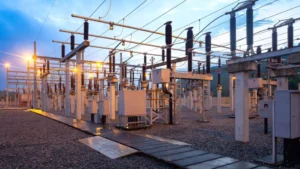
Data centers in Virginia, they are rapidly promoting electricity demand and increasing Dominion Energy’s exposure to the wholesale market. Fuel costs for its subsidiary, Virginia Electric and Power Company, have risen sharply over the past five years as the system requires more electricity.
According to regulatory documents cited in the available information, Virginia Electric projects fuel expenditures of $4.35 billion until the end of June 2027 the figure represents an 88% increase compared to the 2.31 billion recorded in 2021.
Thus, the average cost would go from 2.59 cents per kilowatt-hour in 2021 to about 3.95 cents, the change coinciding with the expansion of digital infrastructure in Virginia, considered the world’s largest market for data centers.
Dominion increases its electricity purchases in PJM
Furthermore, the growth of the electricity demand forces Virginia Electric to resort more frequently to the wholesale market managed by PJM Interconnection the company expects to obtain around 23% of its energy supply there, compared to 14% in 2021.
This increased reliance has economic implications. According to Dominion’s estimates included in the documentation, buying electricity on the wholesale market can cost around 6.28 cents per kilowatt-hour. In contrast, nuclear fuel would have an average cost of less than one cent per kilowatt-hour.
Therefore, having more of its own generation capacity can reduce the company’s exposure to fluctuations in the electricity market.
Scott Gaskill Virginia Electric’s vice president of regulatory affairs explained this relationship in testimony submitted to state regulators on July 28:
Each megawatt-hour generated by the company’s own resources reduces the need to purchase energy on the PJM market.
Scott Gaskill
Data centers increase electricity demand in Virginia
On the other hand, the expansion of the data centers this is creating a challenge for electrical system planning. These facilities require large amounts of energy to keep servers, cooling systems, and digital equipment running continuously.
The phenomenon has gained even more importance with the growth of the artificial intelligence, whose computer infrastructure requires large-scale processing centers.
In Virginia, this new load coincides with a wholesale market that can experience sharp fluctuations, staff at the Virginia State Corporation Commission have warned that spot prices can reach several thousand dollars per megawatt-hour during episodes of extreme heat or prolonged periods of cold.
Likewise, the increase in consumption forces a debate about who should bear the costs necessary to expand and supply the electricity system.
Electricity bills enter the debate
Meanwhile, the cost increases could directly affect consumers, serves approximately 2.7 million households and businesses in the state.
Regulatory documents indicate that the increase in fuel costs could lead to an average monthly bill of 173 to 195 dollars, which is equivalent to an increase of approximately 13%.
However, there is a financial alternative if Dominion can issue bonds to distribute the recovery of part of those expenses over several years, the immediate increase in the bill could be limited to approximately 5%.
This situation has fueled the debate about the impact of data centers on residential rates. Regulators, consumer representatives, and lawmakers are questioning whether an excessive portion of the costs stemming from increased demand is being passed on to residential users.
Dominion and representatives of the data center industry hold a different position, arguing that these facilities pay the costs associated with their consumption and rejecting that they are responsible for the recent increases in residential bills.
More in-house generation to reduce market exposure
Given this scenario, increasing the capacity of electricity generation it appears as a central piece for Dominion. Increased in-house production would allow for reduced purchases in PJM and limit exposure to periods of high prices.
The proposed merger between NextEra Energy y Dominion the company, valued at $66.8 billion according to available information, is also part of this strategy. The transaction is expected to facilitate further expansion of power plants and projects renewable energies.
The operation also has a political dimension, the governor of Virginia, Abigail Spanberger, announced that it would participate in the regulatory review to seek commitments related to tariff affordability, job protection and clean energy investments.
Furthermore, Dominion is committed to its project of offshore wind energy in Virginia the project, valued at $11.7 billion, is estimated by the company to generate approximately $5 billion in fuel savings for its customers during its first ten years of operation.
Thus, the growth of data centers in Virginia is taking the discussion beyond digital infrastructure, the surge in electricity demand is forcing Dominion to balance its own generation, wholesale purchases, and investments in new capacity, while regulators and consumers closely monitor the impact on rates.
Source: MarketScreener
Photo: Shutterstock