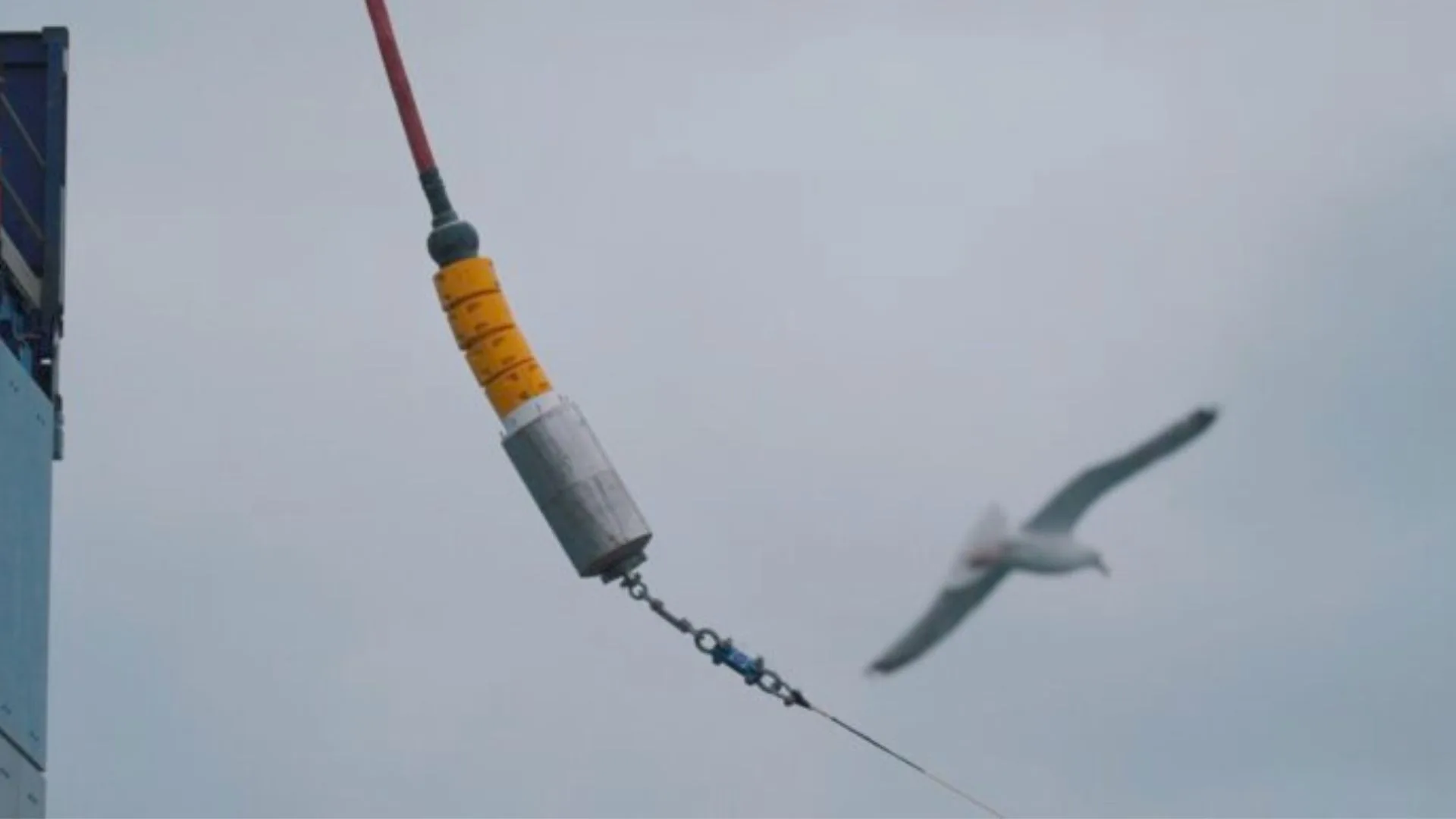
Stillstrom by Maersk completed a technological test that demonstrates the automatic management of boat charging cable with dynamic positioning, a step forward for the electrification of support vessels in offshore wind farms.
Stillstrom by Maersk has demonstrated the automated operation of its offshore cargo cable management system through a test conducted on a vessel equipped with dynamic positioning (DP). The company stated that this solution overcomes one of the main operational challenges for the adoption of hybrid and electric vessels in offshore wind farms.
The system test Stillstrom Offshore eCharger (SOeC) it was developed alongside ESVAGT and Semco Maritime at the latter company’s shipyard facilities in Esbjerg, Denmark. Furthermore, DNV he oversaw the demonstration as part of the system’s technological qualification process.
Automatic cable control during offshore loading
During offshore loading operations, vessels using dynamic positioning must maintain their location while remaining connected to a power source. This requires precise cable management due to the vessel’s constant movements and changes in distance from the connection point.
The system developed by Still current it automated the entire process, from deploying the charging connector to retrieving the cable when the vessel returned to its initial position. The technology automatically adjusted the cable length to maintain a stable operating profile during vessel movement.
For the demonstration, the connector was deployed from a height of 15.5 meters a representative configuration of the installation that could be used in an offshore wind turbine or offshore substation. The system incorporated a reel located on the tower with 125 meters of cable, capable of releasing and retrieving the line according to the position of the vessel.
Technology for hybrid and electric vessels in offshore wind farms
The test also evaluated different technical elements of the system, including the performance of the automated cable control, the use of GPS RTK as a positioning reference, the synchronization between the reel installed on the offshore structure and the ship’s electric winch, as well as the user interface and data logging functions.
The validation was performed under real shipyard conditions to analyze the solution’s behavior in an environment similar to the one it would face during offshore operations this type of automation seeks to facilitate the integration of hybrid and electric support vessels in offshore wind farms, where the availability of renewable energy can reduce the use of conventional fuels.
Upcoming tests before commercial rollout
Stillstrom will continue with a more integrated testing phase that will include a support vessel for navigation (SOV) along with the complete offshore loading system. The company then plans to conduct a sea trial before moving toward final certification.
The company has developed marine energy solutions focused on decarbonizing the maritime sector from its headquarters in Copenhagen and Aberdeen. Its offshore charging technology is designed to enable electric ships and hybrids maintain operations with lower emissions during activities related to offshore wind energy.
Source: OffshoreWIND
Photo: Stillstrom