Harsh environments, complex logistics, operational risk, engineering precision, and execution timing all converge in projects where reliability becomes critical long before operations even begin.
Behind many of these large-scale industrial and offshore activities are companies responsible not only for engineering and infrastructure, but also for making complex operations possible under demanding real-world conditions.
Over the years, Grupo HB has expanded its capabilities across marine support, offshore operations, engineering, industrial infrastructure, and specialized project execution, developing an operational structure designed to support highly demanding energy and industrial environments.
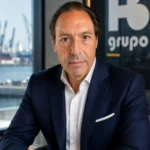
In this conversation with Rodrigo González, President of Grupo HB, we explore the operational realities behind offshore execution, the growing complexity of industrial infrastructure projects, and the leadership required to sustain reliability in environments where every operational decision matters.
- Grupo HB has developed capabilities in marine services, offshore support, engineering, and industrial infrastructure. What has been the strategic vision behind building such an integrated operational structure?
From the very beginning, we understood that offshore infrastructure requires far more than isolated services. Our vision has been to build an organization capable of delivering integrated solutions backed by nearly four decades of experience in marine operations, major maintenance of single point moorings, offshore services, and specialized industrial projects across Latin America. This integration allows us to maintain greater control over safety, quality, execution timelines, and project costs, creating value for our clients while ensuring the operational continuity of strategic assets within the energy sector.
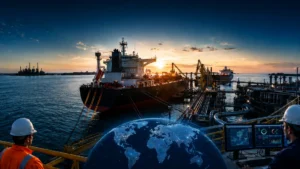
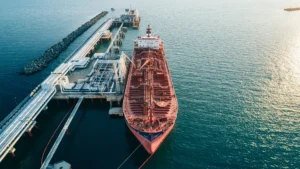
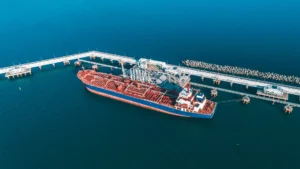
Grupo HB has participated in more than fifteen major maintenance projects for CALM-type single point moorings, a specialty that requires highly specialized engineering, marine logistics, and offshore execution capabilities.
- Offshore and marine operations continue to become increasingly complex. What are currently the greatest operational and technical challenges facing offshore infrastructure projects?
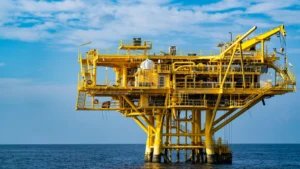
Today, we face challenges related to aging infrastructure, the need to maximize asset availability, the incorporation of new technologies, and compliance with increasingly demanding safety and sustainability standards. In addition, extreme weather conditions and the need to execute complex work within limited operational windows require highly specialized planning and teams with extensive technical experience.
- Grupo HB is involved in jack-up barge operations and marine support services. How important are these assets in improving efficiency and reliability in offshore activities?
They are essential assets. Jack-up barges provide a stable and secure platform for carrying out specialized work in marine environments, reducing risks and increasing productivity. Combined with proper marine logistics and highly trained personnel, they enable critical operations to be executed with greater precision, optimizing execution times and minimizing operational disruptions for our clients.
- Engineering today goes far beyond traditional project design. How is Grupo HB integrating innovation and engineering execution into modern industrial and offshore projects?
Modern engineering must be directly connected to execution. At Grupo HB, we promote multidisciplinary teams that participate from project conceptualization through commissioning. We incorporate digital tools, predictive analytics, advanced modeling, and risk management methodologies to anticipate challenges and optimize decision-making. Innovation is not limited to technology; it also involves new ways of coordinating people, resources, and processes to achieve better outcomes.
- Infrastructure reliability remains a major concern across the energy sector. What operational risks do you believe companies can no longer afford to underestimate in offshore environments?
Risks associated with deferred maintenance, obsolete critical equipment, loss of technical knowledge, and insufficient monitoring represent significant threats.
It is also essential to consider factors related to industrial cybersecurity, extreme weather conditions, and contractor management. Prevention and integrated risk management must become a strategic priority rather than merely an operational one.
- Large industrial projects require coordination across multiple disciplines and operational stages. How important is integrated execution in maintaining project efficiency and operational continuity?
Integrated execution is essential. When engineering, logistics, construction, marine operations, and maintenance work under a unified vision, the risks of delays, cost overruns, and coordination issues are significantly reduced. It also enables faster decision-making and more efficient adaptation to changes during project execution, ensuring operational continuity and compliance with project objectives.
- Operational resilience has become a critical priority for the energy and offshore sectors. How can companies strengthen infrastructure reliability and maintain operational continuity in increasingly demanding and unpredictable environments?
Resilience is built through a combination of strategic maintenance, continuous monitoring, redundancy in critical systems, ongoing training, and an organizational culture focused on prevention. It is also important to develop robust supply chains and contingency response plans that enable rapid reaction to unexpected events. Organizations that invest in preparedness and anticipation are the ones capable of sustaining long-term operations.
- Sustainability is becoming increasingly important in offshore and industrial infrastructure projects. How can engineering, marine operations, and integrated execution strategies contribute to safer, more efficient, and sustainable industrial development?
Sustainability must be integrated from the project’s initial design phase. Efficient engineering enables resource optimization, reduced energy consumption, and minimized environmental impacts. Specialized marine operations contribute to executing activities under higher safety standards and with lower environmental risk. When the entire project lifecycle is managed in an integrated manner, it becomes possible to achieve stronger operational results while reinforcing commitment to the environment and surrounding communities.
- Beyond technology and infrastructure, the human factor remains essential in offshore operations. How important are leadership, workforce development, and operational culture in sustaining safety, reliability, and long-term project success?
They are the most important element. Behind every successful project is a highly committed team of professionals. Our growth over nearly four decades has been made possible by the talent, discipline, and accumulated experience of our people. Technology can improve processes, but people are the ones making decisions in complex and high responsibility situations. That is why we continuously invest in training, professional development, and leadership strengthening. A culture based on responsibility, operational discipline, and teamwork is essential to maintaining high levels of safety and sustainable performance.
- Safety and operational reliability are critical in marine and offshore environments. How is a culture capable of sustaining performance under high-risk conditions built?
A safety culture is not built through documents, but through example and consistency. It must begin with visible leadership commitment and be reflected in every operational decision. Continuous training, open communication, incident analysis, and the active participation of all personnel create an environment where safety becomes a natural part of daily operations. When people understand that safety is a value rather than an obligation, the results are reflected throughout the organization.
- The energy industry is undergoing a major infrastructure transformation. How do you envision the future evolution of offshore and industrial development in Latin America?
We currently see significant opportunities in markets such as Peru, Mexico, the Caribbean, and South America, where the modernization of energy infrastructure will continue to drive demand for specialized services. Latin America possesses energy resources and a strategic geographic position. Investment in offshore projects, marine terminals, energy logistics, and asset maintenance will continue to grow. Companies that combine technical expertise, innovation, sustainability, and integrated execution capabilities will be better positioned to lead this new stage of regional development.
- Looking ahead, what is your long-term vision for Grupo HB and its role within the offshore and industrial sectors globally?
Our vision is to consolidate Grupo HB as an international benchmark in integrated solutions for marine, offshore, and industrial infrastructure. We aim to continue expanding our capabilities, strengthen our presence across Latin America, and participate in increasingly complex and strategic projects.
At the same time, we seek to uphold the values that have guided us for nearly four decades: safety, reliability, operational excellence, and innovation. We aspire to be a long-term partner for our clients, contributing to the sustainable development of the global energy industry.
As offshore and industrial projects continue increasing in scale and complexity, the companies creating long-term impact will be those capable of combining engineering expertise, operational adaptability, infrastructure execution, and disciplined field performance under highly demanding conditions.
The insights shared by Rodrigo M. González González reflect a central idea for modern offshore and industrial development: infrastructure may be built with steel and technology, but reliability is built with people, experience, and operational discipline. In critical environments, coordination, execution capacity, and leadership remain decisive factors in sustaining performance.
This article was developed by Rodrigo González of Grupo HB and published as part of the eighth edition of Inspenet Brief magazine (July 2026), dedicated to technical content for the energy and industrial sectors.