Table of Contents
- Shell Earnings Exceed Expectations in a Quarter
- Dividend Increase and More Moderate Share Buyback
- LNG, Refining, and Marketing Drive Shell's Results
- Marketing Improves Due to Lubricants and Lower Operating Costs
- ARC Resources Acquisition Reinforces Production Strategy
- Net Debt and Leverage Rise During the Quarter
- Shell Anticipates Operational Pressure in the Second Quarter
Shell raised its quarterly dividend by 5% after exceeding market forecasts with adjusted earnings of $6.9 billion in the first quarter of 2026.
Shell Earnings Exceed Expectations in a Quarter
Shell reported adjusted earnings of $6.9 billion in the first quarter of 2026, above analyst expectations and also higher than the $5.6 billion recorded in the same period of the previous year.
In addition, cash flow from operations, excluding working capital, reached $17.2 billion. However, overall cash flow was impacted by a working capital outflow of $11.2 billion, associated with strong commodity price volatility.
According to the company, Shell’s integrated portfolio and operational performance were key to navigating a complex energy environment, pressured by the escalation of the Middle East conflict, supply disruptions, and sharp movements in oil and gas markets.
Dividend Increase and More Moderate Share Buyback
Furthermore, Shell announced a 5% increase in its quarterly dividend, to $0.3906 per share. The measure reinforces its shareholder return policy amid solid cash generation, although the company opted to reduce the pace of share buybacks.
Specifically, the company launched a new $3.0 billion buyback program for the next three months, down from $3.5 billion in the previous quarter. This adjustment seeks to preserve liquidity and sustain the balance sheet in a more unstable pricing environment.
Likewise, Shell indicated that the buyback could be temporarily suspended during the shareholder approval process for the acquisition of ARC Resources, a significant transaction within its energy growth strategy.
LNG, Refining, and Marketing Drive Shell’s Results
The exploration and production business generated adjusted earnings of $2.4 billion, supported by higher oil and gas prices. Although there was lower production in some areas, the segment maintained a solid contribution to the quarterly result.
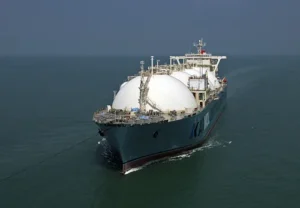
Meanwhile, Integrated Gas recorded adjusted earnings of $1.8 billion. The business’s stability was explained by the strength of the LNG market and long-term contracts with favorable pricing structures, factors that helped offset lower production volumes.
In turn, the Chemicals and Products division was one of the main sources of profitability. Shell reported adjusted earnings of $1.9 billion in this unit, favored by 99% refinery utilization, improved refining margins, and a more dynamic commercial environment.
Marketing Improves Due to Lubricants and Lower Operating Costs
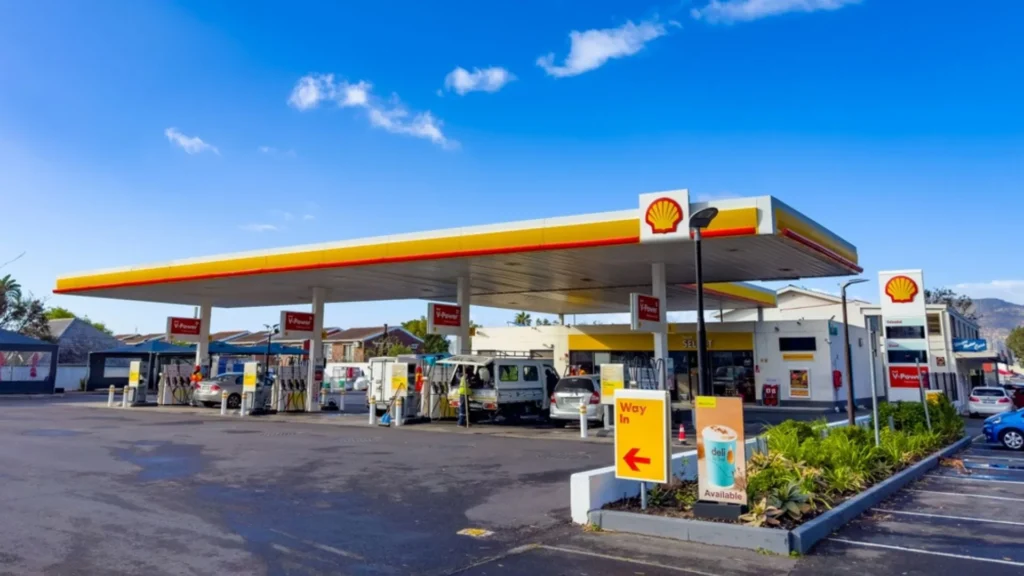
In addition, the Marketing business raised its adjusted earnings to $1.3 billion. Performance was supported by improved results in lubricants and a reduction in operating costs, two factors that provided stability to the company’s commercial portfolio.
This result confirms the weight of Shell’s integrated operations, which combine upstream, LNG, refining, chemicals, trading, and marketing to cushion price cycles and geopolitical tensions.
ARC Resources Acquisition Reinforces Production Strategy
The acquisition of ARC Resources continues to occupy a central place in Shell’s strategy. The company estimates that the transaction will add approximately 370,000 barrels of oil equivalent per day and support a compound annual production growth rate of 4% through 2030.
For 2026, Shell expects to invest approximately $4.0 billion in this acquisition, within a projected capital expenditure budget of between $24.0 billion and $26.0 billion.
With this transaction, the energy company seeks to expand its production base, strengthen its presence in high-profitability resources, and improve the resilience of its portfolio in the face of changes in global energy demand.
Net Debt and Leverage Rise During the Quarter
However, the balance sheet showed some deterioration. Net debt increased to $52.6 billion, compared to $45.7 billion at the end of 2025. The increase reflected the effect of working capital and higher lease liabilities.
As a result, leverage rose to 23%. Although the figure remains within manageable levels for a company of Shell’s size, the movement explains part of the caution in the pace of buybacks and capital allocation for the coming months.
Shell Anticipates Operational Pressure in the Second Quarter
Looking ahead to the second quarter, Shell warned that production could be affected by the Middle East conflict, particularly by disruptions related to Qatar and regional instability.
It also expects lower trading margins and lower sales volumes in the current quarter. Even so, the company maintains its focus on financial discipline, cash generation, and shareholder returns.
In this context, Shell’s results show how major oil and gas companies increasingly depend on integrated trading, LNG, and refining businesses to contain earnings volatility. The combination of elevated margins, higher commodity prices, and active capital management enabled the company to raise its dividend, albeit with a more prudent stance on buybacks and debt.
Source: Shell
Photo: Shutterstock