Table of Contents
- What is energy security today?
- Electrical grid resilience
- Technical framework of resilience
- How to improve electrical resilience?
- Electrical grid modernization
- Energy storage
- Demand in 2026 and structural pressure
- Geopolitical reinforcement
- Renewable energy integration
- Technical challenges of renewables
- Required energy infrastructure
- Decarbonization and systemic stability
- Key resilience technologies
- Regulatory framework and governance
- International comparison
- Future outlook 2030–2040
- Conclusion
- References
- Frequently Asked Questions on Energy Security
Energy security has become a structural requirement to sustain economic stability in a context of accelerated electrification and transition toward low-carbon systems. According to the International Energy Agency (IEA, 2024), global electricity demand is expected to grow by around 3% annually until 2030, driven by digitalization, the expansion of data centers, and industrial electrification.
This scenario requires strengthening the resilience of the electrical grid and modernizing energy infrastructure to integrate renewable energy without compromising reliability. Achieving decarbonization and systemic stability is no longer a strategic option; it is a technical condition for maintaining industrial competitiveness.
What is energy security today?
Defining energy security implies evaluating the system’s real capacity to guarantee continuous, affordable, and sustainable energy supply, both under normal operation and stress scenarios.
The International Energy Agency (IEA, Energy Security Report, 2023) describes it as “the uninterrupted availability of energy sources at an affordable price.” However, in today’s context of electrification and energy transition, the concept has evolved toward a broader, interconnected vision that includes:
- Operational stability of the electrical grid
- Resilient energy infrastructure
- Technological diversification
- Reduction of geopolitical vulnerabilities
- Transition toward low-carbon sources
The U.S. Department of Energy (DOE, 2023) complements this perspective by stating that energy security depends on the system’s ability to anticipate, adapt, and rapidly recover from physical, digital, or climate-related disruptions.
From a technical perspective, this framework is based on three clearly identifiable dimensions:
- System reliability, evaluated through indicators such as SAIDI, SAIFI, and LOLE
- Structural resilience, aimed at absorbing impacts and accelerating service restoration
- Environmental sustainability, linked to progressive decarbonization
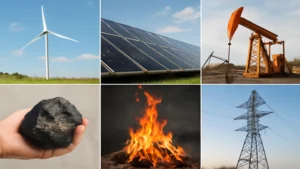
The current vision integrates operational stability, resilient infrastructure, and technological diversification. It is not only about supply, but about the system’s ability to recover from disruptions. To understand the pillars of this chain, it is useful to review the upstream, midstream, and downstream stages that define the foundation of global energy security.
Electrical grid resilience
Resilience is the structural component that transforms energy security into a tangible operational capability. Unlike reliability, which evaluates performance under expected conditions, resilience measures the system’s response to extreme events and its speed of functional recovery.
This impact on competitiveness and operational continuity is a central research area at the Energy Institute at Haas (UC Berkeley), where the effects of power outages on GDP in industrialized economies are analyzed.
To mitigate these risks, asset management must align with international safety and industrial asset standards that ensure service continuity through rigorous requirements. Within this framework, the U.S. Department of Energy (DOE) defines resilience as the system’s ability to anticipate, adapt, and quickly recover from disturbances, introducing a dynamic dimension that goes beyond traditional continuity indicators.
Technical framework of resilience
From an electrical engineering perspective, resilience can be analyzed in three clearly differentiated phases:
- Preparation, through vulnerability assessment and preventive reinforcement of critical infrastructure
- Absorption, ensuring transient stability through automatic protection systems, operational reserves, and ancillary services
- Recovery, prioritizing load restoration and efficient grid reconfiguration
Unlike reliability (measured with indicators such as SAIDI, SAIFI, or LOLE), resilience analyzes system behavior outside the normal operating range.
A system may show low average interruption rates and still experience long recovery times after hurricanes, wildfires, or cascading failures.
From an economic perspective, power outages can represent losses equivalent to 1–2% of GDP in industrialized economies. In critical industrial facilities, a single hour without power can generate significant financial impacts.
In an environment of increasing electrification and climate exposure, electrical grid resilience is becoming a direct enabler of energy security.
How to improve electrical resilience?
Strengthening grid resilience requires more than expanding installed capacity. It demands technological modernization, expansion of energy infrastructure, and planning based on quantitative risk analysis.
The IEA (Electricity Market Report, 2024) warns that grid investments must double by 2030 to sustain demand growth and renewable integration, a challenge directly linked to energy security.
Electrical grid modernization
Grid modernization is the central pillar of operational resilience. Currently, smart grids adopt advanced architecture models, such as those proposed by the MIT Energy Initiative (MITEI), integrating critical components for systemic stability:
- Monitoring and control: Real-time sensors and next-generation SCADA systems
- Automation: Substation infrastructure with autonomous response capability
- Digital management: Advanced asset management and predictive analytics using artificial intelligence
According to the DOE (2023), this level of automation reduces restoration times by 30% to 50% in digitalized systems. In addition, the implementation of digital twins allows simulation of contingencies and optimization of maintenance and investment decisions before real failures occur.
Energy storage
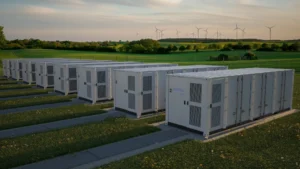
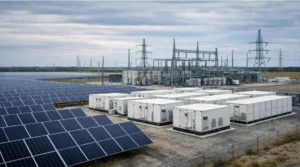
Energy storage has become a structural component in systems with high renewable penetration. Research from the Stanford Precourt Institute for Energy highlights that its ability to stabilize the grid is essential when variable generation exceeds 40%. At this threshold, storage becomes the only guarantee of dynamic stability and reduction of climate-related variability risks.
According to IEA estimates, global installed storage capacity exceeded 200 GW in 2024 and is projected to double before 2030. Its most critical technical contributions include:
- Frequency regulation and voltage support
- Generation ramp control
- Transmission congestion mitigation
Strengthening infrastructure requires advanced backup technology. To deepen this trend, it is essential to understand what will define energy storage in 2026, a key factor for managing intermittent sources such as wind power. Finally, distributed deployment of these solutions strengthens local resilience, reducing dependence on long and vulnerable transmission infrastructure.
Demand in 2026 and structural pressure
Electricity demand growth has become the most determining factor for global energy security. The following figure shows the projected growth of global electricity demand and the specific increase in data center consumption, one of the main drivers of structural pressure on energy security.
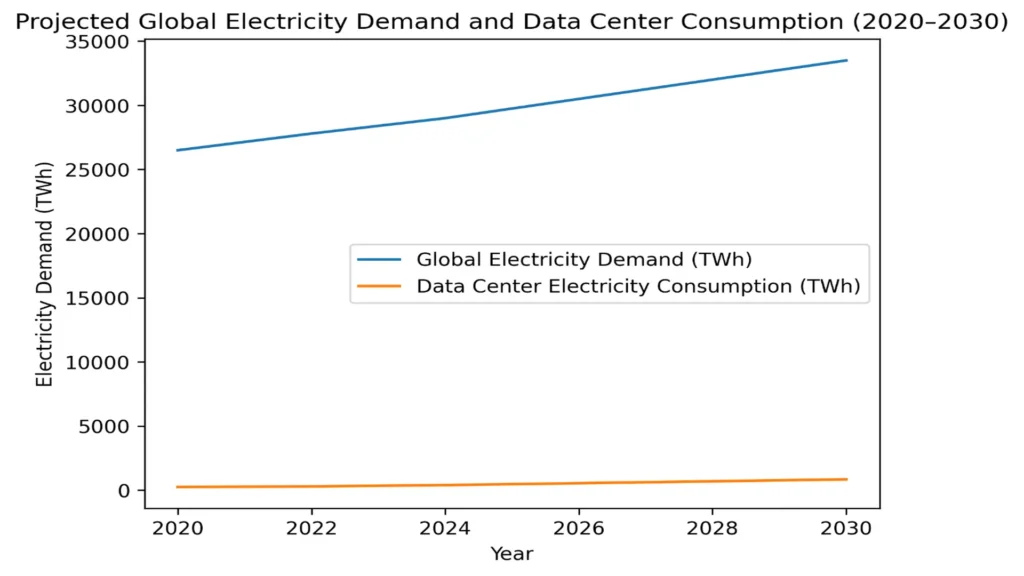
According to the IEA (Electricity 2024 Report), global consumption could increase by more than 25% by 2030, driven by data centers, industrial electrification, and electric mobility. A critical case is the technology sector: data centers are now seeking energy and are even evaluating uranium mining to ensure zero-interruption tolerance supply.
The expansion of artificial intelligence infrastructure is particularly relevant. The IEA projects that data center electricity consumption could double before 2030, representing between 8% and 10% of total consumption in advanced economies. These facilities operate with virtually zero tolerance for outages, raising standards for reliability, power quality, and frequency stability.
At the same time, industrial electrification (hydrogen electrolysis, electric furnaces, replacement of thermal processes) increases the system’s base load, while electric mobility introduces concentrated demand peaks in specific time windows.
Transmission congestion, reduced reserve margins, and the need to double energy infrastructure CAPEX before 2030 are clear signals of structural pressure.
This pressure is managed through artificial intelligence applied to the energy sector, a tool that optimizes dispatch and detects anomalies before they become system failures.
In this context, modern energy security depends on the system’s ability to absorb sustained demand increases without compromising stability or operational continuity.
Geopolitical reinforcement
Beyond technical factors, energy security is deeply influenced by geopolitical variables such as import dependence, volatility in natural gas markets, and concentration of critical minerals for clean technologies.
Diversification of energy sources, strengthening of supply chains, and regional energy autonomy have become strategic components of systemic analysis. In a context marked by trade tensions and regional conflicts, integrating geopolitical risk into energy planning is no longer optional but structural.
Renewable energy integration
The integration of renewable energy is one of the most transformative vectors of the global power system. In many developed markets, solar and wind penetration exceeds 30–40% annually and can be even higher in certain periods.
Although this progress is essential for decarbonization, it introduces significant technical challenges for energy security and grid resilience.
Technical challenges of renewables
Variable sources present operational characteristics different from conventional generation:
- Intermittency dependent on weather conditions
- Reduced system inertia due to replacement of synchronous generation
- Rapid generation ramps requiring higher flexibility
Reduced inertia can affect frequency stability during sudden disturbances, requiring millisecond-level balancing through advanced ancillary services.
The IEA warns that systems with high renewable penetration require substantial investment in operational flexibility, storage, and regional interconnections.
Required energy infrastructure
To integrate renewables without compromising stability, energy infrastructure must be reinforced through:
- Transmission grid expansion
- Regional interconnections
- Energy storage systems
- Digitalization and advanced substation control
Without adequate expansion, congestion may limit renewable utilization even when installed capacity is available.
From an energy security perspective, the transition implies redesigning the electrical architecture to preserve dynamic stability and adequate reserve margins.
Decarbonization and systemic stability
Decarbonization is a structural objective of global energy policy, but it must align with technical stability criteria. Reducing emissions without preserving reliability can create vulnerabilities. In this sense, the transition must comply with the goals established in the Paris Agreement, synchronizing renewable expansion with energy infrastructure modernization.
During the Carbon Solutions Forum 2026, industry leaders agreed that the low-carbon transition requires synchronization between renewable expansion, operational flexibility, storage, and infrastructure modernization.
The discussion highlighted three strategic pillars:
- Scaling of CCUS technologies capable of capturing up to 90% of emissions in certain industrial processes
- Low-carbon hydrogen as a vector for seasonal storage and industrial backup
- MMRV systems to ensure traceability and technical transparency
In the current context, energy security requires a balance between environmental sustainability, technical stability, and economic competitiveness.
Key resilience technologies
The consolidation of energy security depends on technologies that allow risk anticipation and real-time decision optimization.
MMRV systems
They integrate sensors, digital platforms, and advanced analytics to quantify emissions and validate reductions, providing data-driven operational visibility.
Artificial intelligence applied to grids
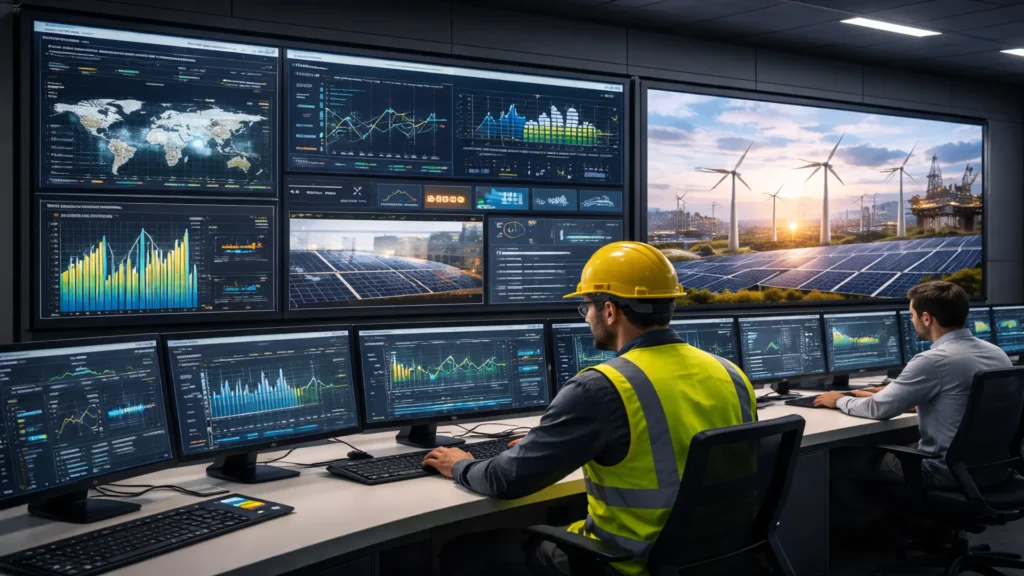
It enables failure prediction, dispatch optimization, and early anomaly detection. Predictive models can exceed 85% accuracy.
Digital twins
They replicate critical assets to simulate contingencies and optimize investment decisions.
Hydrogen and energy storage
They provide structural flexibility and industrial backup in systems with high renewable variability.
Regulatory framework and governance
Energy security is supported by regulatory frameworks that guide planning, resilience, and decarbonization.
| Framework / Standard | Scope | Impact on energy security |
|---|---|---|
| Paris Agreement | Global | Defines decarbonization targets that condition energy planning |
| ISO 50001 | International | Energy efficiency management in industrial facilities |
| ISO 31000 | International | Risk management applicable to energy infrastructure |
| NERC Standards | U.S. / Canada | Mandatory reliability and critical infrastructure protection standards |
| FERC | U.S. | Wholesale market and interstate transmission regulation |
| EU ETS | European Union | Emissions trading system incentivizing carbon reduction |
| 45Q (U.S.) | Fiscal | Incentive for carbon capture and storage (CCUS) |
| Integrated Resource Planning (IRP) | National / Regional | Coordinated planning of generation, transmission, and storage |
In the 2026 context, alignment between public policy, operators, and the private sector is decisive for maintaining structural resilience, stability, and long-term energy security.
International comparison
Regulatory approaches vary by region. The European Union prioritizes integration and carbon markets; the United States combines reliability standards with tax incentives; Asia strengthens resilience through nuclear expansion and liquefied natural gas diversification.
Future outlook 2030–2040
By 2030 and 2040, energy security will depend on integrating artificial intelligence into grids, expanding large-scale storage, and ensuring stable access to critical minerals.
Conclusion
Energy security in 2026 is a structural challenge that requires integrating electrical grid resilience, modernization of energy infrastructure, and decarbonization without compromising operational stability.
Strengthening energy security is not an additional cost, but a strategic investment that supports competitiveness, economic stability, and long-term sustainability.
At Inspenet, we promote technical and strategic analysis of global energy challenges, fostering specialized content that integrates innovation, sustainability, and industrial resilience.
References
International Energy Agency (IEA). (2024). Electricity 2024 Report.
International Energy Agency (IEA). (2023). Energy Security Report.
U.S. Department of Energy (DOE). (2023). Grid Resilience Framework.
U.S. Department of Energy (DOE). (2023). Carbon Capture Report.
Intergovernmental Panel on Climate Change (IPCC). (2023). AR6 Synthesis Report.
North American Electric Reliability Corporation (NERC). (2023). Reliability Standards Overview.
Frequently Asked Questions on Energy Security
What is energy security in 2026?
It is the ability of the energy system to guarantee continuous, affordable, and sustainable supply, integrating electrical grid resilience and decarbonization without compromising operational stability.
How can grid resilience be improved?
Through electrical grid modernization, digitalization, energy storage, transmission expansion, and risk-based planning for climate and cyber threats.
How can energy security and decarbonization be achieved simultaneously?
By combining renewable integration, CCUS technologies, low-carbon hydrogen, and MMRV systems under a coherent regulatory framework.
What technologies strengthen grid resilience?
Artificial intelligence, digital twins, energy storage, microgrids, and reinforced energy infrastructure.