Helion begins construction of fusion power plant for Microsoft
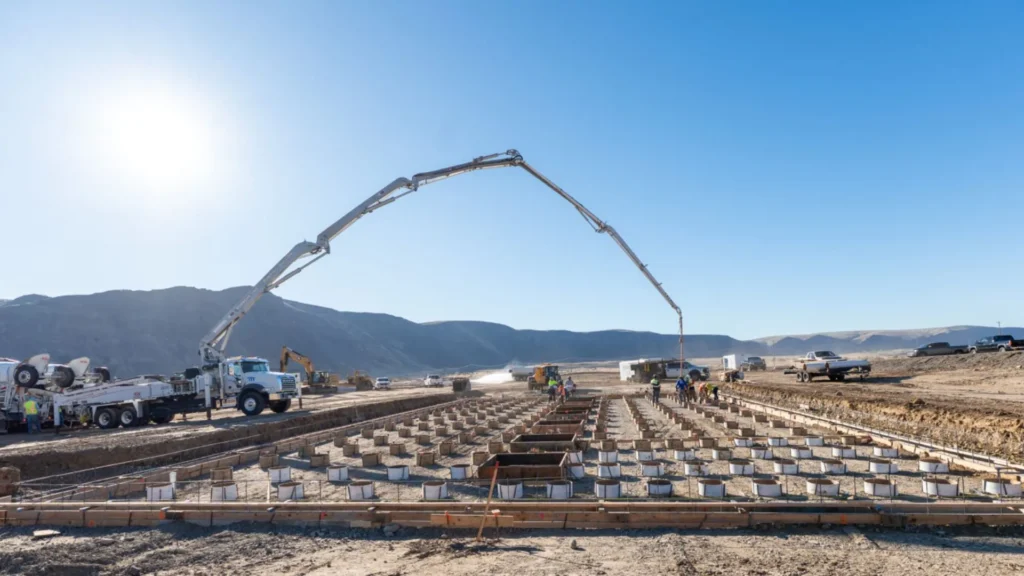
Helion has begun construction on Orion, its future nuclear fusion power plant located in Washington state. The project represents one of the most advanced attempts to bring fusion electricity to the commercial power grid and remains on track to supply power to Microsoft by 2028.
The US company confirmed that the land is located in Chelan County, an area chosen for its access to electrical transmission infrastructure and its history of energy development. The site belongs to the Chelan County Public Utilities District, which is leasing the space for the construction of the facility.
Microsoft remains committed to fusion energy
Alongside the start of construction, Helion reaffirmed the energy agreement signed with Microsoft in 2023. The contract provides for the supply of electricity generated through nuclear fusion to power part of the technology company's operations starting in 2028.
The alliance became the first announced commercial-scale fusion power purchase agreement . Constellation Energy is also participating as the electricity supplier in the project.
Microsoft believes fusion energy could become an alternative to meet the growing energy demands of data centers and artificial intelligence systems. The company maintains that this type of power generation could provide a continuous supply of clean energy if it can be commercially scaled.
Orion seeks to connect fusion electricity to the grid
Helion explained that Orion will be the first plant specifically designed to send fusion electricity directly to the power grid. The company has focused its strategy on accelerating experimental testing and rapidly developing prototypes to reduce technological advancement timelines.
Currently, the company is working with Polaris, its seventh-generation experimental reactor. The goal of this system is to demonstrate electricity generation through fusion , a step considered essential before operating a commercial plant.
Previously, Helion achieved another breakthrough with Trenta, a prototype that reached fuel temperatures exceeding 100 million degrees Celsius. This range is generally considered necessary to sustain fusion reactions usable in energy production.
The fusion industry is accelerating energy competition
The start of construction places Helion among the most advanced private companies in the global race to develop commercial nuclear fusion . Several companies and laboratories are currently working on similar technologies with the aim of producing electricity without carbon emissions and with less waste than traditional nuclear fission.
However, the sector still faces technical, regulatory, and financial challenges. These include the stability of plasma reactions, energy efficiency, and large-scale operating costs.
Even so, Helion's progress reflects how energy pressure stemming from the expansion of artificial intelligence and data centers is driving new investments in advanced power generation technologies.
Washington positions itself as a strategic point
The project also strengthens Washington's role in U.S. energy development. Helion stated that it has been working since 2023 with local authorities, state agencies, and nearby communities to complete environmental reviews and obtain the necessary permits.
The company will still need to complete further regulatory steps before the power plant can operate commercially. Nevertheless, the start of construction represents one of the most concrete developments to date in the fusion energy industry.
News of additional interest
Europe hardens its stance on Chinese turbines
Europe's leading wind turbine manufacturers have increased pressure on the European Union to limit the participation of Chinese companies in the bloc's energy projects. José Luis Blanco, CEO of Nordex, called for all new wind capacity connected to European grids to use Western-origin technology due to concerns about cybersecurity and control of critical infrastructure. He warned that the risk lies not in the location of the servers but in who manages the software and has access to the systems.
European companies say Chinese manufacturers are gaining ground thanks to lower prices and faster deliveries fueled by government support. Although groups like Nordex, Vestas, and Siemens Gamesa still dominate over 90% of the European market, there are growing fears of a repeat of what happened with solar panels, where Europe lost industrial capacity and became dependent on Asian imports. Brussels is already investigating potential unfair subsidies and considering stricter rules to exclude suppliers deemed high-risk.
Cartagena prepares to import more gas
Ecopetrol and Puerto Bahía will begin construction on a regasification project in Cartagena after receiving the necessary regulatory and environmental permits. The initiative will allow the import of liquefied natural gas (LNG) and its conversion for use in the Colombian market via a floating storage and regasification unit. The facility is scheduled to begin operations in December 2026 and will be able to contribute up to 300 GBTUD to the national energy grid.
The National Infrastructure Agency approved adjustments to the port concession, and the National Environmental Licensing Authority (ANLA) gave the green light to the environmental change required to develop the project using the existing facilities of the maritime terminal. With this, Puerto Bahía will move forward with contracting services, purchasing, and constructing the necessary infrastructure. Ecopetrol confirmed that it already has signed commercial contracts with distributors and marketers for the gas, which will supply homes and businesses throughout the country.
The IMO opens the door to autonomous ships
The International Maritime Organization has approved the first global code to regulate autonomous and remotely operated vessels. The new framework, known as the MASS Code, establishes standards for vessels with artificial intelligence to navigate to standards similar to those of traditional ships in terms of safety, security, and environmental protection. The regulation will begin to be applied to cargo ships in July 2026 and will serve as a basis for future mandatory standards.
The code includes requirements on navigation, remote operations, connectivity, cybersecurity, and emergency response. It also recognizes the role of shore-based control centers and maintains the master as ultimately responsible for the vessel, even when not physically on board. The IMO stated that the objective is to enable the gradual integration of new technologies without compromising global maritime safety.
Volvo and Hitachi seek emission-free projects
Volvo Construction Equipment and Hitachi Energy have signed an alliance to accelerate the development of zero-emission construction projects . The companies will work on solutions that integrate electric machinery, energy infrastructure, and energy management systems with the goal of reducing the environmental impact of the construction sector.
The agreement envisions the creation of operational models that enable the use of electrical equipment connected to clean energy sources and digital control systems. The companies will also collaborate on commercial strategies, technical support, and services to facilitate the adoption of these technologies by construction companies and industrial operators. Volvo will contribute its expertise in electric machinery, while Hitachi Energy will lead the integration of energy systems and network management.