The company RESONIKS presented QCFlex, a fully automated acoustic inspection system based on artificial intelligence designed to detect structural defects in industrial manufacturing processes.
The solution aims to bring acoustic testing from laboratory environments to real production lines, enabling fast and automated inspections of metal, ceramic, and composite components.
QCFlex uses artificial intelligence to detect defects
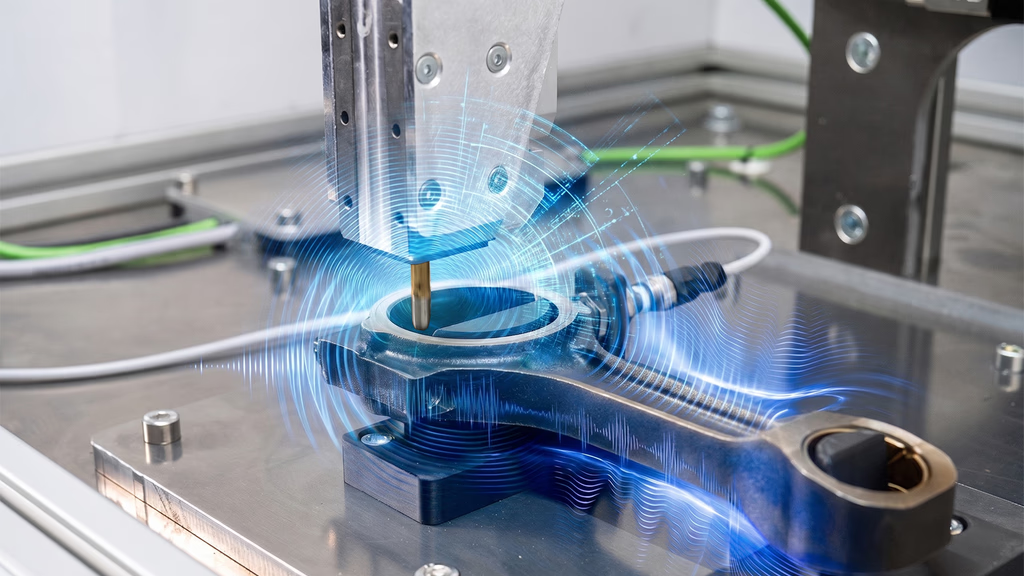
The system works by analyzing acoustic signatures generated when impacting industrial parts with an automated precision hammer.
According to RESONIKS, a defect-free part produces a specific “acoustic fingerprint,” while cracks, voids, or internal defects generate sound variations detectable through machine learning algorithms.
QCFlex uses AI models trained to identify these differences even in industrial environments with high noise levels.
The company noted that the system delivers automatic pass or fail results in seconds, eliminating human subjectivity during inspection.
Automated architecture integrates sensors and robotics
The system incorporates an SH2 precision hammer mounted on a high-precision SCARA robot that repeatedly impacts the part with controlled and reproducible force.
Subsequently, second-generation MP2 microphones record the acoustic response in a frequency range between 20 Hz and 80 kHz, ensuring consistent measurements across different units.
The artificial intelligence then processes the acoustic information to generate a fully traceable and auditable automatic decision.
System was designed for real industrial environments
RESONIKS highlighted that one of the main challenges was adapting acoustic testing to industrial conditions characterized by vibrations, dust, humidity, and temperature changes.
To achieve this, QCFlex incorporates: automated opening and closing mechanisms to protect sensitive components, robotic interchangeable clamping systems for different types of parts, and an intuitive touch interface to reduce the need for specialized training.
The system supports components up to 800 mm in size and 200 kg in weight.
Technology seeks to improve efficiency and sustainability
The company explained that integrating early defect detection within the production line helps reduce rework, material waste, and energy consumption.
According to RESONIKS, this capability directly impacts Overall Equipment Effectiveness (OEE) indicators by preventing defective parts from continuing through the production process.
The company believes the solution can also contribute to more sustainable manufacturing operations by reducing waste and optimizing resource use.
RESONIKS moves toward large-scale industrial deployment
With the launch of QCFlex, RESONIKS indicated that it is moving past the pilot project phase and toward full industrial implementations.
The company stated it will work directly with manufacturers to adapt the system to specific quality requirements and production environments.
“QCFlex is designed to help manufacturers strengthen confidence in every process,” the company highlighted.
Source and photo: https://www.resoniks.com/