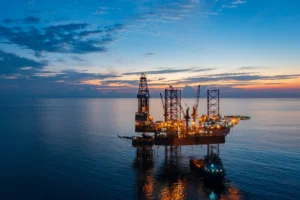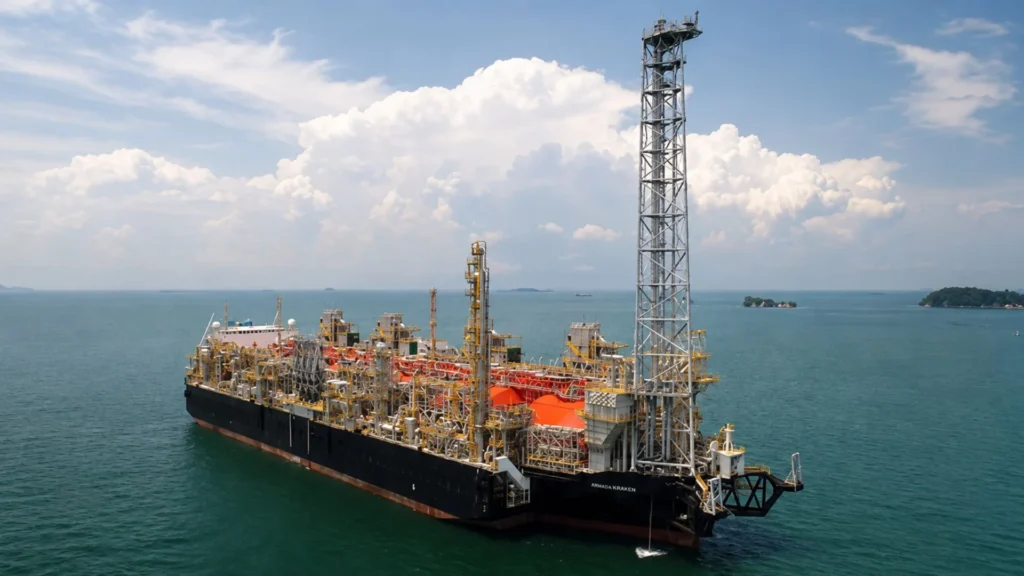
Seatrium and Golar LNG they have signed a letter of intent to move forward on a third conversion by a LNG carrier at a floating LNG plant (FLNG), extending a collaboration that spans more than two decades.
Seatrium and Golar are preparing the EPC contract
According to the terms of the letter of intent (LOI), both companies will work on developing the technical design and defining the project. The goal is to have the necessary foundation in place to formalize an engineering, procurement, and construction (EPC) contract during the second half of 2026.
In addition, Golar will make an initial payment to support the activities that Seatrium will be developed during this stage prior to the EPC contract.
The transaction represents a further step in both companies’ strategy in the floating LNG plant market, converting LNG carriers allows for the reuse of existing vessels and the incorporation of systems to process and liquefy natural gas directly at offshore facilities.
The experience of Hilli Episeyo and Gimi
Furthermore, the project builds upon the experience gained with the FLNG units Hilli Episeyo and FLNG Gimi. Seatrium delivered Hilli Episeyo in 2017 with a production capacity of 2.4 million tons of LNG per year. Subsequently, in 2023, it delivered Gimi with a capacity to produce 2.7 million tons per year.
According to Seatrium, both facilities are currently the only two operational FLNG units in the world obtained through the conversion of LNG carriers.
Marlin Khiew, executive vice president of Seatrium Energy (Projects), explained that the company intends to leverage the experience gained from both projects to increase standardization through a serial construction model. This approach aims to provide greater certainty during execution, reduce time to market, and improve cost efficiency.
Golar LNG expands its FLNG project portfolio
In addition, LNG Golar considers the new agreement an extension of a business relationship of more than 20 years with Seatrium. Morten Skjong, Golar’s technical director, noted that Hilli is heading to Seatrium’s facilities for modernization work before beginning its 20-year charter contract in Argentina.
The new letter of intent opens the door to expanding that cooperation with another FLNG conversion, although the project will still need to progress through its design and definition phase before reaching the EPC contract planned for the second half of 2026.
In parallel, Golar is developing other projects to expand its floating LNG capacity, the company also awarded Yantai CIMC Raffles Offshore an EPC contract related to its fourth FLNG unit and the second vessel based on its MKII design.
FLNG plants are gaining ground in gas monetization
Finally, FLNG facilities offer an alternative for producing, processing, and liquefying natural gas near offshore fields. The LNG can be stored on-site and later transferred to ships for export.
This model reduces the need to first transport the gas to an onshore liquefaction plant and can offer greater flexibility for developing certain offshore resources.
This outlook aligns with an international market that anticipates increased LNG demand over the coming decades. In this context, Seatrium seeks to leverage its engineering, conversion, and EPC capabilities, while Golar continues to expand its floating liquefaction infrastructure portfolio.
Source: Offshore Energy
Photo: Seatrium