Table of Contents
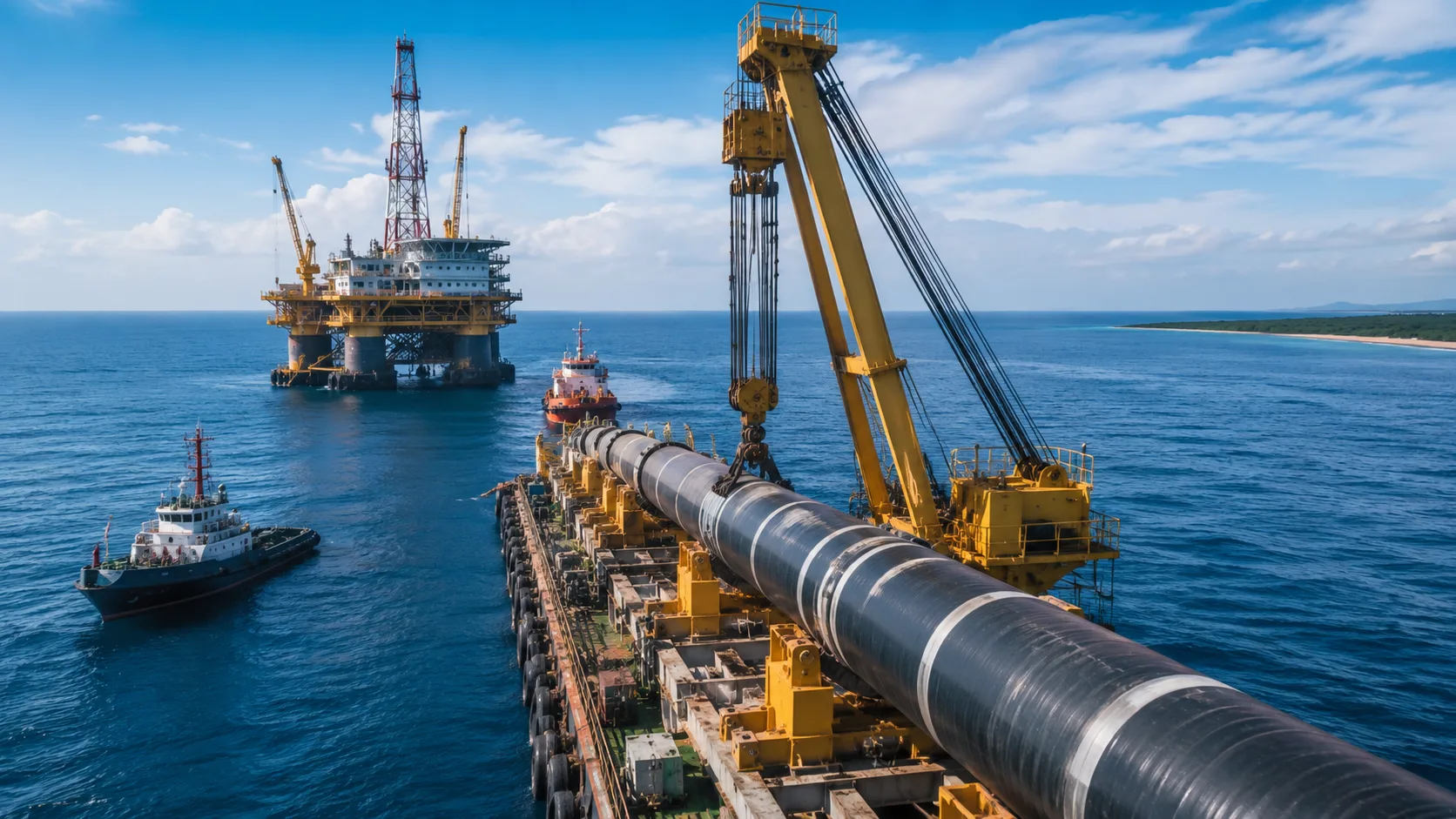
Rovuma LNG is advancing preparations for its offshore infrastructure with the award of a package to Corinth Pipeworks to manufacture approximately 250 kilometers of steel pipe for the first phase of Mozambique’s mega gas project. The supply will total around 120,000 tonnes and will incorporate anti-corrosion protection systems and concrete coating for installation within the subsea network.
The award is part of a broader strategy by the Area 4 partners to secure long-lead equipment and materials as the project continues progressing toward a final investment decision (FID). ExxonMobil recently reported that pre-investment commitments associated with Rovuma LNG Phase 1 have reached approximately US$1.1 billion, including subsea production systems, large-diameter valves, and different categories of pipe.
The scope awarded to Corinth Pipeworks is valued at between US$200 million and US$250 million, according to information published about the award. The company will manufacture LSAW pipes ranging from 20 to 24 inches in diameter, which will subsequently form part of the infrastructure required to transport gas produced offshore.
Rovuma LNG Secures Critical Infrastructure Ahead of FID
The scale of the order provides an indication of the infrastructure that is beginning to mobilize around the project. Corinth Pipeworks will manufacture approximately 250 kilometers of Longitudinally Submerged Arc Welded (LSAW) pipe, equivalent to around 120,000 tonnes of steel.
Production will take place at the company’s industrial facilities in Thisvi, Greece. In addition to manufacturing the pipes, the scope includes anti-corrosion coating and concrete weight coating, elements that are particularly important for pipelines intended for offshore service.
The anti-corrosion coating provides a barrier against the external environment to which the pipeline will be exposed, while the concrete coating adds additional weight and contributes to the stability of the line once installed on the seabed.
This is not, moreover, the only package related to piping. ExxonMobil confirmed additional awards to Sumitomo Corporation of America for seamless pipe and to Zhejiang Jiuli Hi-Tech Metals for mechanically lined pipe, induction bends, and other components.
This combination highlights the diversity of materials and solutions required to develop a subsea system capable of operating under the conditions anticipated for the Area 4 gas fields.
Offshore Development Will Connect the Fields to Afungi
The subsea infrastructure will provide the link between the gas resources located off the coast of Mozambique and the future onshore liquefaction facilities.
ExxonMobil states that the first phase initially includes 18 subsea wells, at water depths reaching approximately 1,700 meters, as well as around 50 kilometers of offshore flowlines to transport the gas toward the LNG plant.
This configuration makes the reliability of the pipeline systems an essential component of the development. The lines will have to transport hydrocarbons from a deepwater subsea environment to the facilities associated with processing and subsequent LNG production.
Area 4 contains around 80 trillion cubic feet of natural gas, according to ExxonMobil’s updated project description, providing a resource base capable of supporting multiple LNG developments.
A Plant With an Annual Capacity of 18.6 Million Tonnes
The scale of the offshore infrastructure is directly related to the planned size of the onshore facilities.
The current Rovuma LNG configuration предусматривает a capacity of approximately 18.6 million tonnes of LNG per year, using a modular electric liquefaction concept.
The design includes 12 electrically driven liquefaction modules, each with an approximate capacity of 1.55 million tonnes per year, together with a combined-cycle power generation plant intended to meet the facilities’ electricity demand. ExxonMobil estimates that this architecture could reduce greenhouse gas emissions by up to 40% compared with conventional mega-trains, based on the project’s FEED design.
The configuration represents an evolution from previous concepts considered for Rovuma. The partners formally entered the FEED stage for the updated design in 2024, before moving forward with the current equipment and materials awards.
ExxonMobil Advances Upstream and Midstream Activities Simultaneously
Recent decisions show that development is not limited to the subsea system. In August, ExxonMobil awarded McDermott engineering and procurement work for Rovuma LNG, within a framework that also involves the SMDC consortium, comprising Saipem, McDermott, Daewoo Engineering & Construction, and China Petroleum Engineering & Construction Corporation, for limited engineering and procurement activities related to the Phase 1 midstream infrastructure.
The project is led by ExxonMobil Moçambique as the delegated operator for Area 4. The ownership structure also includes Eni, CNPC, ENH, KOGAS, and XRG. ExxonMobil indirectly holds a 25% interest in the block.
The award of approximately US$1.1 billion in pre-investment contracts is particularly significant because it comes as the partners continue working toward the FID. Securing long-lead components in advance could subsequently reduce the project schedule’s exposure to supply constraints.
Mozambique Prepares for a World-Scale LNG Development
Rovuma LNG forms part of a much broader energy transformation surrounding the gas reserves discovered offshore Mozambique, where Coral Norte FLNG is also driving the expansion of LNG production.
The combination of subsea wells, production systems, offshore pipelines, and an onshore plant with an annual capacity of 18.6 million tonnes will require an international industrial supply chain capable of manufacturing, transporting, installing, and subsequently maintaining specialized infrastructure for decades.
ExxonMobil estimates that the project could generate approximately US$150 billion in revenue for the Government of Mozambique over roughly 30 years of operations, although these projections will depend on the project’s final execution and commercial development.
The pipeline contract therefore represents more than an individual industrial award. It forms part of the process through which Rovuma LNG is beginning to transform its engineering plans into physical infrastructure, securing in advance some of the components it will need to connect deepwater gas resources with one of Africa’s most significant future LNG complexes.
Sources: Offshore Technology | ExxonMobil | ExxonMobil — Rovuma LNG Project Overview |