Table of Contents
- Repsol in Venezuela: New impetus for oil production
- More operational control and better payment conditions
- The agreement is supported by the OFAC license
- Longer concessions and new fields incorporated
- Repsol maintains its commitment to Venezuela
- Natural gas activity also grows
- A significant move for the Venezuelan oil sector
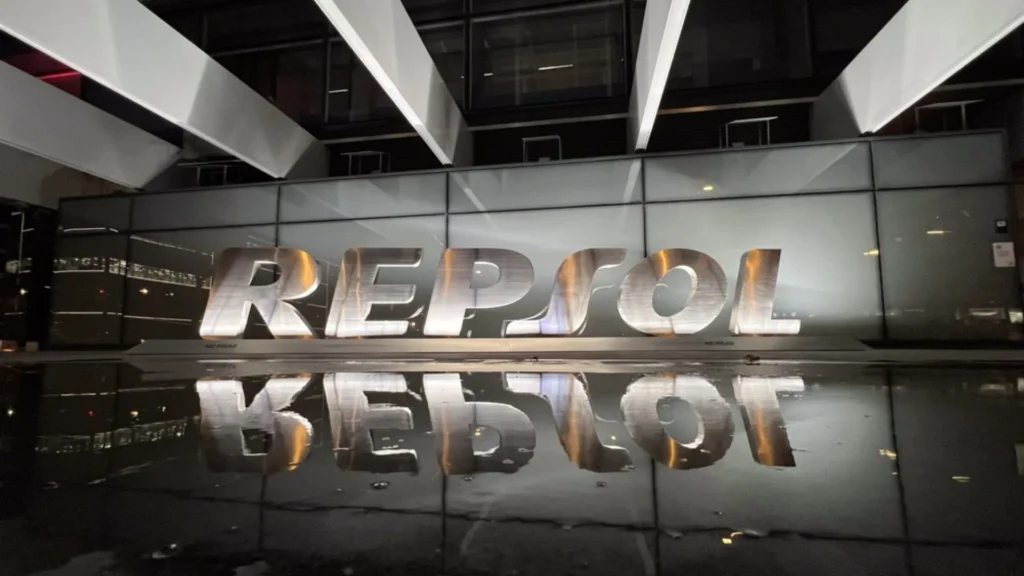
Repsol has taken a new step in its strategy in Venezuela after signing an agreement with the Ministry of Hydrocarbons and PDVSA that will allow it to regain control of operations in Petroquiriquire, one of its key assets in the country. The move opens the door to a progressive increase in oil production and seeks to ensure more stable payment mechanisms for the company.
Furthermore, the agreement reinforces the operational framework under which Repsol has been working in Venezuela since the Framework Agreement signed in 2023 and updated in 2024. The Spanish oil company maintains a 40% stake in Petroquiriquire, while PDVSA retains 60%, but the new conditions point to greater technical and operational management capacity for the company.
Repsol in Venezuela: New impetus for oil production
Specifically, the company expects to increase its gross oil production in Venezuela by 50% over the next 12 months. Likewise, it plans to triple it within three years if the necessary regulatory, operational, and commercial conditions are maintained.
Currently, Repsol produces around 45,000 gross barrels per day in the country, mainly from Petroquiriquire. This volume makes the asset a central piece within its presence in the Venezuelan energy sector and the main support for its expansion plan.
More operational control and better payment conditions
On the other hand, one of the most relevant points of the agreement is the possibility of strengthening payment mechanisms. This aspect had been one of the main limitations for many joint operations in Venezuela, especially in an environment marked by financial restrictions and the need to fit operations within the framework permitted by the United States.
The new stage also proposes an operation with shared leadership between Repsol and PDVSA, focusing on technical, logistical, and governance standards. The Spanish oil company will contribute expertise in exploration and production, commercial capacity, and local operational presence, which gives it room to react quickly if the environment remains favorable.
The agreement is supported by the OFAC license
Furthermore, this progress comes after the issuance of General License 50A by the United States Office of Foreign Assets Control. This authorization allows Repsol and its subsidiaries to participate in transactions linked to crude oil and gas operations in Venezuela with the Venezuelan government, PDVSA, and its affiliated entities.
From a business perspective, this license reduces some of the regulatory uncertainty and helps the company regain momentum in a market where it had been operating with severe limitations for years. It also improves visibility on collections, shipments, and operational continuity, three decisive variables for any production increase plan.
Longer concessions and new fields incorporated
In addition, the Framework Agreement originally signed in 2023 already contemplated extending the duration of concessions in Petroquiriquire. Later, the 2024 update also incorporated the Tomoporo and La Ceiba fields, which expands the scope of oil development associated with the alliance.
This detail is not minor. A longer duration of concessions and a broader asset portfolio usually translate into better conditions for planning investments, deploying technology, and organizing project logistics with a less short-term vision.
Repsol maintains its commitment to Venezuela
As explained by Francisco Gea, Repsol’s General Director of Exploration and Production, the company has assets and technical, operational, and human capabilities on the ground to grow in the country. The company has operated in Venezuela uninterruptedly since 1993, a fact that reinforces the reading of continuity behind this new agreement.
Furthermore, CEO Josu Jon Imaz had already announced that Repsol was prepared to accelerate its crude production in Venezuela using locally generated revenues. This strategy suggests a roadmap based on gradual expansion, operational discipline, and leveraging cash flow within the country itself.
Natural gas activity also grows
In parallel, Repsol and the Italian ENI recently signed another agreement with the Venezuelan authorities and PDVSA to sustain natural gas production in Cardón IV through 2026. This asset, 50% owned by both companies, adds a second layer to Repsol’s energy strategy in Venezuela.
Thus, the company is not limited to crude oil. It also consolidates its position in natural gas, a segment that can gain relevance as the country regains operational capacity and contractual stability.
A significant move for the Venezuelan oil sector
Overall, the agreement between Repsol, the Venezuelan government, and PDVSA marks a significant signal for the country’s oil sector. It does not yet represent an immediate market transformation, but it does set up a scenario with more room to increase oil production, streamline payments, and strengthen operations in strategic assets.
If conditions are favorable, Petroquiriquire could become one of the most visible focal points of the new cycle of oil activity in Venezuela. And for Repsol, this progress represents a concrete opportunity to grow production, gain operational stability, and solidify a position it has been building for over three decades.
Source: Repsol
Photo: Shutterstock