OptiGrid was selected by Vena Energy to provide commercial optimization services for the Bellambi Heights Battery Energy Storage System (BESS) project.
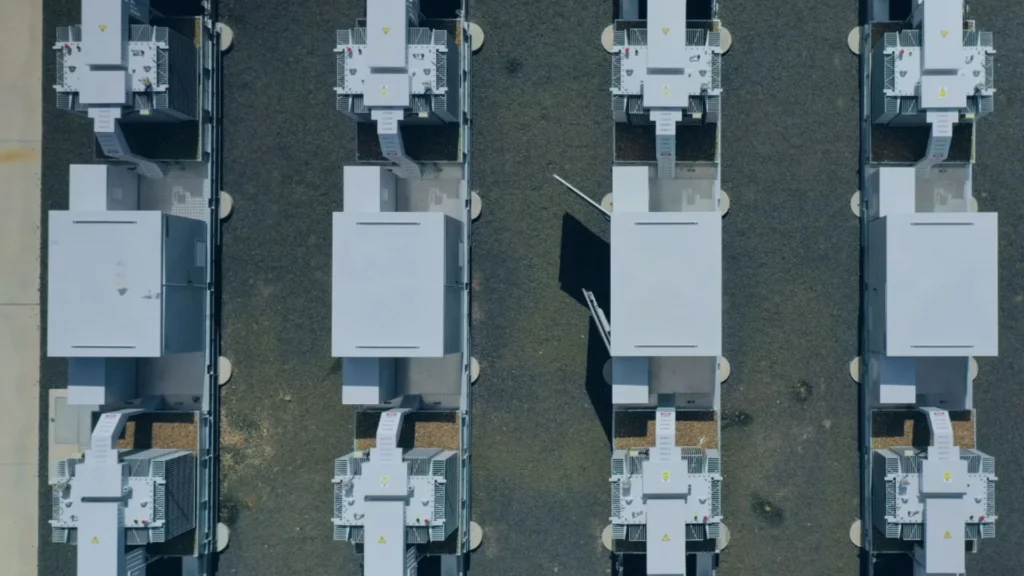
The facility will have a total capacity of 408 MW and will consist of two adjacent 204 MW units. The project is located in Beryl, New South Wales, and its commercial operation is scheduled for 2027.
Until now, OptiGrid had primarily worked with batteries under 5 MW. Its portfolio includes assets linked to companies such as Lunio and Ampyr. Through these systems, it helps commercial and industrial facilities participate more actively in the power grid.
The Bellambi Heights contract changes that scale. According to Sahand Karimi, CEO of OptiGrid, the operational or contracted assets using their platform now reach 1 GW.
OptiGrid to manage Vena Energy’s 408 MW battery
For Bellambi Heights BESS, Vena Energy will use OptiBidder, the optimization and bidding platform developed by OptiGrid.
The system employs forecasts and optimization algorithms to support commercial decisions for the batteries. In practice, the platform analyzes market signals and determines how to present energy bids.
Furthermore, Bellambi Heights will be able to participate in both the energy market and Frequency Control Ancillary Services (FCAS). This capability will allow it to respond to National Electricity Market (NEM) conditions and contribute to grid stability.
Optimization is particularly important for an asset that can store energy for two hours. The timing chosen to charge or discharge a battery can significantly alter the revenue generated in the market.
Likewise, OptiGrid must consider the commercial obligations and restrictions associated with the asset. Karimi maintains that capturing a battery’s value requires combining accurate forecasts with a strategy capable of incorporating those conditions.
More batteries put pressure on electricity prices in Australia
The contract comes as the Australian storage market undergoes a major shift. The addition of large-capacity batteries is increasing competition among owners and operators.
During 2025, these assets took advantage of periods of high prices and lower competition to capture significant margins. In 2026, the situation is different.
The construction of new BESS systems coincides with rapid growth in domestic batteries. This increased available capacity is heightening competition and exerting downward pressure on electricity prices.
Karimi notes that the margins and overall prices recorded this year are among the lowest in the last five years. In his view, a significant part of this behavior is related to the expansion of batteries.
For operators, this scenario may reduce short-term profitability. However, it also reinforces the importance of optimization software. When price spreads narrow, deciding when to buy, store, and sell electricity becomes more relevant.
Storage expansion modifies the NEM
The growth of batteries also has implications for the operation of the National Electricity Market. According to Karimi, the downward pressure on prices may indicate that the power system has greater capacity to handle the gradual retirement of coal-fired power plants. Batteries can store electricity when there is an abundance and return it to the grid when demand increases.
Additionally, a larger number of operators introduces competition into a market where bidding decisions can influence prices.
The debate has gained importance after Synergy, a Western Australian retailer and generator, was fined $1.2 million for conduct related to profit maximization and price distortion.
The company attributed the behavior recorded in 2023 to a software error related to its first major battery project. For Karimi, the episode also shows the need for clearer guidelines for electricity bidding.
Battery rules come under greater scrutiny
Bidding software has been operating within the NEM for years. However, the growth of BESS systems is increasing their weight in the power supply and, with it, the scrutiny of the algorithms used to submit bids.
One of the problems pointed out by Karimi arises when the structure of bids causes pre-dispatch forecasts to incorrectly represent expected demand. This can complicate market planning.
The Australian Energy Regulator (AER) is evaluating bid-revision practices as the dispatch time approaches. The process could lead to new guidance for generators and battery operators.
As this debate progresses, Bellambi Heights BESS places OptiGrid directly in the large-scale storage segment. For Vena Energy, the project adds 408 MW to a portfolio that includes a global storage infrastructure pipeline of 26.2 GWh.
The agreement also shows how software is gaining weight within the battery market. With more capacity connected to the system and narrower price spreads, the ability to forecast NEM conditions and adjust bids may become an increasingly important factor for the profitability of these assets.
Source and photo: Optigrid