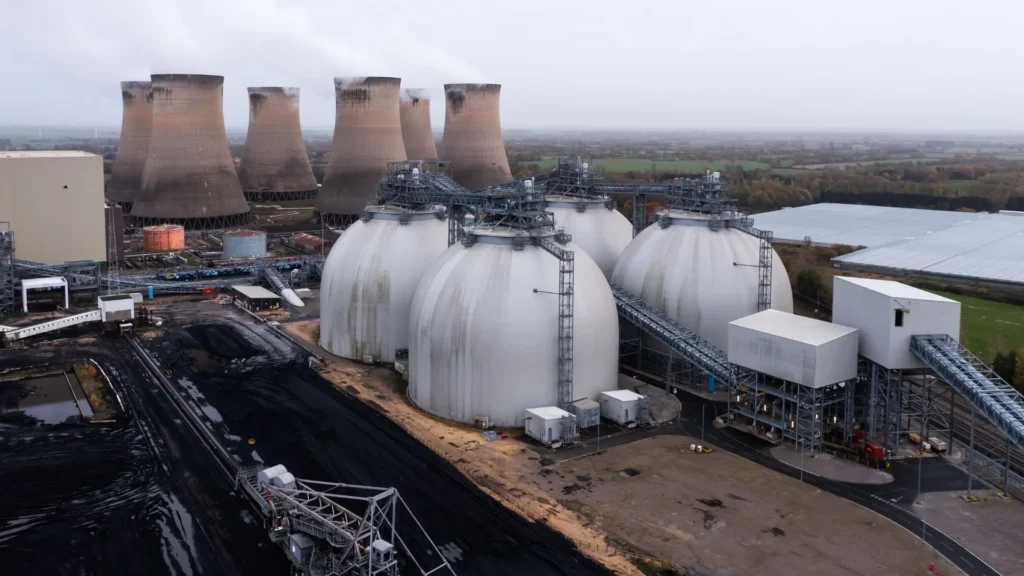
The Europe’s largest carbon capture plant Yara has begun operations at its Sluiskil facility in the Netherlands, with the capacity to capture up to 800,000 tons of CO2 per year and ship it to Norway for permanent storage. Yara’s carbon capture facility is part of an industrial chain that integrates CO2 capture and liquefaction with its maritime transport and subsequent geological storage beneath the Norwegian seabed.
The infrastructure will be able to process up to 800,000 tons of CO2 annually generated during ammonia production, the gas, once captured, will be liquefied and temporarily stored at Dutch facilities before being transported to the North Sea. With this system, Yara aims to reduce some of the emissions associated with its industrial activity and, at the same time, avoid the carbon taxation costs associated with those volumes.
Europe’s largest carbon capture plant connects the Netherlands and Norway
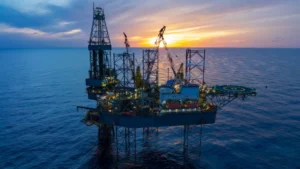
Subsequently, the CO2 captured in Yara Sluiskil it will be loaded onto Northern Lights vessels for transport to Øygarden, on the west coast of Norway, from there, the carbon will be led towards a geological formation located approximately 2,600 meters below the seabed, where it will remain permanently stored.
This connection establishes a cross-border chain that includes CO2 capture, liquefaction, maritime transport, and permanent storage, in this way, an industrial facility located in the Netherlands can use Norwegian infrastructure to manage emissions that would otherwise be released into the atmosphere. The project envisions to capture and store approximately 12 million tons of CO2 over a period of 15 years provided that the necessary conditions for its operation are maintained.
Yara is committed to decarbonizing ammonia production
Furthermore, the facility is of particular importance to Yara Sluiskil due to the scale of its ammonia and fertilizer production. Ammonia production generates carbon dioxide emissions that can be separated and captured during the industrial process; the new infrastructure allows this characteristic to be leveraged to reduce the amount of CO2 released directly into the atmosphere.
This is an important day for Yara and for European industry. The carbon capture plant in Sluiskil demonstrates that large-scale industrial decarbonization is possible today.
Svein Tore Holsether
Holsether also highlighted the challenge for Europe to make progress in reducing emissions while maintaining its industrial activity, jobs, and key value chains.
A European chain for carbon capture and storage
Furthermore, the implementation connects two essential pieces of the carbon capture and storage (CCS) with the industrial facilities that generate and capture CO2 and the infrastructure responsible for transporting it to permanent geological storage facilities. Northern Lights performs this second function through its ships and facilities in Norway, its participation allows the geological storage capacity to be used by industrial facilities located outside the country.
Together, we demonstrated that CO2 capture, cross-border transport and storage are a viable solution for European industry.
Tim Heijn
The inauguration was attended by representatives of the governments involved and the European Union, including Norwegian Prime Minister Jonas Gahr Støre, Dutch Prime Minister Rob Jetten and European Commissioner for Climate, Net Zero Emissions and Clean Growth, Wopke Hoekstra.
With its commissioning, the Yara Sluiskil plant is testing, on an industrial scale, a model in which CO2 can be captured in one country, transported by sea, and permanently stored in another. The performance of this chain will be crucial in determining the extent to which this scheme can be extended to other European industries whose emissions are difficult to reduce.
Source: Offshore Energy
Poto: Shutterstock